TEKS ELAR 2.9.C
The Standard
discuss elements of drama such as characters, dialogue, and setting
Texas Essential Knowledge and Skills for English Language Arts and Reading
Teacher's field guide
What This Standard Means
What Students Need to Do
- Students examine a short play and identify who takes part, what is spoken, and where the action occurs. They discuss how these parts help readers follow the scene.
What Mastery Looks Like
- Students can name who appears in a scene, identify what each person says, and explain where the action happens. They support their answers with details from the script.
Common Misconceptions
- Students may confuse the actors with the people they portray. They may treat spoken lines, stage directions, and descriptions of place as if they serve the same purpose.
How to Assess It
- Give students a six-line play excerpt. Ask them to circle one speaker’s name, underline that speaker’s words, and write where the scene occurs.
Lesson moves
Ways to Teach It
Give pairs role cards and a short script, then have them act out the scene using simple classroom props.
After reading a scene, ask, “How would changing the place change what the people say or do?”
Play Script Sort by having teams place sentence cards under speaker name, spoken words, stage direction, or place.
Examine a school assembly program and discuss how listed roles, spoken parts, and the performance space help the event run smoothly.
Free download
Printable 2.9.C Worksheet
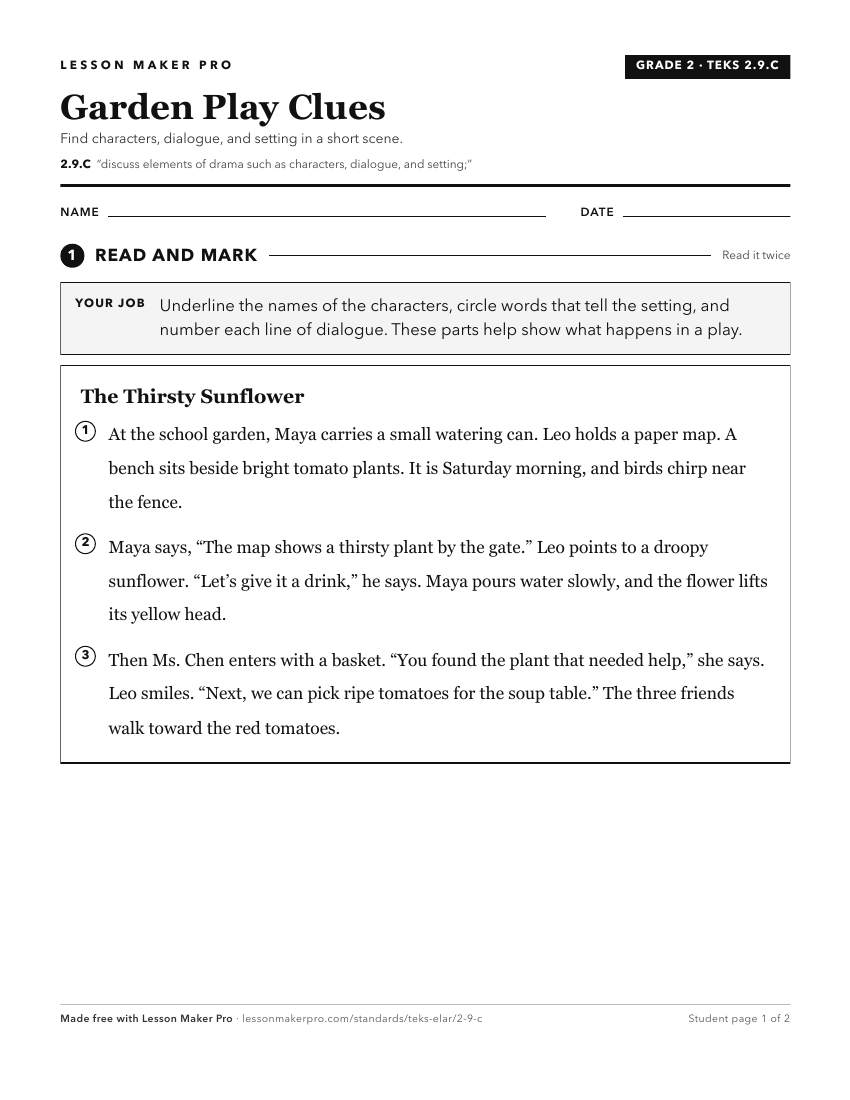
A ready-to-print activity worksheet aligned to 2.9.C, with an answer key for the teacher on its own page. No account needed.
PDF, US Letter, prints cleanly in black and white.
Download the worksheetKeep exploring
Related Standards
Turn this exact standard into a lesson
Grade, subject, topic, and the complete standard are prefilled. Create one free, no account needed.
Also for this standard:Make a WorksheetMake a QuizMake a Sub Lesson