TEKS ELAR 6.8.C
The Standard
analyze how playwrights develop characters through dialogue and staging
Texas Essential Knowledge and Skills for English Language Arts and Reading
Teacher's field guide
What This Standard Means
What Students Need to Do
- Students examine a play’s spoken lines and stage directions for clues about characters. They explain how words, actions, gestures, and movement reveal traits, motives, relationships, and changes.
What Mastery Looks Like
- Students cite specific dialogue and stage directions to explain a character’s traits, motives, relationships, or changes. They also explain how staging choices shape the audience’s view of that character.
Common Misconceptions
- Students may treat stage directions as unimportant or confuse them with spoken dialogue. They may name a character trait without citing a line, action, gesture, or movement that supports it.
How to Assess It
- Give students a short scene and ask: “What does the dialogue reveal about one character, and how does one stage direction strengthen or change that impression?”
Lesson moves
Ways to Teach It
Have pairs perform the same short scene twice using different gestures, facial expressions, and blocking, then compare how the character changes.
Ask students to write: “Which line and stage direction reveal the character’s strongest motive, and what do they show?”
Play Evidence Match by pairing dialogue and stage direction cards with character traits, then require students to defend each match.
Compare a script excerpt with its filmed performance, noting how actors and directors use pauses, movement, and tone to shape character.
Free download
Printable 6.8.C Worksheet
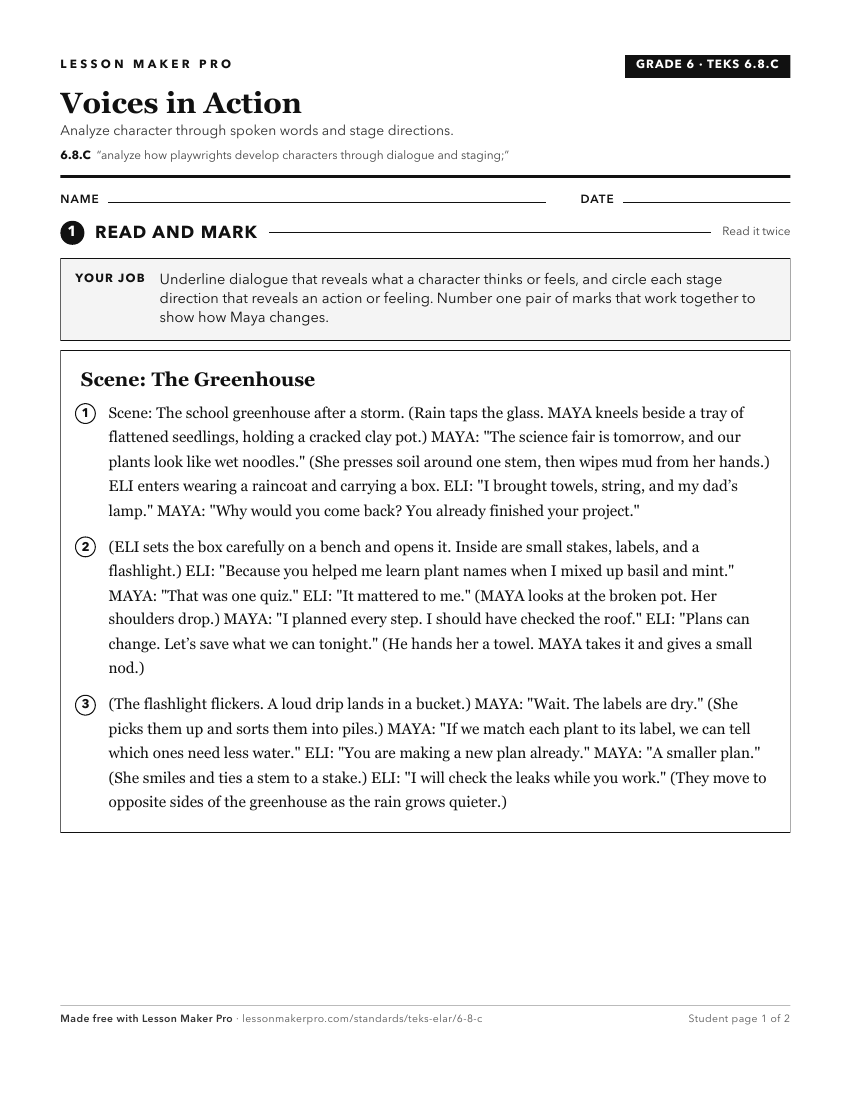
A ready-to-print activity worksheet aligned to 6.8.C, with an answer key for the teacher on its own page. No account needed.
PDF, US Letter, prints cleanly in black and white.
Download the worksheetKeep exploring
Related Standards
- 2.9.C
discuss elements of drama such as characters, dialogue, and setting;
- 8.8.C
analyze how playwrights develop dramatic action through the use of acts and scenes;
- 7.8.C
analyze how playwrights develop characters through dialogue and staging
- 8.7.A
analyze how themes are developed through the interaction of characters and events;
Turn this exact standard into a lesson
Grade, subject, topic, and the complete standard are prefilled. Create one free, no account needed.
Also for this standard:Make a WorksheetMake a QuizMake a Sub Lesson