TEKS ELAR 8.8.C
The Standard
analyze how playwrights develop dramatic action through the use of acts and scenes
Texas Essential Knowledge and Skills for English Language Arts and Reading
Teacher's field guide
What This Standard Means
What Students Need to Do
- Students track how the plot changes from one scene or act to the next. They explain how playwrights use those divisions to build conflict, suspense, and resolution.
What Mastery Looks Like
- Students identify key shifts at act and scene breaks. They explain how those shifts create suspense, raise stakes, reveal information, or move the conflict toward resolution.
Common Misconceptions
- Students may treat acts and scenes as simple chapter breaks. They may summarize each section without explaining how a transition changes the conflict, setting, characters, or stakes.
How to Assess It
- Give students a two-scene excerpt and ask, “What changes after the scene break, and how does that change move the plot forward?” Require two details.
Lesson moves
Ways to Teach It
Print major events from a short play on cards, then have groups arrange them into acts and scenes and justify each break.
Ask students to write: “Why might the playwright end the scene here instead of continuing the action?”
Play Scene Break Detective by having teams mark transitions in an excerpt and earn points for explaining each transition’s effect.
Compare a play’s scene breaks with episode breaks in a television drama, noting how each keeps an audience watching.
Free download
Printable 8.8.C Worksheet
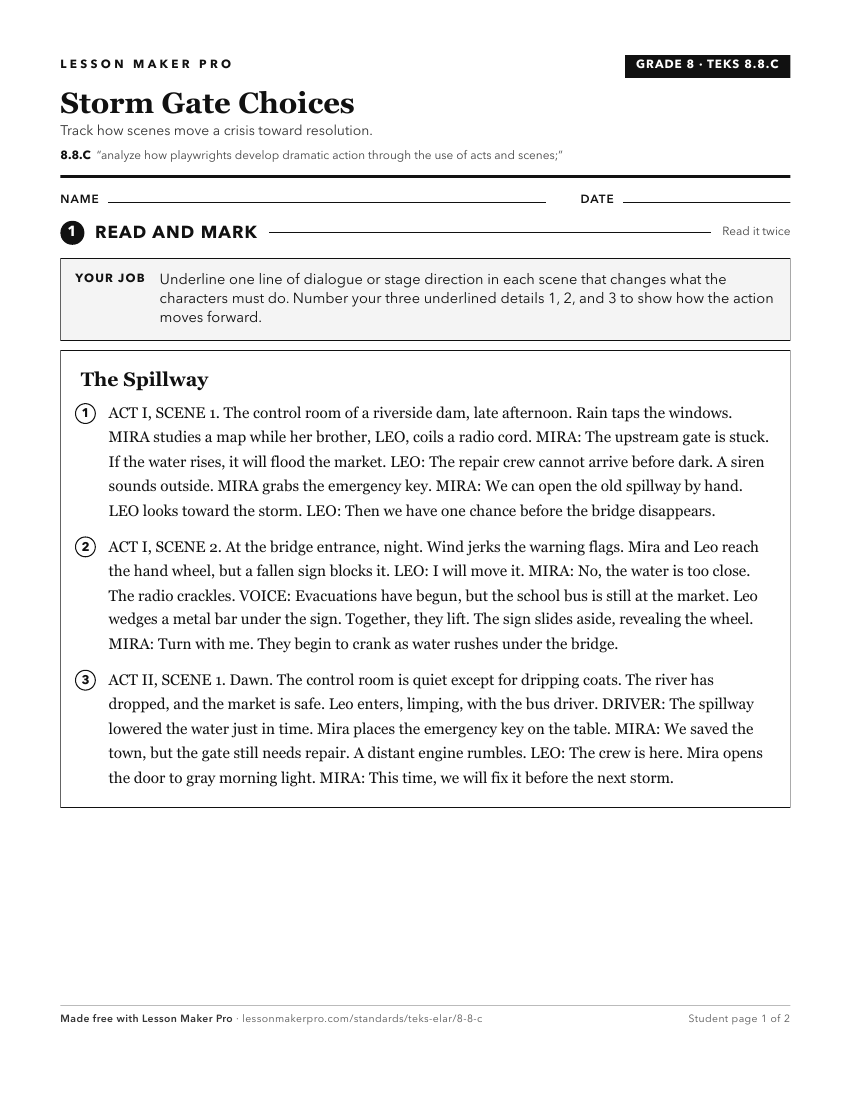
A ready-to-print activity worksheet aligned to 8.8.C, with an answer key for the teacher on its own page. No account needed.
PDF, US Letter, prints cleanly in black and white.
Download the worksheetKeep exploring
Related Standards
- 6.8.C
analyze how playwrights develop characters through dialogue and staging;
- 3.9.C
discuss elements of drama such as characters, dialogue, setting, and acts;
- 5.9.C
explain structure in drama such as character tags, acts, scenes, and stage directions;
- 7.8.C
analyze how playwrights develop characters through dialogue and staging
Turn this exact standard into a lesson
Grade, subject, topic, and the complete standard are prefilled. Create one free, no account needed.
Also for this standard:Make a WorksheetMake a QuizMake a Sub Lesson