TEKS ELAR 5.9.C
The Standard
explain structure in drama such as character tags, acts, scenes, and stage directions
Texas Essential Knowledge and Skills for English Language Arts and Reading
Teacher's field guide
What This Standard Means
What Students Need to Do
- Students identify the parts of a play script and explain how each part guides the reader or performer. They use layout clues to follow dialogue, action, setting changes, and shifts in time.
What Mastery Looks Like
- Students correctly identify who speaks, what performers do, and where major and minor divisions occur. They explain how the script’s layout guides reading, staging, and changes in place or time.
Common Misconceptions
- Students may read action notes aloud as dialogue or mistake a character label for part of the spoken line. They may also treat acts and scenes as interchangeable, missing how each marks a different level of division.
How to Assess It
- Give students a short script excerpt. Ask them to label four script features and explain how two of them help a reader or performer.
Lesson moves
Ways to Teach It
Give groups a cut-up script page to sort speaker labels, spoken lines, action notes, and scene headings, then rebuild and explain it.
Ask pairs, "How would the audience’s understanding change if the lighting note or scene break disappeared?" Require one detail from the script.
Run a script scavenger hunt where teams find an act heading, scene heading, speaker label, and action note in a printed play.
Compare one script page with its filmed scene, noting how performers and directors turn written cues into movement, sound, and setting.
Free download
Printable 5.9.C Worksheet
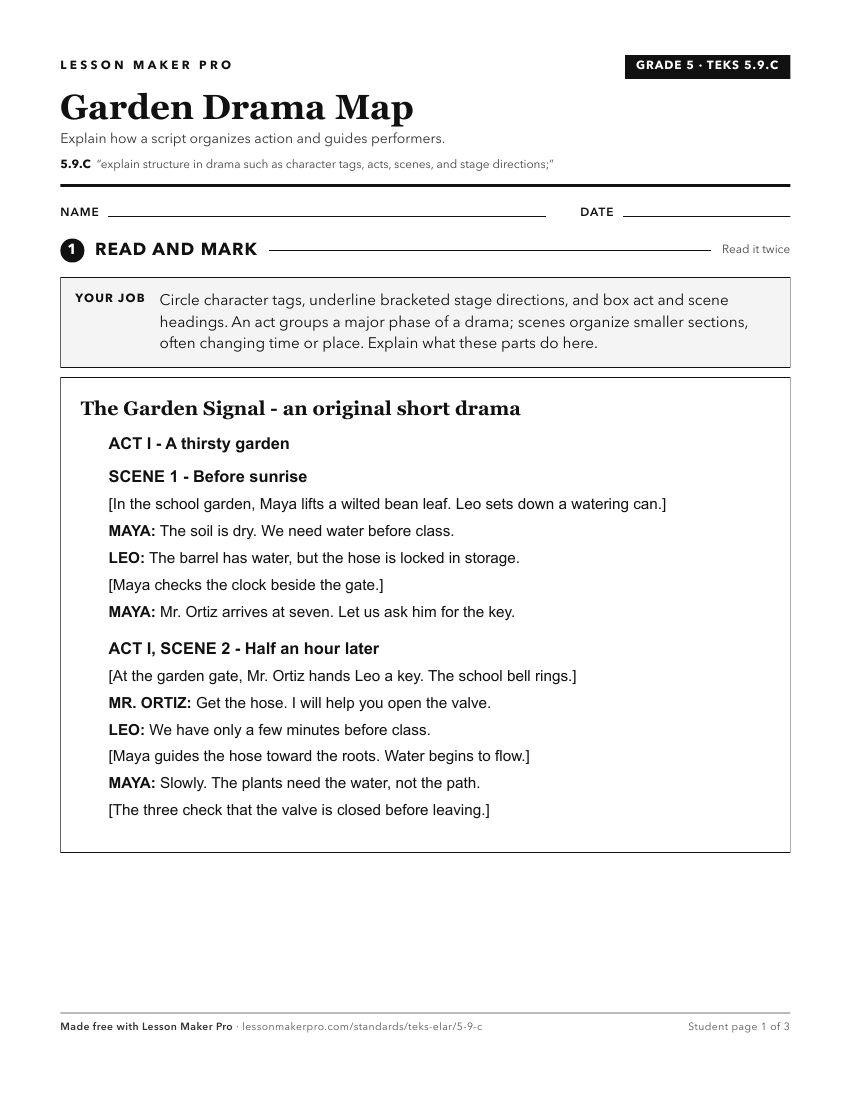
A ready-to-print activity worksheet aligned to 5.9.C, with an answer key for the teacher on its own page. No account needed.
PDF, US Letter, prints cleanly in black and white.
Download the worksheetKeep exploring
Related Standards
Turn this exact standard into a lesson
Grade, subject, topic, and the complete standard are prefilled. Create one free, no account needed.
Also for this standard:Make a WorksheetMake a QuizMake a Sub Lesson