TEKS ELAR K.1.B
The Standard
restate and follow oral directions that involve a short, related sequence of actions
Texas Essential Knowledge and Skills for English Language Arts and Reading
Teacher's field guide
What This Standard Means
What Students Need to Do
- Students listen to two or three connected actions and tell the steps back in order. They then complete each action in the order given.
What Mastery Looks Like
- A student can say the actions back in the correct order. The student then completes each action without a reminder or help from classmates.
Common Misconceptions
- Students may begin moving after hearing only the first action. They may reverse the order or leave out a step. Some copy classmates instead of recalling the words they heard.
How to Assess It
- Tell each child, “Pick up a red crayon, draw a circle, then place the crayon in the tray.” Ask the child to repeat the steps before acting.
Lesson moves
Ways to Teach It
Give pairs three picture cards showing a classroom routine, then have them arrange the cards, say the steps, and act them out.
Ask partners, “What did you do first and next?” after completing a two-step direction, then switch who explains.
Play Robot Director, where one child gives two connected commands and the robot repeats them before moving.
During cleanup, give linked directions such as putting markers in the cup and returning the cup to the shelf.
Free download
Printable K.1.B Worksheet
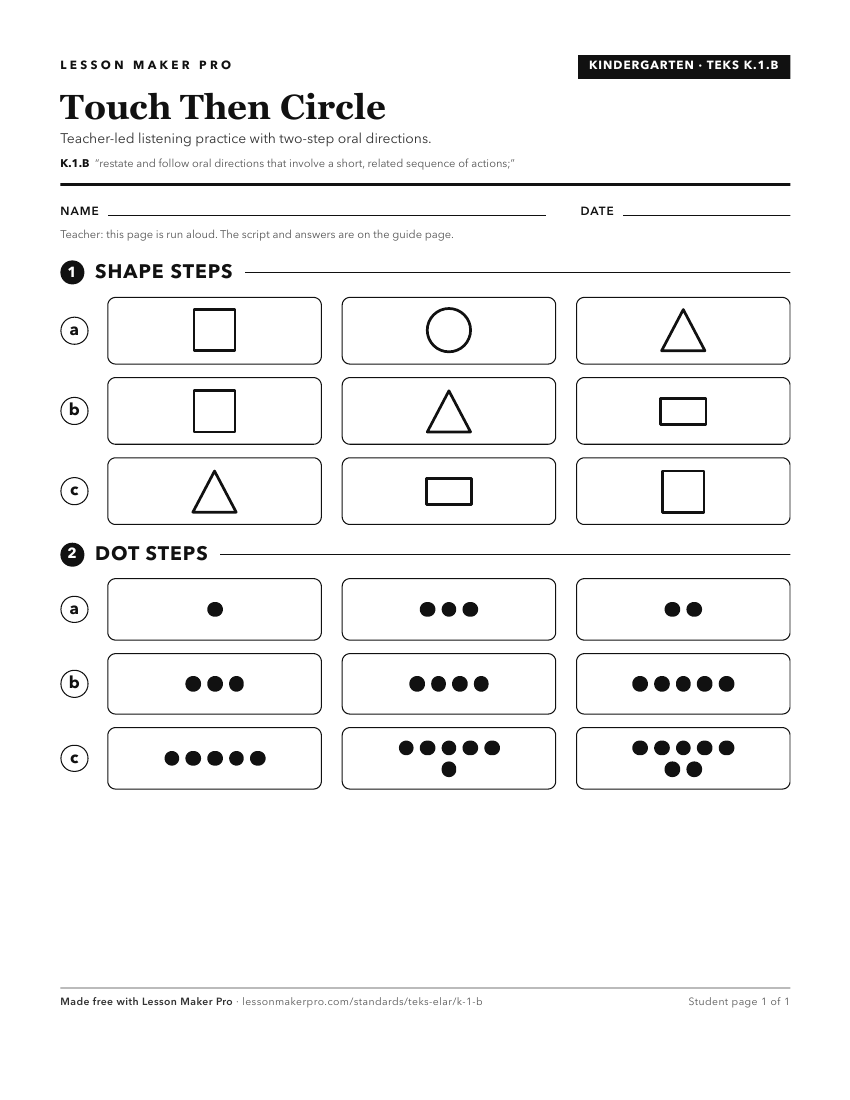
A ready-to-print activity worksheet aligned to K.1.B, with an answer key for the teacher on its own page. No account needed.
PDF, US Letter, prints cleanly in black and white.
Download the worksheetKeep exploring
Related Standards
- 4.1.B
follow, restate, and give oral instructions that involve a series of related sequences of action;
- 1.1.B
follow, restate, and give oral instructions that involve a short, related sequence of actions;
- 3.1.B
follow, restate, and give oral instructions that involve a series of related sequences of action;
- 2.1.B
follow, restate, and give oral instructions that involve a short, related sequence of actions;
Turn this exact standard into a lesson
Grade, subject, topic, and the complete standard are prefilled. Create one free, no account needed.
Also for this standard:Make a WorksheetMake a QuizMake a Sub Lesson