TEKS ELAR 2.1.B
The Standard
follow, restate, and give oral instructions that involve a short, related sequence of actions
Texas Essential Knowledge and Skills for English Language Arts and Reading
Teacher's field guide
What This Standard Means
What Students Need to Do
- Students listen to a short set of connected directions and complete each action in order. They repeat the directions in their own words and give clear steps to others.
What Mastery Looks Like
- A student completes three related steps in the correct order after hearing them once or twice. The student repeats the steps accurately and gives clear directions a partner can follow.
Common Misconceptions
- Students may remember the actions but complete them out of order. They may leave out a step when repeating directions or use vague words such as “do that.”
How to Assess It
- Give this oral direction: “Fold the paper, draw a star, then write your name.” Afterward, have each student restate the steps in order.
Lesson moves
Ways to Teach It
Give each student paper and crayons, then read three drawing steps aloud and compare the finished pictures.
Ask partners to explain how to pack a backpack, using first, next, and last.
Play Direction Relay, where students hear three actions, perform them in order, then tell the sequence to the next player.
Have students give a partner clear oral directions for checking out a library book or washing hands.
Free download
Printable 2.1.B Worksheet
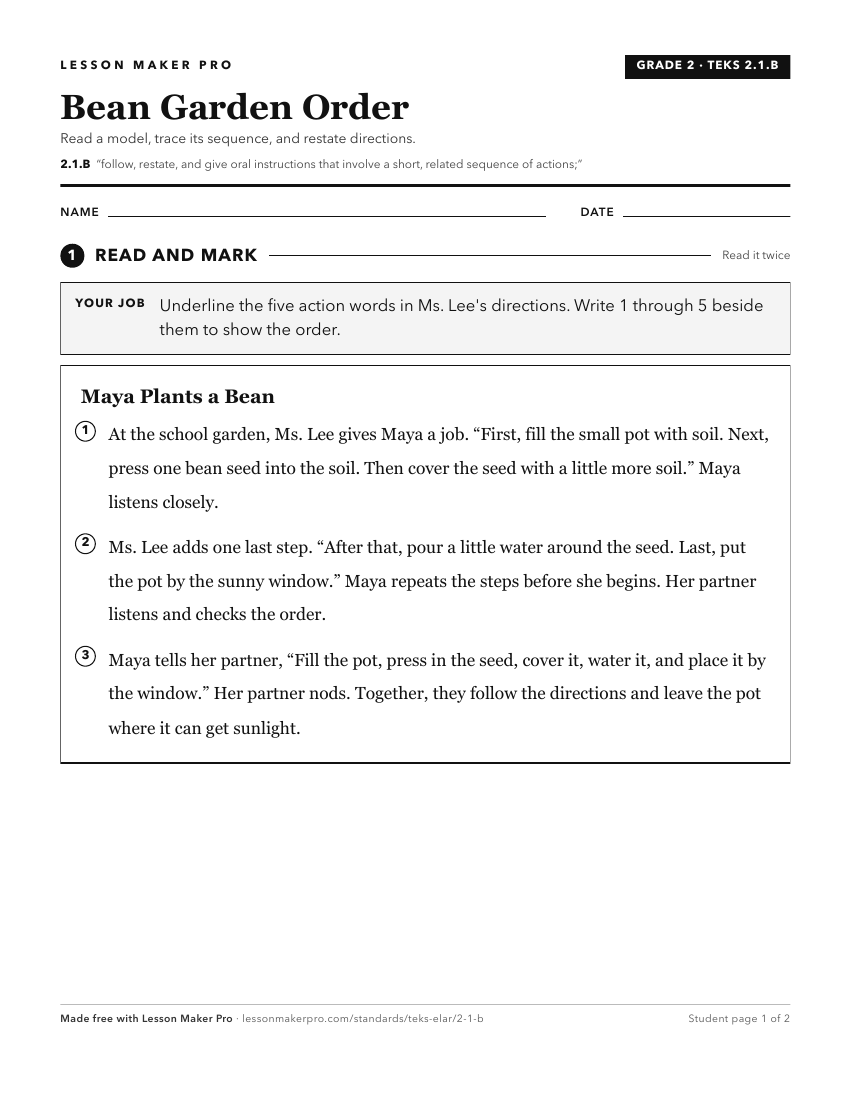
A ready-to-print activity worksheet aligned to 2.1.B, with an answer key for the teacher on its own page. No account needed.
PDF, US Letter, prints cleanly in black and white.
Download the worksheetKeep exploring
Related Standards
- 4.1.B
follow, restate, and give oral instructions that involve a series of related sequences of action;
- 1.1.B
The 1st Grade version of this standard.
- 3.1.B
follow, restate, and give oral instructions that involve a series of related sequences of action;
- K.1.B
restate and follow oral directions that involve a short, related sequence of actions;
Turn this exact standard into a lesson
Grade, subject, topic, and the complete standard are prefilled. Create one free, no account needed.
Also for this standard:Make a WorksheetMake a QuizMake a Sub Lesson