TEKS ELAR 8.12.H.i
The Standard
reliability, credibility, and bias, including omission
Texas Essential Knowledge and Skills for English Language Arts and Reading · The student engages in both short-term and sustained recursive inquiry processes for a variety of purposes.
Teacher's field guide
What This Standard Means
What Students Need to Do
- Students judge whether a source is dependable by checking the author, publisher, evidence, date, and links to other sources. They also notice loaded language, one-sided claims, and facts or viewpoints left out.
What Mastery Looks Like
- A student can compare two sources and explain which is more dependable using details about authorship, evidence, publication, and date. The student can point out slanted wording and identify relevant information or perspectives that are missing.
Common Misconceptions
- Students may assume the first search result, a professional-looking site, or a .org address is automatically trustworthy. They may think bias makes a source entirely false, or miss bias created by leaving out evidence and viewpoints.
How to Assess It
- Give students two short articles about the same school policy. Ask them to choose the more dependable source, cite two specific reasons, and name one missing viewpoint.
Lesson moves
Ways to Teach It
Give pairs two printed articles on one event and sticky notes to mark authors, evidence, dates, loaded words, and missing voices.
Ask students to write: Which source would you trust more, and what claim, wording, or missing viewpoint shaped your choice?
Play Source Detective with source cards, awarding points when teams support each credibility rating with two specific clues.
Have students fact-check a viral social media post by tracing its claim to an original report and noting what the post leaves out.
Free download
Printable 8.12.H.i Worksheet
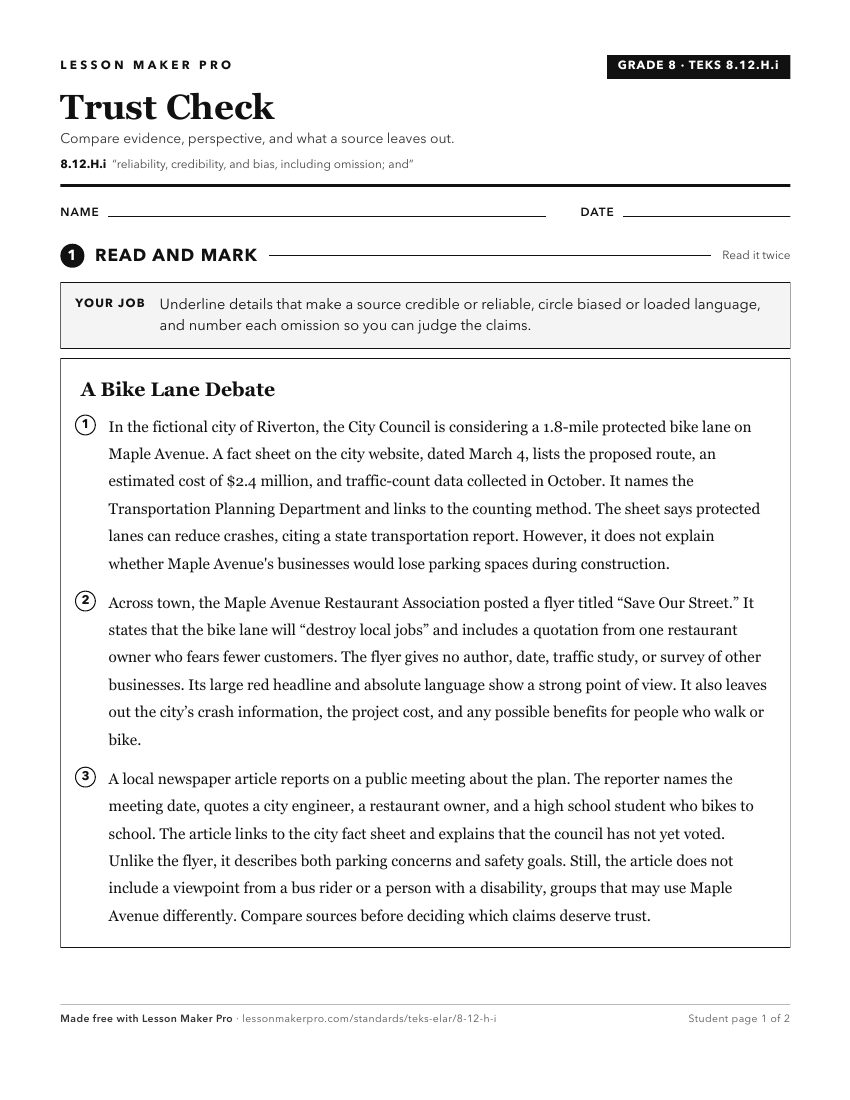
A ready-to-print activity worksheet aligned to 8.12.H.i, with an answer key for the teacher on its own page. No account needed.
PDF, US Letter, prints cleanly in black and white.
Download the worksheetKeep exploring
Related Standards
Turn this exact standard into a lesson
Grade, subject, topic, and the complete standard are prefilled. Create one free, no account needed.
Also for this standard:Make a WorksheetMake a QuizMake a Sub Lesson