TEKS ELAR 8.11.D
The Standard
compose correspondence that reflects an opinion, registers a complaint, or requests information in a business or friendly structure.
Texas Essential Knowledge and Skills for English Language Arts and Reading
Teacher's field guide
What This Standard Means
What Students Need to Do
- Students write letters or emails for a clear purpose and audience. They select a friendly or business format and use specific, respectful language to communicate their message.
What Mastery Looks Like
- A strong response uses the right format, clear details, and a tone suited to the reader. The student states the purpose early and ends with a specific, reasonable next step.
Common Misconceptions
- Students may use texting language in formal messages or leave out the subject line, greeting, and closing. Complaints may sound hostile, requests may be vague, and opinions may lack reasons.
How to Assess It
- Use this exit ticket: “The school store charged you twice. Write a six-sentence email that explains the problem and asks for a specific solution.”
Lesson moves
Ways to Teach It
Give pairs a cut-up business letter and have them arrange the subject, greeting, body, request, closing, and signature in order.
Compare two complaint emails, then discuss which one is more likely to get results and cite specific wording.
Draw purpose and audience cards, then write a suitable opening and closing before a partner checks tone and format.
Write an actual email to the school librarian requesting information about a book, service, or upcoming event.
Free download
Printable 8.11.D Worksheet
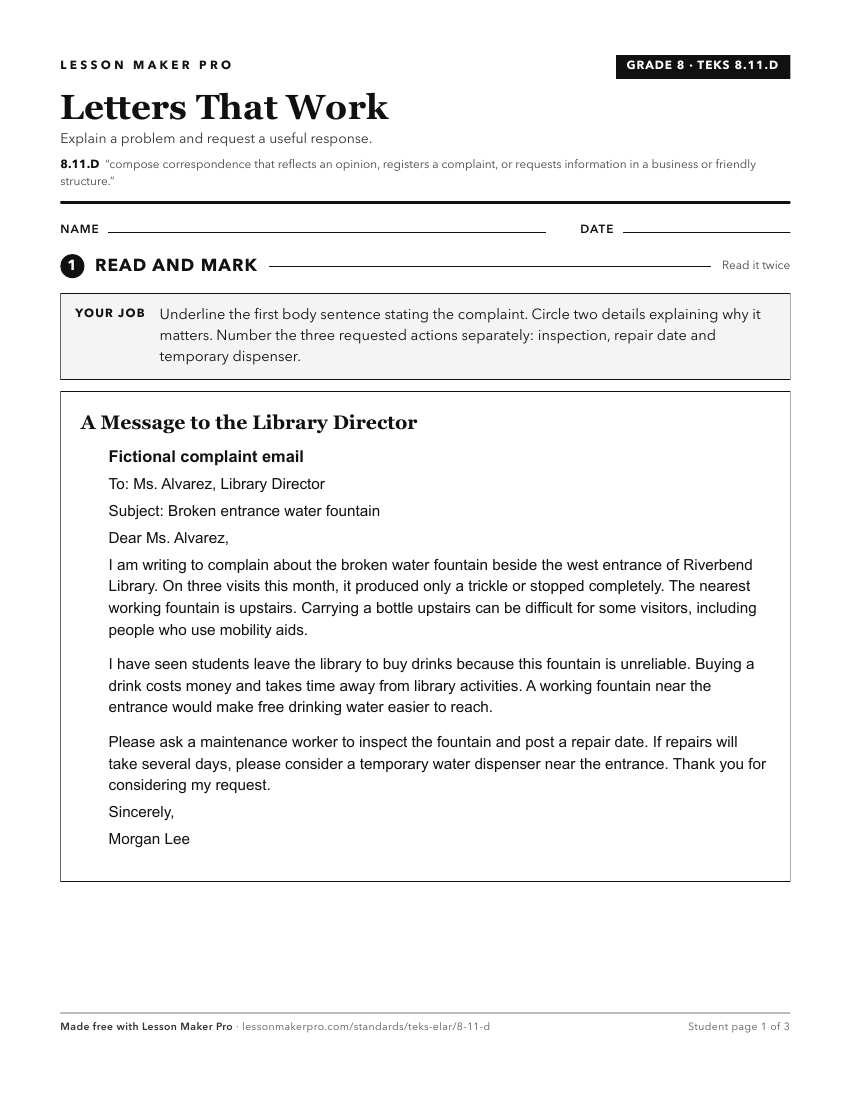
A ready-to-print activity worksheet aligned to 8.11.D, with an answer key for the teacher on its own page. No account needed.
PDF, US Letter, prints cleanly in black and white.
Download the worksheetKeep exploring
Related Standards
Turn this exact standard into a lesson
Grade, subject, topic, and the complete standard are prefilled. Create one free, no account needed.
Also for this standard:Make a WorksheetMake a QuizMake a Sub Lesson