TEKS ELAR 7.11.D
The Standard
compose correspondence that reflects an opinion, registers a complaint, or requests information in a business or friendly structure
Texas Essential Knowledge and Skills for English Language Arts and Reading · Composition: listening, speaking, reading, writing, and thinking using multiple texts
Teacher's field guide
What This Standard Means
What Students Need to Do
- Students write letters or emails for a clear purpose, such as sharing a view, reporting a problem, or seeking details. They match the format, tone, and wording to the audience.
What Mastery Looks Like
- The student chooses a friendly or business format that fits the audience. The message states its purpose, gives relevant details, uses a suitable tone, and ends with a clear next step.
Common Misconceptions
- Students may use slang or an angry tone with a business audience. They may state an issue or opinion without details, a clear request, or a closing.
How to Assess It
- Exit ticket: Write a short email to the school librarian asking whether a specific book is available. Include a subject line, greeting, clear question, and closing.
Lesson moves
Ways to Teach It
Give pairs printed messages to sort by friendly or business format, then have them label the clues that guided each choice.
Write two openings for the same complaint, one to a friend and one to a principal, then discuss how tone and wording change.
Play Purpose Match by pairing audience, purpose, tone, and format cards, then draft one matching message in five minutes.
Draft an email to a local business asking about hours, prices, accessibility, or a product, using details from its website.
Free download
Printable 7.11.D Worksheet
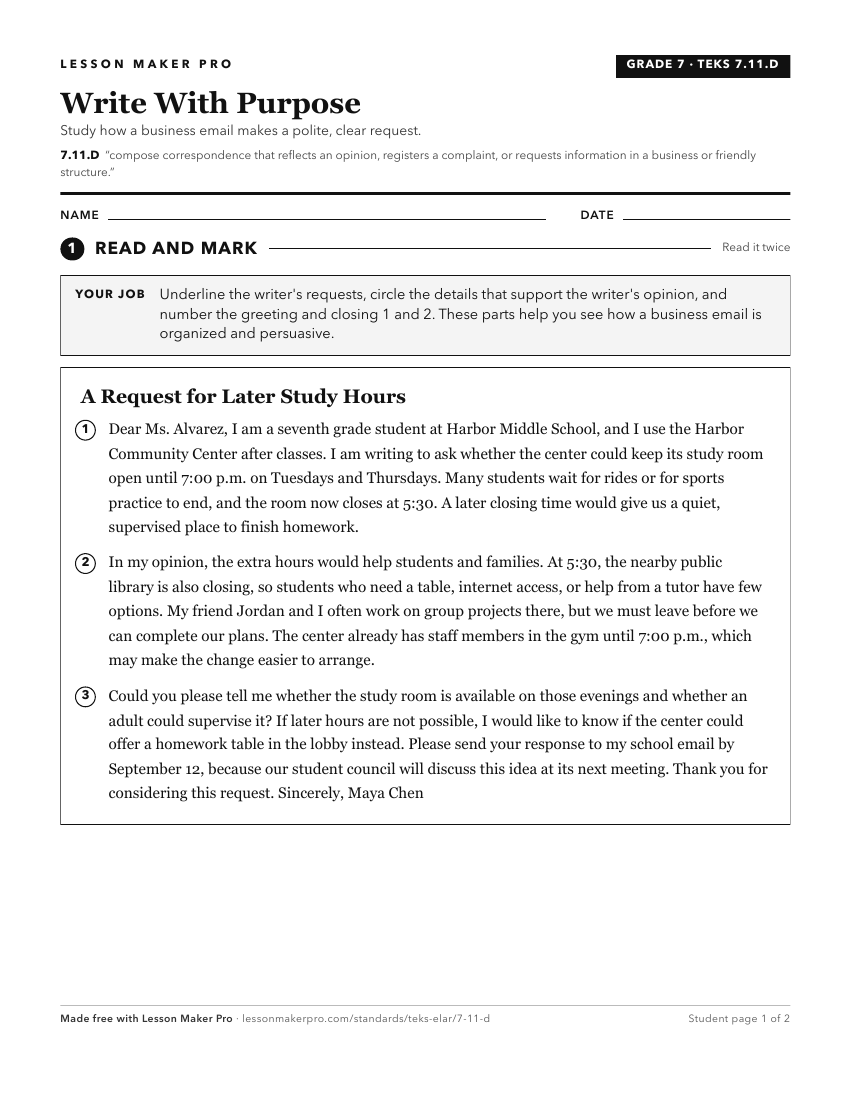
A ready-to-print activity worksheet aligned to 7.11.D, with an answer key for the teacher on its own page. No account needed.
PDF, US Letter, prints cleanly in black and white.
Download the worksheetKeep exploring
Related Standards
- 4.12.D
compose correspondence that requests information.
- 5.12.D
compose correspondence that requests information.
- 8.11.D
compose correspondence that reflects an opinion, registers a complaint, or requests information in a business or friendly structure.
- 6.11.D
compose correspondence that reflects an opinion, registers a complaint, or requests information in a business or friendly structure.
Turn this exact standard into a lesson
Grade, subject, topic, and the complete standard are prefilled. Create one free, no account needed.
Also for this standard:Make a WorksheetMake a QuizMake a Sub Lesson