TEKS ELAR 6.11.D
The Standard
compose correspondence that reflects an opinion, registers a complaint, or requests information in a business or friendly structure.
Texas Essential Knowledge and Skills for English Language Arts and Reading
Teacher's field guide
What This Standard Means
What Students Need to Do
- Students write letters or emails to share a viewpoint, explain a problem, or ask for details. They match the organization, tone, greeting, and closing to the audience and purpose.
What Mastery Looks Like
- Students choose a format and tone that fit the reader and purpose. Their message includes a clear opening, relevant details, a specific request or viewpoint, and an appropriate closing.
Common Misconceptions
- Students may use casual greetings, slang, or vague language in a formal message. They may state a problem or opinion without giving details or clearly asking for a response.
How to Assess It
- Give students a school lunch menu and ask them to write a brief email requesting one missing piece of information. Check the greeting, clear request, appropriate tone, and closing.
Lesson moves
Ways to Teach It
Have pairs sort printed message parts into a formal business letter and a friendly letter, then explain each placement.
Ask students to rewrite the same complaint for a principal and a close friend, then compare word choice and tone.
Play Tone Match by having teams pair audience cards with suitable greetings, sentences, and closings.
Students email the school librarian to request information about borrowing technology, using a clear subject line and specific questions.
Free download
Printable 6.11.D Worksheet
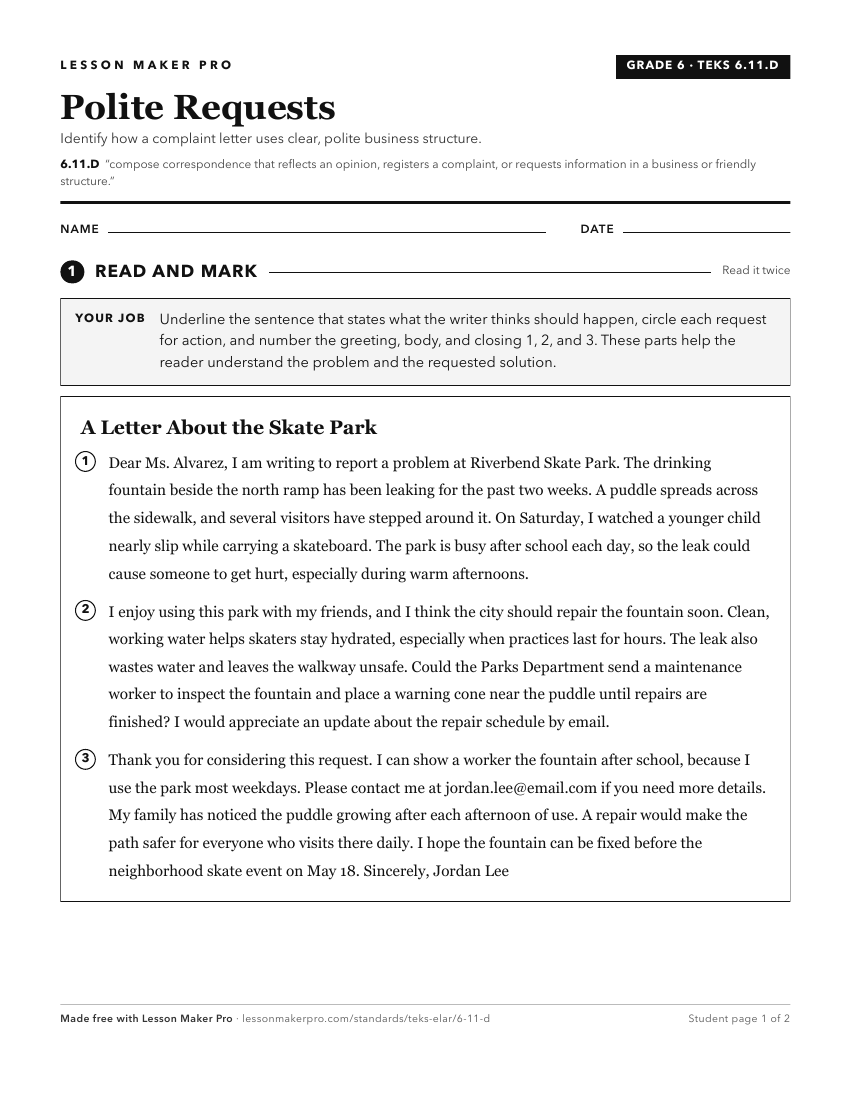
A ready-to-print activity worksheet aligned to 6.11.D, with an answer key for the teacher on its own page. No account needed.
PDF, US Letter, prints cleanly in black and white.
Download the worksheetKeep exploring
Related Standards
Turn this exact standard into a lesson
Grade, subject, topic, and the complete standard are prefilled. Create one free, no account needed.
Also for this standard:Make a WorksheetMake a QuizMake a Sub Lesson