TEKS ELAR 7.6.I
The Standard
reflect on and adjust responses as new evidence is presented
Texas Essential Knowledge and Skills for English Language Arts and Reading · Response skills: listening, speaking, reading, writing, and thinking using multiple texts
Teacher's field guide
What This Standard Means
What Students Need to Do
- Students revisit an initial claim or interpretation after encountering new details in a text, recording, or video. They explain how the new evidence affects their thinking and adjust their response when needed.
What Mastery Looks Like
- Students clearly state their first response, identify the new evidence, and revise their thinking when needed. They explain whether the evidence strengthened, weakened, or changed their original view.
Common Misconceptions
- Students may treat revising as correcting grammar rather than changing an idea. They may ignore conflicting evidence, reverse their view without explanation, or keep the same claim without addressing new details.
How to Assess It
- Give students an initial claim and two evidence cards revealed one at a time. Ask them to write a revised claim and explain how the second card affected it.
Lesson moves
Ways to Teach It
Give groups claim cards and evidence strips in two envelopes; after opening each envelope, students place and revise claims on chart paper.
Ask, "What did you think first, what new evidence appeared, and exactly how should your response change?"
Play Evidence Pivot: teams read a claim, draw a new evidence card, then earn points for a justified revision.
Compare an early news report with a later update, then have students write how the added facts change their conclusion.
Free download
Printable 7.6.I Worksheet
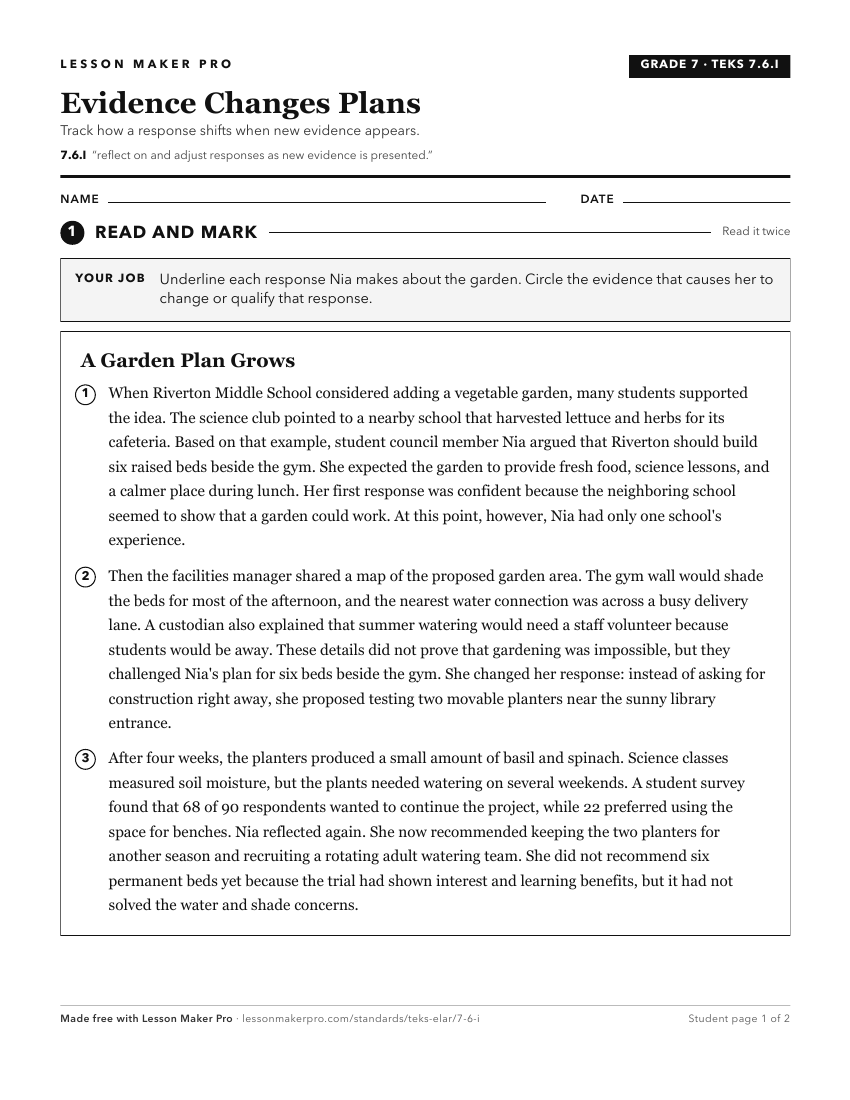
A ready-to-print activity worksheet aligned to 7.6.I, with an answer key for the teacher on its own page. No account needed.
PDF, US Letter, prints cleanly in black and white.
Download the worksheetKeep exploring
Related Standards
Turn this exact standard into a lesson
Grade, subject, topic, and the complete standard are prefilled. Create one free, no account needed.
Also for this standard:Make a WorksheetMake a QuizMake a Sub Lesson