TEKS ELAR 6.6.I
The Standard
reflect on and adjust responses as new evidence is presented.
Texas Essential Knowledge and Skills for English Language Arts and Reading
Teacher's field guide
What This Standard Means
What Students Need to Do
- Students form an initial response to a text, recording, or video, then compare it with added details. They explain how the added information changed, strengthened, or confirmed their thinking.
What Mastery Looks Like
- Students state an initial claim and identify the detail that supports it. After receiving more information, they revise or keep the claim and explain their choice with specific evidence.
Common Misconceptions
- Students may summarize the source instead of explaining how their thinking changed. Some change their answer automatically, even when the added detail supports the original response. Others revise a claim but leave the reasoning unchanged.
How to Assess It
- Exit ticket: Present these details in order: “Maya’s bus arrived late” and “Her coach changed practice time without telling her.” Students revise or keep their first claim about why Maya missed practice, then explain why using both details.
Lesson moves
Ways to Teach It
Give pairs evidence cards one at a time, then have them move a claim card when each detail changes or strengthens their thinking.
Ask students to write: “My first response was ___, but now I think ___ because the source adds ___.”
Play Evidence Update, where teams revise a written claim after each new sentence is revealed and earn points for clear reasoning.
Compare an early weather forecast with an updated forecast, then identify which new data caused the prediction to change.
Free download
Printable 6.6.I Worksheet
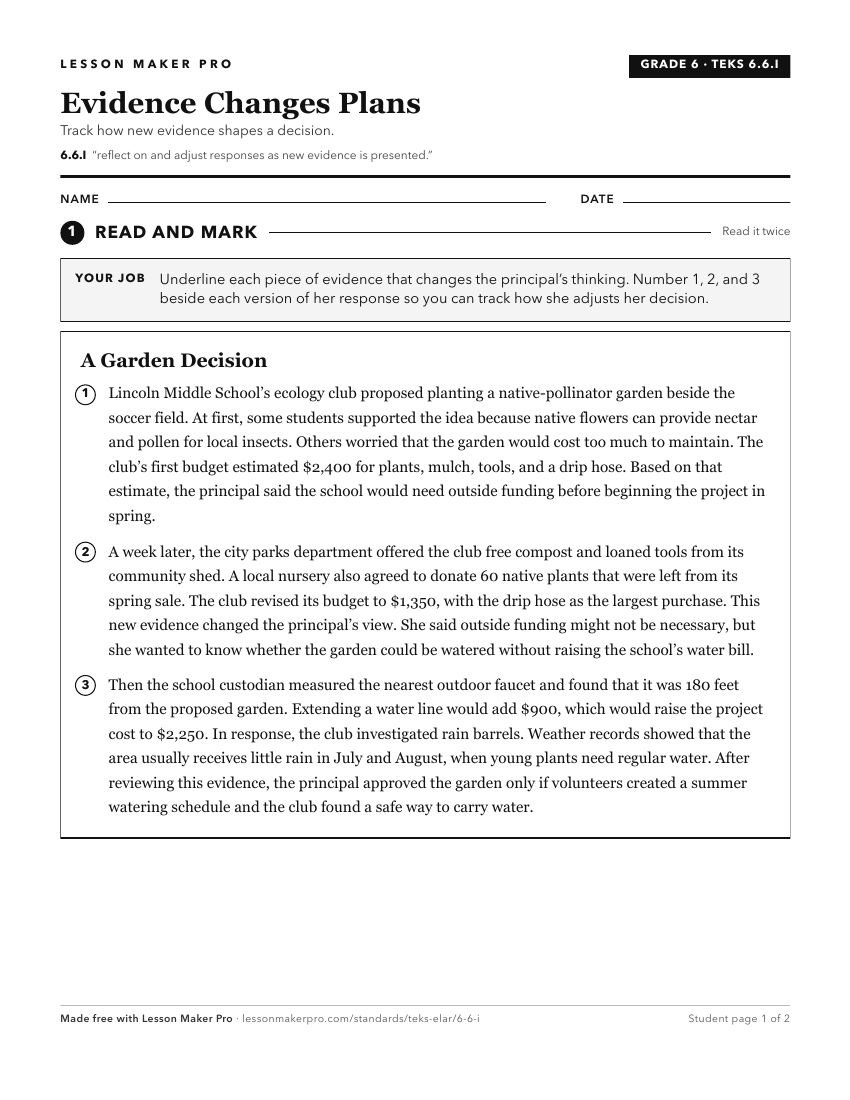
A ready-to-print activity worksheet aligned to 6.6.I, with an answer key for the teacher on its own page. No account needed.
PDF, US Letter, prints cleanly in black and white.
Download the worksheetKeep exploring
Related Standards
Turn this exact standard into a lesson
Grade, subject, topic, and the complete standard are prefilled. Create one free, no account needed.
Also for this standard:Make a WorksheetMake a QuizMake a Sub Lesson