TEKS ELAR 5.8.B
The Standard
analyze the relationships of and conflicts among the characters
Texas Essential Knowledge and Skills for English Language Arts and Reading
Teacher's field guide
What This Standard Means
What Students Need to Do
- Students identify how characters’ goals, feelings, words, and actions affect one another. They explain how disagreements develop and change the characters or events.
What Mastery Looks Like
- Students explain what each character wants and why their goals or actions clash. They use specific dialogue, actions, or thoughts to show how the relationship changes.
Common Misconceptions
- Students may name a conflict but not explain what caused it. They may describe characters separately instead of showing how their choices affect each other. Some confuse a character’s feelings with evidence from the text.
How to Assess It
- Give an exit ticket with this prompt: "Name one conflict between two characters. Explain how each character’s actions affect the other, using one text detail."
Lesson moves
Ways to Teach It
Give pairs character cards and yarn to connect related characters, then add sticky notes naming each influence, reaction, or conflict.
After reading a scene, write: "How does one character’s choice change another character’s actions? Use two details from the text."
Play Evidence Match by pairing character relationship claims with supporting dialogue or action cards, then explain each match.
Compare a story conflict with a school team disagreement by listing each person’s goal, action, and effect on the other person.
Free download
Printable 5.8.B Worksheet
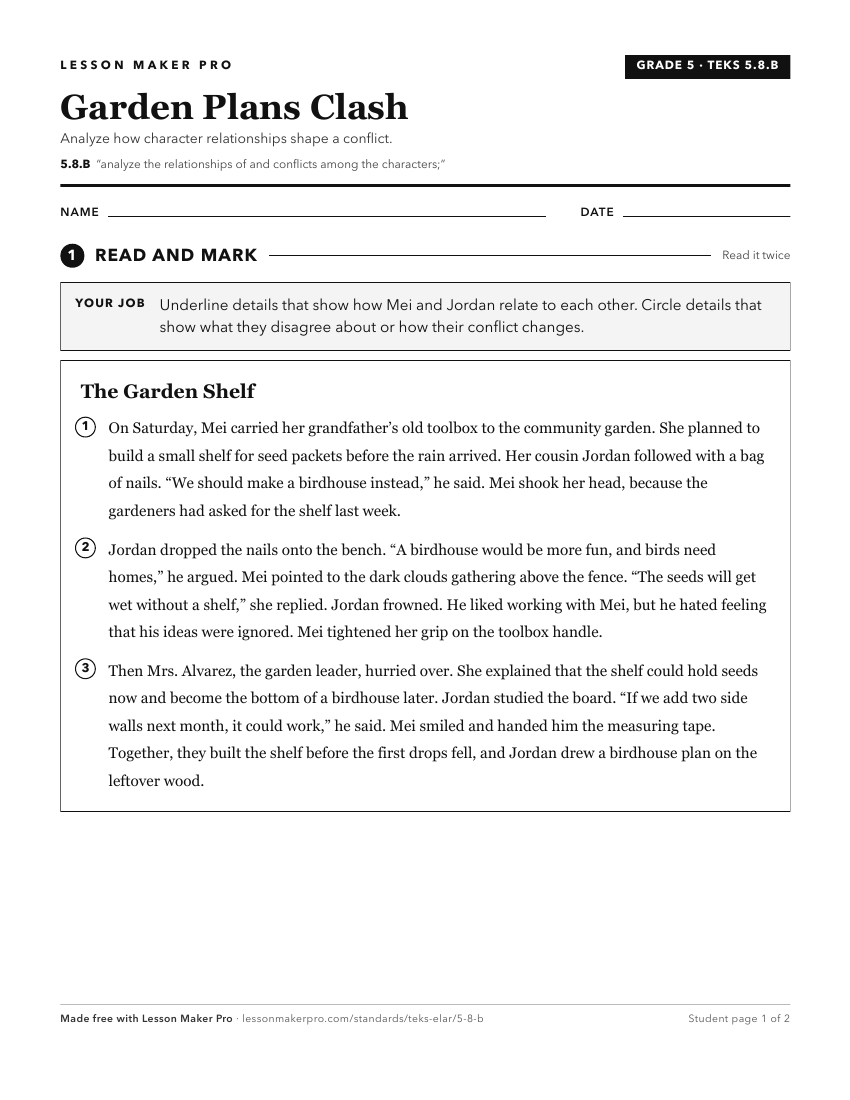
A ready-to-print activity worksheet aligned to 5.8.B, with an answer key for the teacher on its own page. No account needed.
PDF, US Letter, prints cleanly in black and white.
Download the worksheetKeep exploring
Related Standards
- 3.8.B
explain the relationships among the major and minor characters;
- 8.7.B
analyze how characters' motivations and behaviors influence events and resolution of the conflict;
- 7.7.B
analyze how characters' qualities influence events and resolution of the conflict
- 4.8.B
explain the interactions of the characters and the changes they undergo;
Turn this exact standard into a lesson
Grade, subject, topic, and the complete standard are prefilled. Create one free, no account needed.
Also for this standard:Make a WorksheetMake a QuizMake a Sub Lesson