TEKS ELAR 3.8.B
The Standard
explain the relationships among the major and minor characters
Texas Essential Knowledge and Skills for English Language Arts and Reading
Teacher's field guide
What This Standard Means
What Students Need to Do
- Students identify which characters drive the story and which characters have smaller supporting roles. They explain how the characters’ actions, goals, and feelings affect one another.
What Mastery Looks Like
- Students correctly identify major and minor characters based on their roles in the plot. They explain how characters help, oppose, influence, or change one another using story details.
Common Misconceptions
- Students may label every named character as major or assume minor characters do not affect the story. They may describe each character separately without explaining how their actions, feelings, or goals connect.
How to Assess It
- Give students a short story and ask: “How does one minor character affect the main character?” Require one story detail in the response.
Lesson moves
Ways to Teach It
Give pairs character cards and yarn, then have them connect characters and label each link with helps, opposes, influences, or changes.
Ask students to write: “Which minor character affects the main character most, and what story detail proves it?”
Play Character Connection Match by pairing character names with cards describing how one character affects another.
Use a familiar team, club, or family example to compare central members with supporting people who influence decisions and outcomes.
Free download
Printable 3.8.B Worksheet
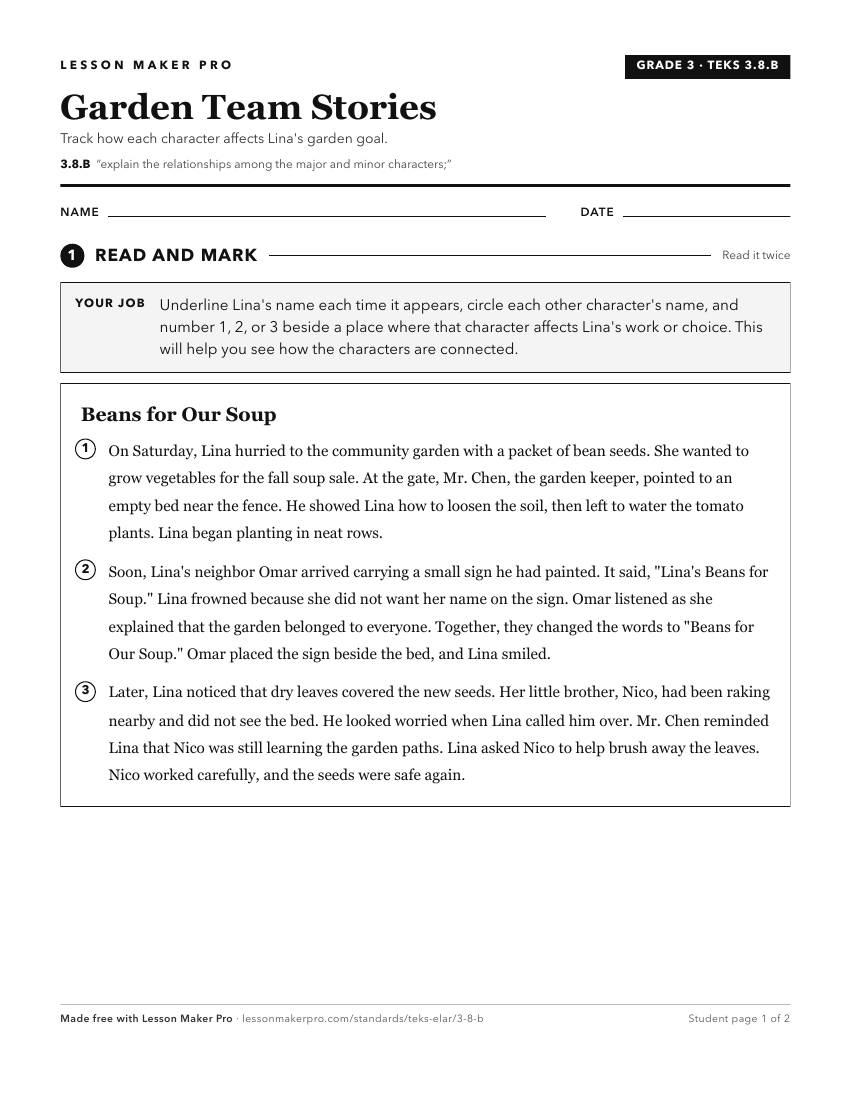
A ready-to-print activity worksheet aligned to 3.8.B, with an answer key for the teacher on its own page. No account needed.
PDF, US Letter, prints cleanly in black and white.
Download the worksheetKeep exploring
Related Standards
Turn this exact standard into a lesson
Grade, subject, topic, and the complete standard are prefilled. Create one free, no account needed.
Also for this standard:Make a WorksheetMake a QuizMake a Sub Lesson