TEKS ELAR 4.8.B
The Standard
explain the interactions of the characters and the changes they undergo
Texas Essential Knowledge and Skills for English Language Arts and Reading
Teacher's field guide
What This Standard Means
What Students Need to Do
- Students track what characters say and do to one another. They explain how these interactions affect a character’s choices, feelings, beliefs, or behavior across the story.
What Mastery Looks Like
- Students describe a character before and after an important interaction. They explain how the interaction caused or revealed the change and support the explanation with text evidence.
Common Misconceptions
- Students may summarize what characters say or do without explaining the effect on another character. They may confuse a brief mood with a lasting change. They may claim every character changes, even when the text shows no change.
How to Assess It
- Ask students to answer: “How does one character’s interaction with another cause a change? Name the change and give one text detail.”
Lesson moves
Ways to Teach It
Give groups character cards and yarn, then have them connect characters and attach labels showing how each interaction changes one character.
Ask students to write: “Which character has the strongest effect on the main character, and what specific change results?”
Play Character Change Match by pairing event cards with before-and-after trait cards, then requiring students to explain each match.
Use a team conflict scenario and ask students to explain how one person’s words could change another person’s choice or attitude.
Free download
Printable 4.8.B Worksheet
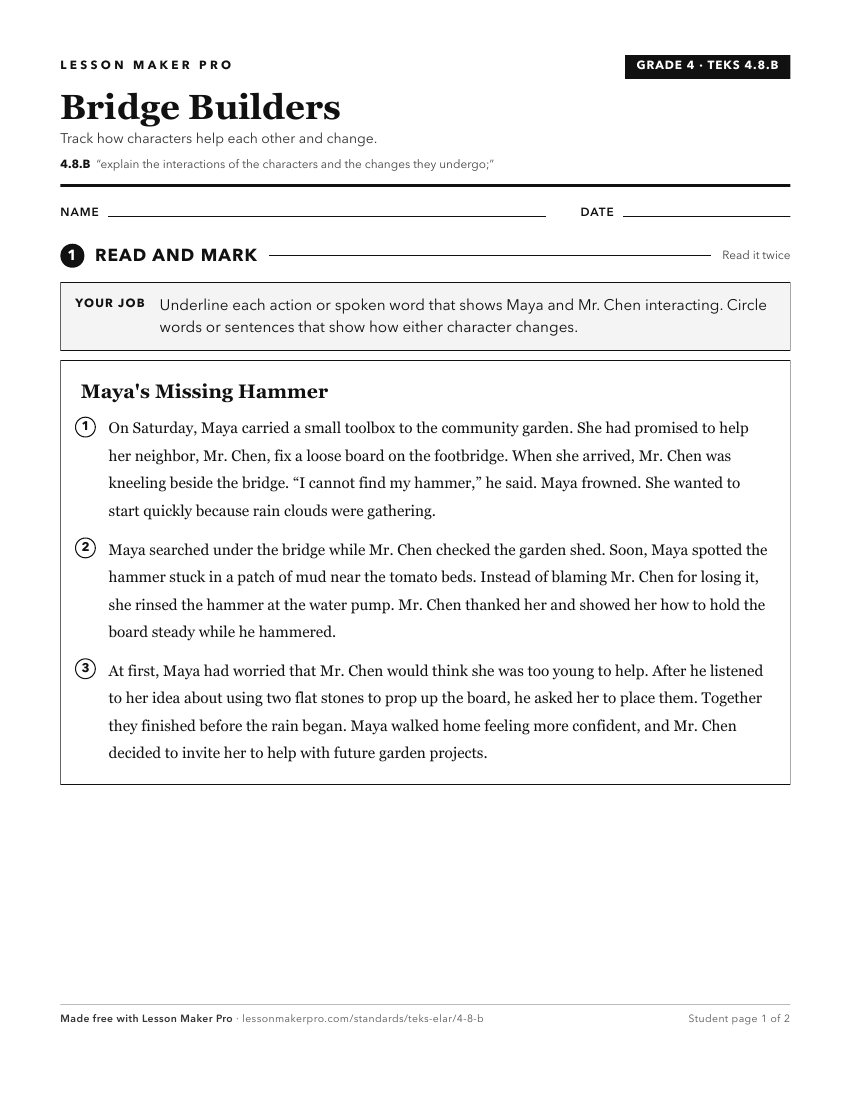
A ready-to-print activity worksheet aligned to 4.8.B, with an answer key for the teacher on its own page. No account needed.
PDF, US Letter, prints cleanly in black and white.
Download the worksheetKeep exploring
Related Standards
Turn this exact standard into a lesson
Grade, subject, topic, and the complete standard are prefilled. Create one free, no account needed.
Also for this standard:Make a WorksheetMake a QuizMake a Sub Lesson