TEKS ELAR 6.7.B
The Standard
analyze how the characters' internal and external responses develop the plot
Texas Essential Knowledge and Skills for English Language Arts and Reading
Teacher's field guide
What This Standard Means
What Students Need to Do
- Students identify what a character thinks or feels and what the character says or does after key events. They explain how those responses cause later events, deepen conflict, or lead toward a resolution.
What Mastery Looks Like
- Students point to a key event, name the character's thought or feeling, and identify the resulting action. They clearly explain how that action causes a later event or changes the conflict.
Common Misconceptions
- Students may confuse a character's feelings with the actions those feelings cause. They may summarize events without explaining cause and effect. They may also treat every character detail as equally important to the plot.
How to Assess It
- Give students a short scene and ask: What does the character feel, what does the character do, and what event happens because of that response?
Lesson moves
Ways to Teach It
Give groups event, feeling, action, and result cards from a familiar story, then have them build and explain a cause-and-effect chain.
Ask students to write: How would the plot change if the main character responded differently at one key moment?
Play Plot Dominoes by matching each character response card to the plot event it causes, then require students to justify each match.
Use a school conflict scenario, such as a missed deadline, and map how one person's thoughts and actions create later consequences.
Free download
Printable 6.7.B Worksheet
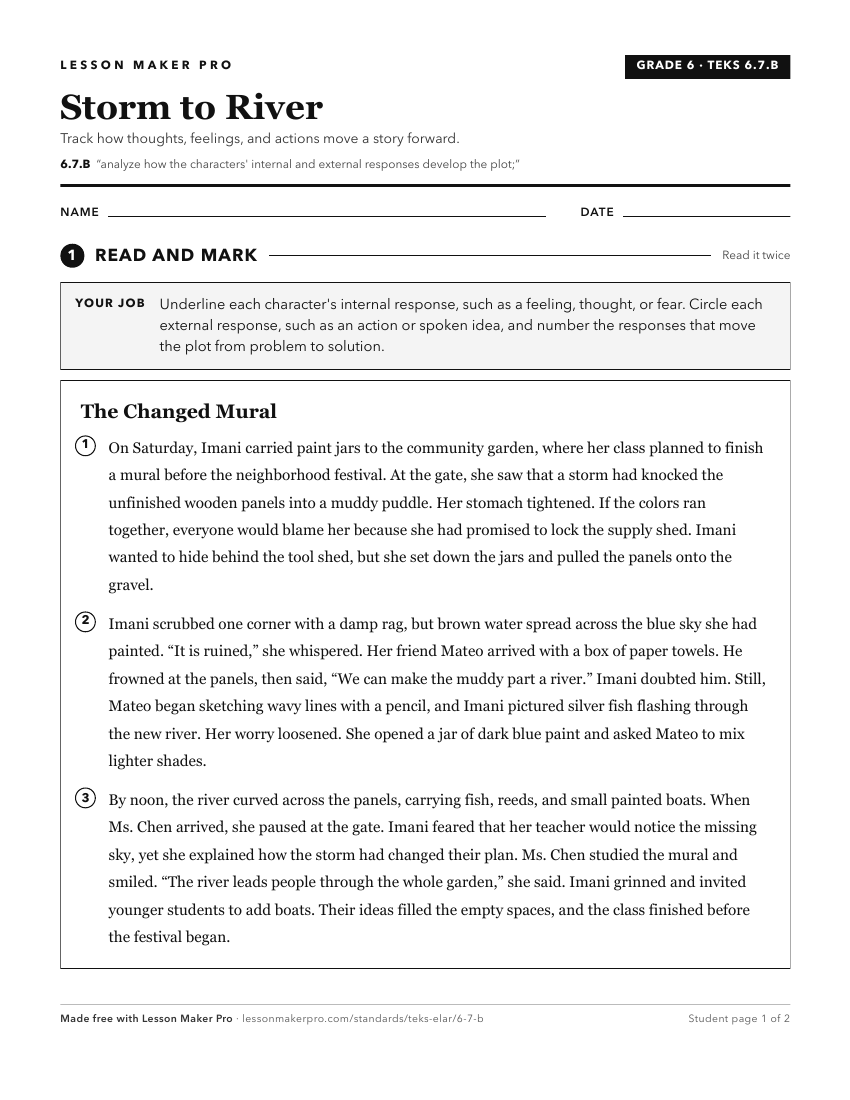
A ready-to-print activity worksheet aligned to 6.7.B, with an answer key for the teacher on its own page. No account needed.
PDF, US Letter, prints cleanly in black and white.
Download the worksheetKeep exploring
Related Standards
- 8.7.B
analyze how characters' motivations and behaviors influence events and resolution of the conflict;
- 7.7.D
analyze how the setting influences character and plot development
- 7.7.B
analyze how characters' qualities influence events and resolution of the conflict
- 8.7.A
analyze how themes are developed through the interaction of characters and events;
Turn this exact standard into a lesson
Grade, subject, topic, and the complete standard are prefilled. Create one free, no account needed.
Also for this standard:Make a WorksheetMake a QuizMake a Sub Lesson