TEKS ELAR 4.2.A.iv
The Standard
decoding words using knowledge of prefixes
Texas Essential Knowledge and Skills for English Language Arts and Reading · The student develops word structure knowledge through phonological awareness, print concepts, phonics, and morphology to communicate, decode, and spell.
Teacher's field guide
What This Standard Means
What Students Need to Do
- Students identify the prefix and base word in an unfamiliar word. They read each part, blend the parts, and check the pronunciation in the sentence.
What Mastery Looks Like
- A student can mark the prefix in words such as preview, misplace, and nonfiction, then read each word accurately. The student keeps the base word recognizable and checks the pronunciation in context.
Common Misconceptions
- Students may treat any opening letters as a prefix, splitting reach as re + ach. They may also omit or mispronounce the prefix while reading the base correctly.
How to Assess It
- Exit ticket: Students underline the prefix in preview, misread, and unsafe, then read each word aloud and name its base word.
Lesson moves
Ways to Teach It
Give students prefix and base-word cards, such as un + kind and re + play, to combine, divide, and read aloud.
Write, “How did the prefix help you read misbehave?” Students mark the word parts and explain their steps to a partner.
Play Prefix Match, where students pair prefix cards with base words and keep each pair after reading the completed word accurately.
Collect prefixed words from signs, menus, or app screens, then create a class list with marked prefixes and practiced pronunciations.
Free download
Printable 4.2.A.iv Worksheet
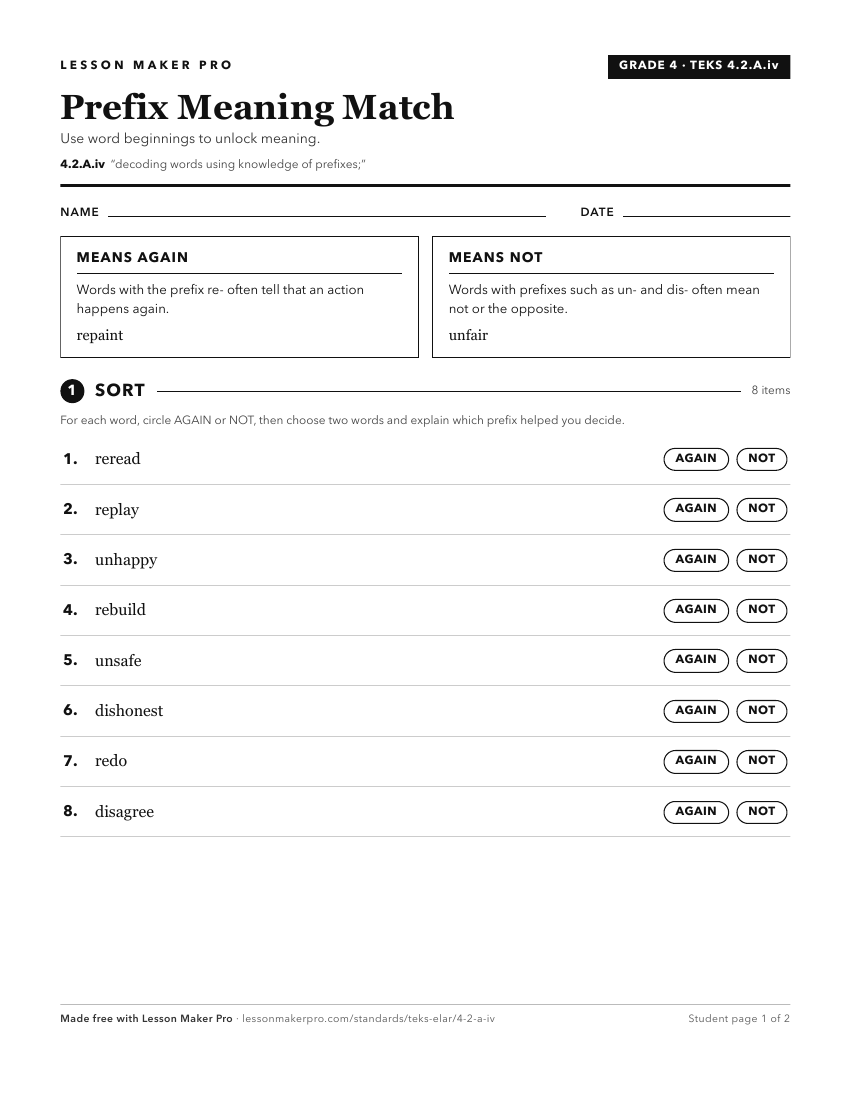
A ready-to-print activity worksheet aligned to 4.2.A.iv, with an answer key for the teacher on its own page. No account needed.
PDF, US Letter, prints cleanly in black and white.
Download the worksheetKeep exploring
Related Standards
Turn this exact standard into a lesson
Grade, subject, topic, and the complete standard are prefilled. Create one free, no account needed.
Also for this standard:Make a WorksheetMake a QuizMake a Sub Lesson