TEKS ELAR 5.2.A.iv
The Standard
decoding words using advanced knowledge of the influence of prefixes and suffixes on base words
Texas Essential Knowledge and Skills for English Language Arts and Reading · The student develops word structure knowledge through phonological awareness, print concepts, phonics, and morphology to communicate, decode, and spell.
Teacher's field guide
What This Standard Means
What Students Need to Do
- Students break unfamiliar words into a base word, prefix, and suffix. They use those parts, including any spelling or sound changes, to pronounce the complete word.
What Mastery Looks Like
- Students locate the base word and recognize attached prefixes and suffixes. They blend the parts smoothly, adjust for spelling or sound changes, and read the whole word accurately.
Common Misconceptions
- Students may read the base word correctly but stumble when an affix changes its spelling or stress. They may split words in the wrong place or treat familiar affixes as part of the base.
How to Assess It
- Give students the words disagreement, washable, and incorrectly. Ask them to mark each base word and affix, then read each whole word aloud.
Lesson moves
Ways to Teach It
Give pairs base-word and affix cards to combine, mark, and read aloud, including words such as reusable, disagreement, and washable.
Ask students to explain how adding un, re, ful, or less changes a base word’s pronunciation, spelling, or meaning.
Play Affix Relay, where teams build a word from cards, underline the base, circle affixes, and read the word correctly.
Have students find five affixed words in menus, signs, or product labels, then divide each into meaningful word parts.
Free download
Printable 5.2.A.iv Worksheet
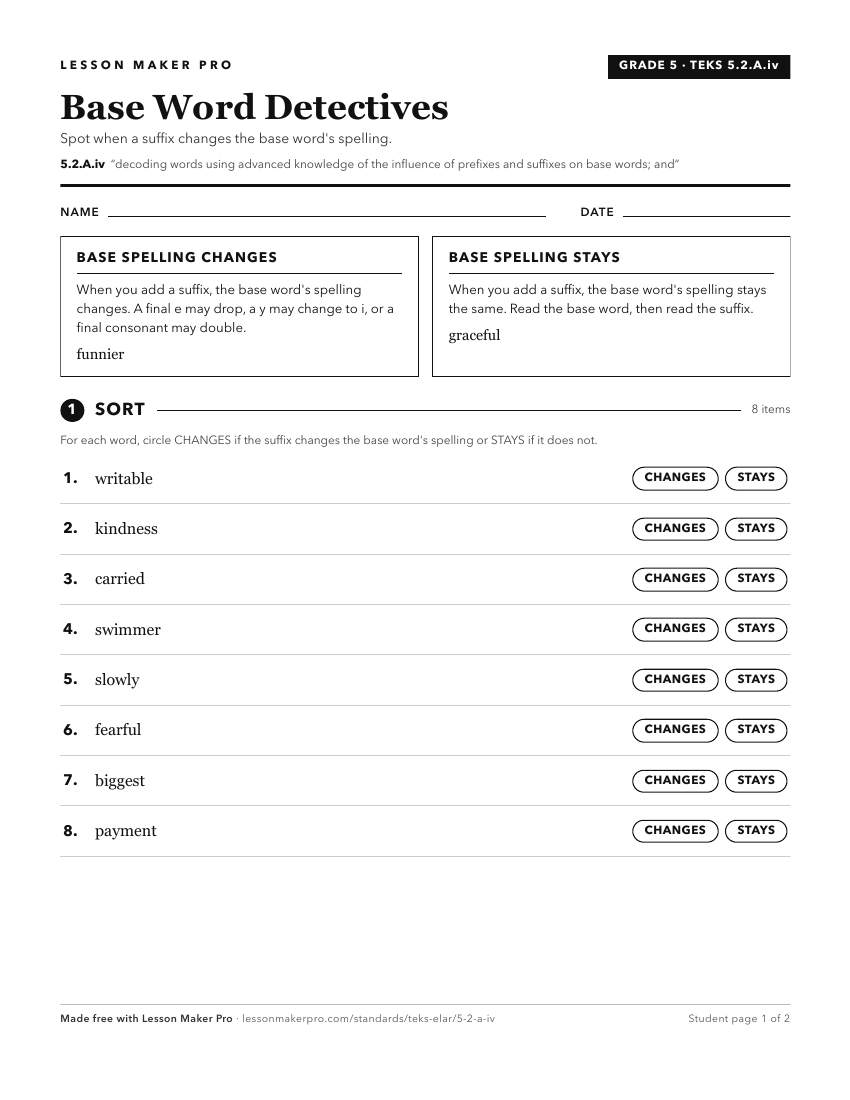
A ready-to-print activity worksheet aligned to 5.2.A.iv, with an answer key for the teacher on its own page. No account needed.
PDF, US Letter, prints cleanly in black and white.
Download the worksheetKeep exploring
Related Standards
- 4.2.A.v
decoding words using knowledge of suffixes, including how they can change base words such as dropping e, changing y to i, and doubling final consonants; and
- 4.2.A.iv
decoding words using knowledge of prefixes;
- 3.2.A.vi
decoding words using knowledge of suffixes, including how they can change base words such as dropping e, changing y to i, and doubling final consonants; and
- 3.2.A.v
decoding words using knowledge of prefixes;
Turn this exact standard into a lesson
Grade, subject, topic, and the complete standard are prefilled. Create one free, no account needed.
Also for this standard:Make a WorksheetMake a QuizMake a Sub Lesson