TEKS ELAR 4.10.G
The Standard
identify and explain the use of anecdote.
Texas Essential Knowledge and Skills for English Language Arts and Reading
Teacher's field guide
What This Standard Means
What Students Need to Do
- Students spot a brief story about a specific event within a larger text. They explain what the story helps the author show, such as a point, feeling, or lesson.
What Mastery Looks Like
- A student can mark the exact sentences that form an anecdote and name clues, including people, place, and a specific event. The student can connect that story to the author’s larger message using evidence.
Common Misconceptions
- Students may label any example, dialogue, or personal opinion as an anecdote. They may retell the story without explaining why the author included it, or assume every anecdote is fictional or funny.
How to Assess It
- Exit ticket: Read, “Recycling takes only a moment. Last Tuesday, I picked up one bottle at recess, and soon five classmates joined me.” Underline the anecdote and explain why the author included it.
Lesson moves
Ways to Teach It
Give groups paragraph strips with facts, opinions, and brief stories; students sort them, highlight the anecdotes, and label each author’s purpose.
Read an article opening aloud, then ask, “Why did the author use this small story rather than begin with a fact?”
Play Anecdote Detective: pairs circle brief event details in six passages and earn a point only when they explain each story’s purpose.
Students write a short speech asking for a class change, adding one true classroom story that supports their request.
Free download
Printable 4.10.G Worksheet
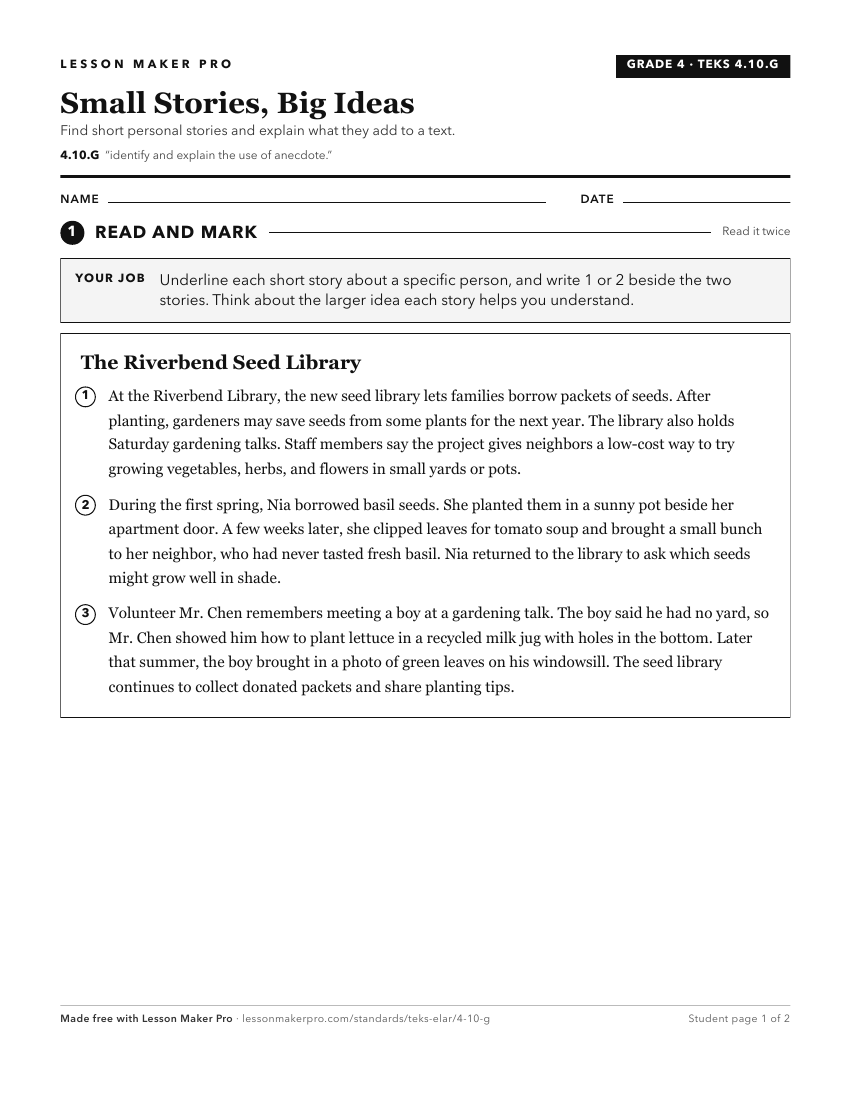
A ready-to-print activity worksheet aligned to 4.10.G, with an answer key for the teacher on its own page. No account needed.
PDF, US Letter, prints cleanly in black and white.
Download the worksheetKeep exploring
Related Standards
Turn this exact standard into a lesson
Grade, subject, topic, and the complete standard are prefilled. Create one free, no account needed.
Also for this standard:Make a WorksheetMake a QuizMake a Sub Lesson