TEKS ELAR 3.2.B.vii
The Standard
spelling words using knowledge of suffixes, including how they can change base words such as dropping e, changing y to i, and doubling final consonants
Texas Essential Knowledge and Skills for English Language Arts and Reading · The student develops word structure knowledge through phonological awareness, print concepts, phonics, and morphology to communicate, decode, and spell.
Teacher's field guide
What This Standard Means
What Students Need to Do
- Students add suffixes to base words and make the spelling change each new word requires. They decide when to drop e, change y to i, or double a final consonant.
What Mastery Looks Like
- A student correctly spells words such as hoping, carried, and running. The student can identify the base word and explain which spelling change was used.
Common Misconceptions
- Students may write hopeing, carryed, or runing because they simply attach the suffix. They may also overapply rules, producing plaied, jumpping, or makeing.
How to Assess It
- Give an exit ticket: Add ing to hope and run, then add ed to carry. Write each new word and name the spelling change.
Lesson moves
Ways to Teach It
Give pairs base-word and suffix cards, then have students build hoping, carried, and running with letter tiles, changing tiles as needed.
Ask students to explain why hoping, carried, and running are not spelled by simply joining each base word and suffix.
Play a sorting relay where teams place suffixed words under drop e, change y to i, double, or no change.
Have students edit a mock class newsletter, correcting hopeing, carryed, runing, played, and jumped before it is posted.
Free download
Printable 3.2.B.vii Worksheet
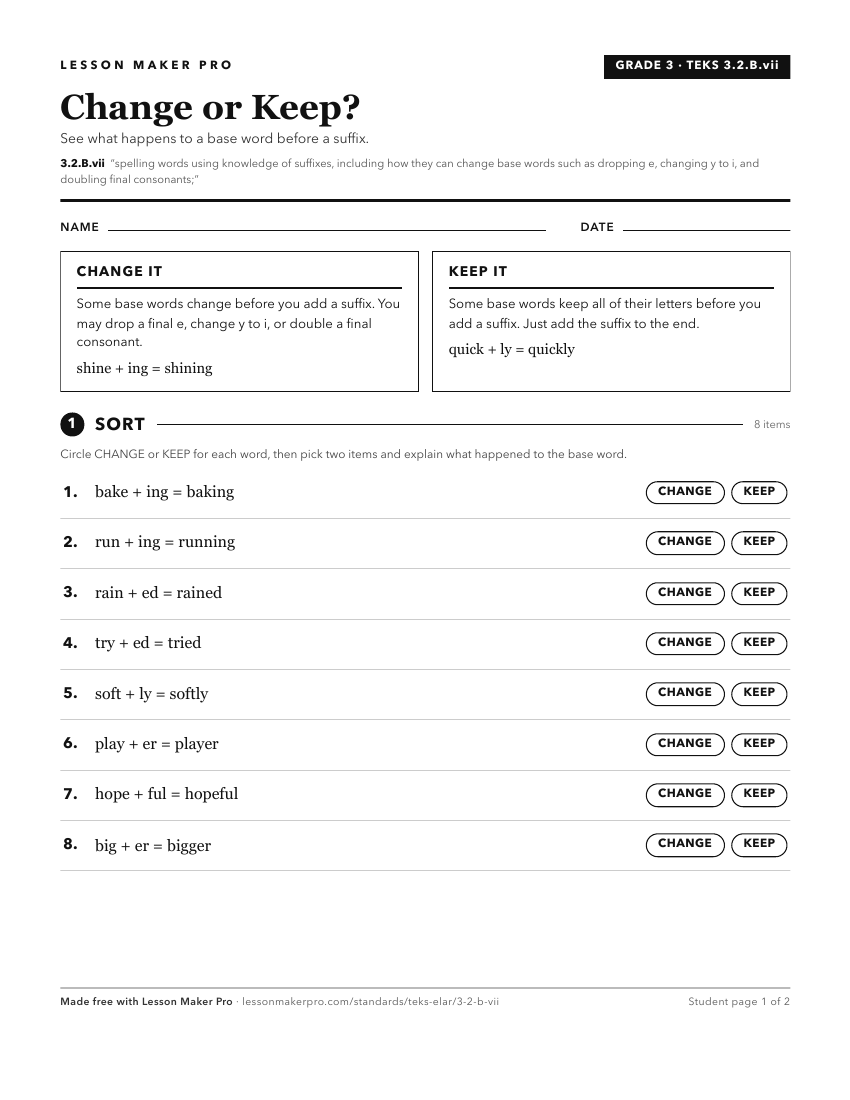
A ready-to-print activity worksheet aligned to 3.2.B.vii, with an answer key for the teacher on its own page. No account needed.
PDF, US Letter, prints cleanly in black and white.
Download the worksheetKeep exploring
Related Standards
- 4.2.B.vi
spelling words using knowledge of suffixes, including how they can change base words such as dropping e, changing y to i, and doubling final consonants; and
- 4.2.A.v
decoding words using knowledge of suffixes, including how they can change base words such as dropping e, changing y to i, and doubling final consonants; and
- 3.2.A.vi
decoding words using knowledge of suffixes, including how they can change base words such as dropping e, changing y to i, and doubling final consonants; and
- 5.2.B.vi
spelling words using knowledge of suffixes, including how they can change base words such as dropping e, changing y to i, and doubling final consonants; and
Turn this exact standard into a lesson
Grade, subject, topic, and the complete standard are prefilled. Create one free, no account needed.
Also for this standard:Make a WorksheetMake a QuizMake a Sub Lesson