TEKS ELAR 2.8.B
The Standard
describe the main character's characters' internal and external traits
Texas Essential Knowledge and Skills for English Language Arts and Reading
Teacher's field guide
What This Standard Means
What Students Need to Do
- Students identify the main character and explain what the character is like inside and outside. They use details from words and pictures to support each description.
What Mastery Looks Like
- A student can sort details such as brave, worried, tall, or wearing glasses into inner and outer qualities. The student supports each choice with words, actions, or pictures from the story.
Common Misconceptions
- Students often list only appearance details or retell actions without naming a quality. They may confuse a temporary feeling, such as sadness, with a lasting quality, such as kindness.
How to Assess It
- Exit ticket: Name the main character, one inner quality, and one outer feature. Give one story detail that supports each answer.
Lesson moves
Ways to Teach It
Give pairs character cards and evidence strips to sort under Inside and Outside, then match each quality to supporting evidence.
Ask, "Which detail shows who the character is on the inside?" Partners answer with a quality and one story detail.
Play Trait Detective: read a clue, then students hold up an Inside or Outside card and name the matching quality.
Have students sketch a familiar community helper, label two visible features, and infer one inner quality from the person's actions.
Free download
Printable 2.8.B Worksheet
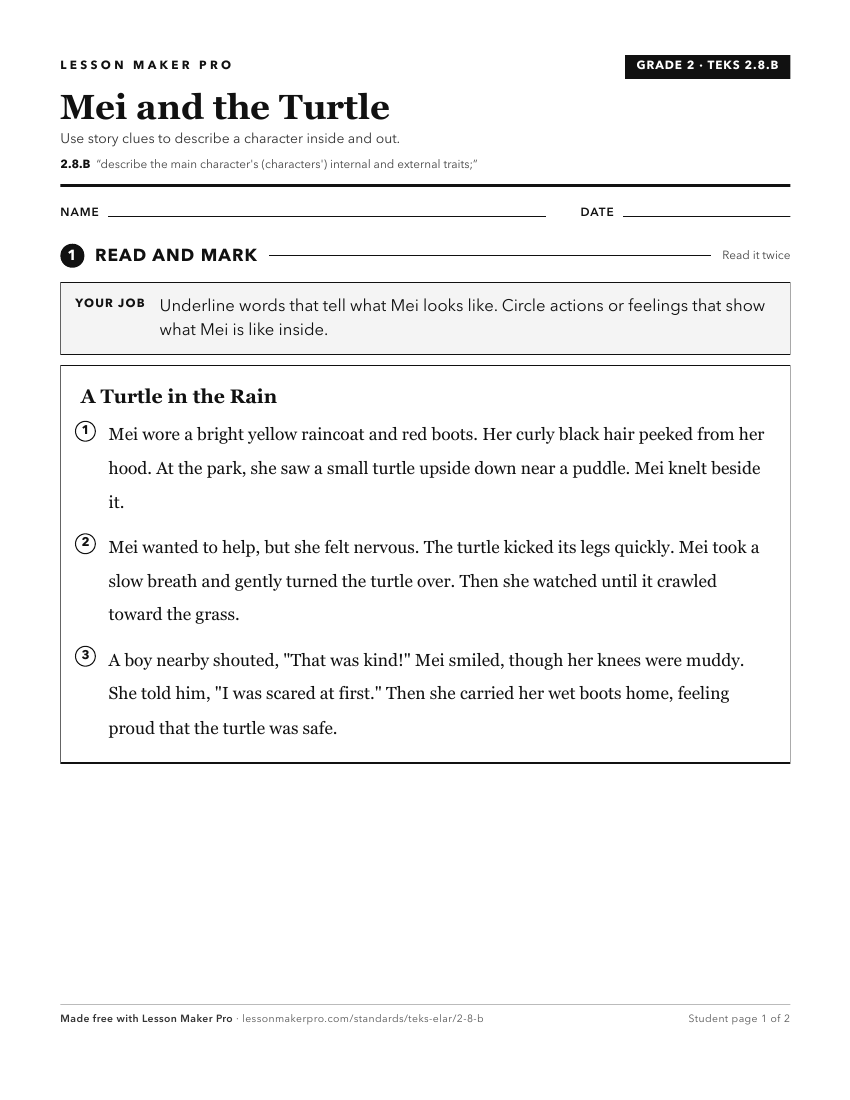
A ready-to-print activity worksheet aligned to 2.8.B, with an answer key for the teacher on its own page. No account needed.
PDF, US Letter, prints cleanly in black and white.
Download the worksheetKeep exploring
Related Standards
Turn this exact standard into a lesson
Grade, subject, topic, and the complete standard are prefilled. Create one free, no account needed.
Also for this standard:Make a WorksheetMake a QuizMake a Sub Lesson