TEKS ELAR 1.2.E
The Standard
alphabetize a series of words to the first or second letter and use a dictionary to find words
Texas Essential Knowledge and Skills for English Language Arts and Reading
Teacher's field guide
What This Standard Means
What Students Need to Do
- Students compare beginning letters to arrange words in order. When words start with the same letter, they compare the next letter. They also use alphabetical order and page clues to locate dictionary entries.
What Mastery Looks Like
- Given a short word list, students place every word in the correct order, including words that begin with the same letter. They can locate a named word in a beginning dictionary without searching every page.
Common Misconceptions
- Students may sort only by the first letter and guess when two words begin alike. They may confuse letter order or search a dictionary page by page instead of using the words at the top.
How to Assess It
- Give students ant, ball, bed, cat, and cup to put in order. Then have them find cup in a classroom dictionary and record its page number.
Lesson moves
Ways to Teach It
Give pairs letter cards and word cards, then have students build an alphabetical line, checking second letters when first letters match.
Ask, “Where would bike, boat, and bug go, and which letter helped you decide?” Students explain in a partner talk.
Play Dictionary Race: call a word, and pairs mark its entry with a sticky note, then read the word before and after it.
Sort a mock class contact list by last name, then find one student’s name as if using a phone directory.
Free download
Printable 1.2.E Worksheet
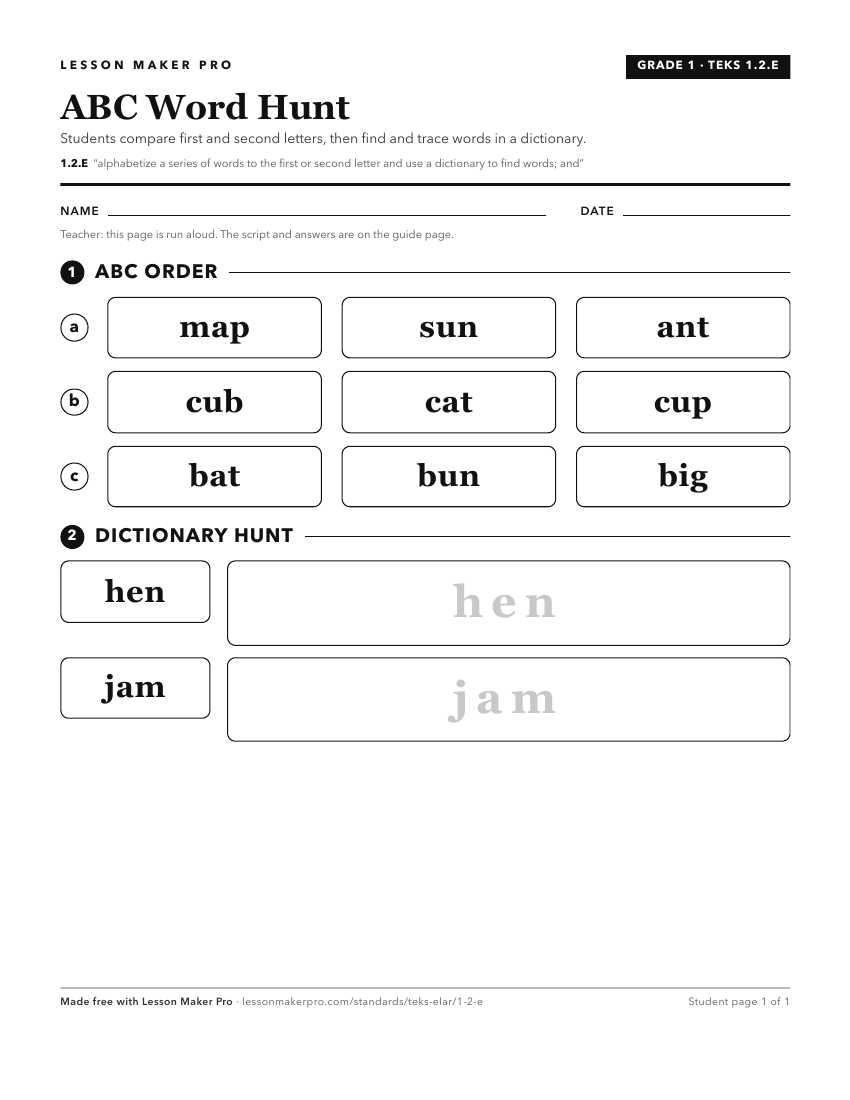
A ready-to-print activity worksheet aligned to 1.2.E, with an answer key for the teacher on its own page. No account needed.
PDF, US Letter, prints cleanly in black and white.
Download the worksheetKeep exploring
Related Standards
- 2.2.D
alphabetize a series of words and use a dictionary or glossary to find words; and
- 3.2.C
alphabetize a series of words to the third letter; and
- K.3.A
use a resource such as a picture dictionary or digital resource to find words;
- 1.3.A
use a resource such as a picture dictionary or digital resource to find words;
Turn this exact standard into a lesson
Grade, subject, topic, and the complete standard are prefilled. Create one free, no account needed.
Also for this standard:Make a WorksheetMake a QuizMake a Sub Lesson