TEKS ELAR 1.1.D
The Standard
work collaboratively with others by following agreed-upon rules for discussion, including listening to others, speaking when recognized, and making appropriate contributions
Texas Essential Knowledge and Skills for English Language Arts and Reading
Teacher's field guide
What This Standard Means
What Students Need to Do
- Students take part in partner, group, and class conversations using agreed rules. They listen, wait to be recognized, and share comments that fit the topic.
What Mastery Looks Like
- Students listen without interrupting and speak after being called on or given a turn signal. Their comments answer the question or connect clearly to another speaker's idea.
Common Misconceptions
- Students may think staying quiet means they are listening, even if they cannot respond to the speaker. They may interrupt, repeat an earlier idea, or add comments that do not fit the topic.
How to Assess It
- Show groups a picture of a busy playground and ask each student to share one observation. Check whether each student listens, waits for a turn, and adds a relevant idea.
Lesson moves
Ways to Teach It
Give each group a talking stick and picture cards, then have students take turns sharing one detail while others listen.
Ask, "How can you show a classmate that you are listening?" and record students' examples on a discussion rules chart.
Play Pass the Turn, where students pass a beanbag and add one relevant sentence to a shared story.
Hold a class meeting to choose a recess game, requiring each student to wait, state a choice, and give one reason.
Free download
Printable 1.1.D Worksheet
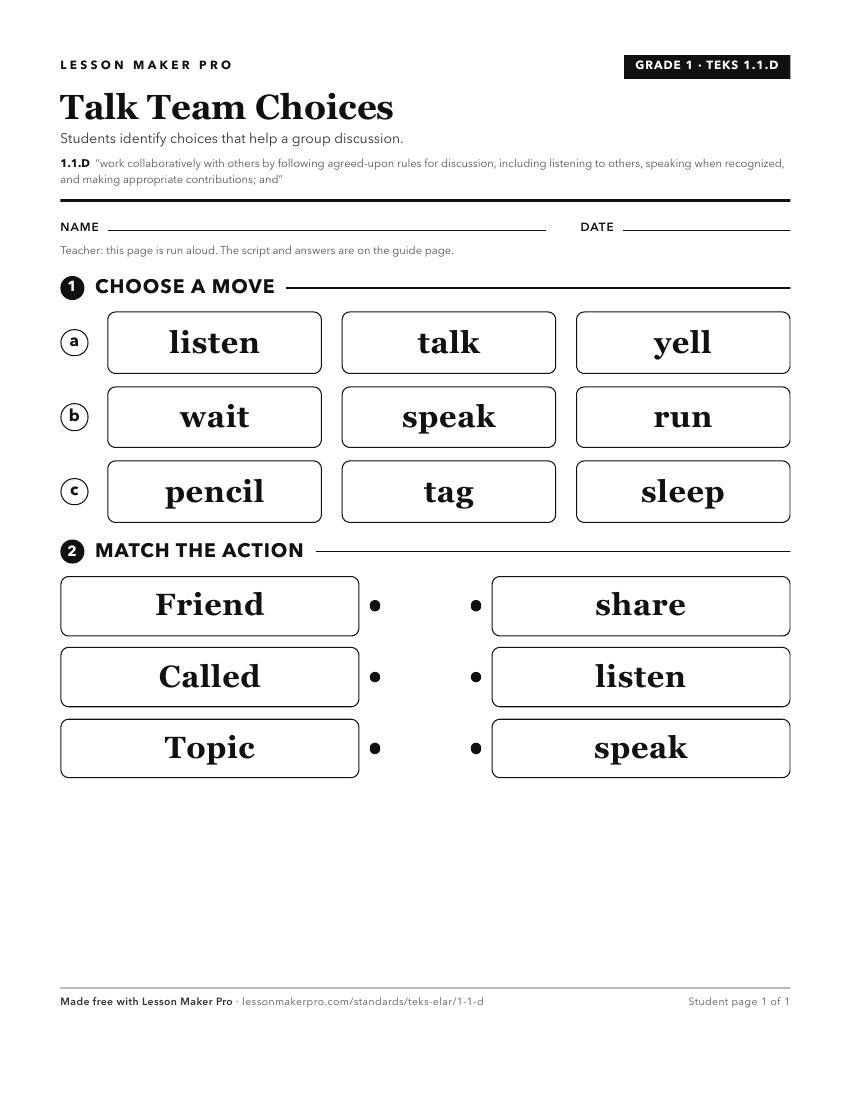
A ready-to-print activity worksheet aligned to 1.1.D, with an answer key for the teacher on its own page. No account needed.
PDF, US Letter, prints cleanly in black and white.
Download the worksheetKeep exploring
Related Standards
- K.1.D
work collaboratively with others by following agreed-upon rules for discussion, including taking turns; and
- 8.1.D
participate collaboratively in discussions, plan agendas with clear goals and deadlines, set time limits for speakers, take notes, and vote on key issues.
- 3.1.D
work collaboratively with others by following agreed-upon rules, norms, and protocols; and
- 2.1.D
work collaboratively with others by following agreed-upon rules for discussion, including listening to others, speaking when recognized, making appropriate cont...
Turn this exact standard into a lesson
Grade, subject, topic, and the complete standard are prefilled. Create one free, no account needed.
Also for this standard:Make a WorksheetMake a QuizMake a Sub Lesson