Oklahoma Social Studies USH.C.4.1.A
The Standard
- USH.C.4
- Analyze the cycles of economic boom and bust of the 1920s and 1930s on the transformation of the United States of America’s government and society.
- USH.C.4.1
- Examine the transformations between the World Wars.
Explain how the era reflected change, characterized by clashes between modern and traditional values, exemplified by the passage of the 18th and 21st Amendments, the Scopes Trial, issues of women’s rights, and the efforts of Carrie Chapman Catt and Alice Paul resulting in the ratification of the 19th Amendment.
Oklahoma Academic Standards for Social Studies (2026) · USH.C.4.1
Teacher's field guide
What This Standard Means
What Students Need to Do
- Students explain how fights over alcohol, evolution, and women's voting rights exposed competing views of morality, science, freedom, and gender roles. They use the amendment timeline and the tactics of Carrie Chapman Catt and Alice Paul to explain what changed.
What Mastery Looks Like
- A student can explain why Prohibition was adopted and later repealed. They can connect the Scopes Trial to a debate over teaching evolution and compare how Catt and Paul worked to win voting rights.
Common Misconceptions
- Students may reverse the roles of the 18th and 21st Amendments or think the Scopes Trial settled the evolution debate. They may treat Catt and Paul as using the same tactics, or assume the 19th Amendment removed every voting barrier for every woman.
How to Assess It
- Exit ticket: In four sentences, explain the competing views behind Prohibition and its repeal, the Scopes Trial, and women's suffrage. Name the relevant amendments and one tactic used by Catt or Paul.
Lesson moves
Ways to Teach It
Give groups printed excerpts from the 18th, 19th, and 21st Amendments and a Scopes headline; have them sort the evidence by competing values.
Ask, "How did Carrie Chapman Catt and Alice Paul differ in their tactics for winning the vote, and what did both challenge?"
Teams order cards for the 18th Amendment, 19th Amendment, Scopes Trial, and 21st Amendment, then explain one clash each card shows.
Post a proposed school phone ban; students name the values on each side, then compare that debate with Prohibition's repeal.
Free download
Printable USH.C.4.1.A Worksheet
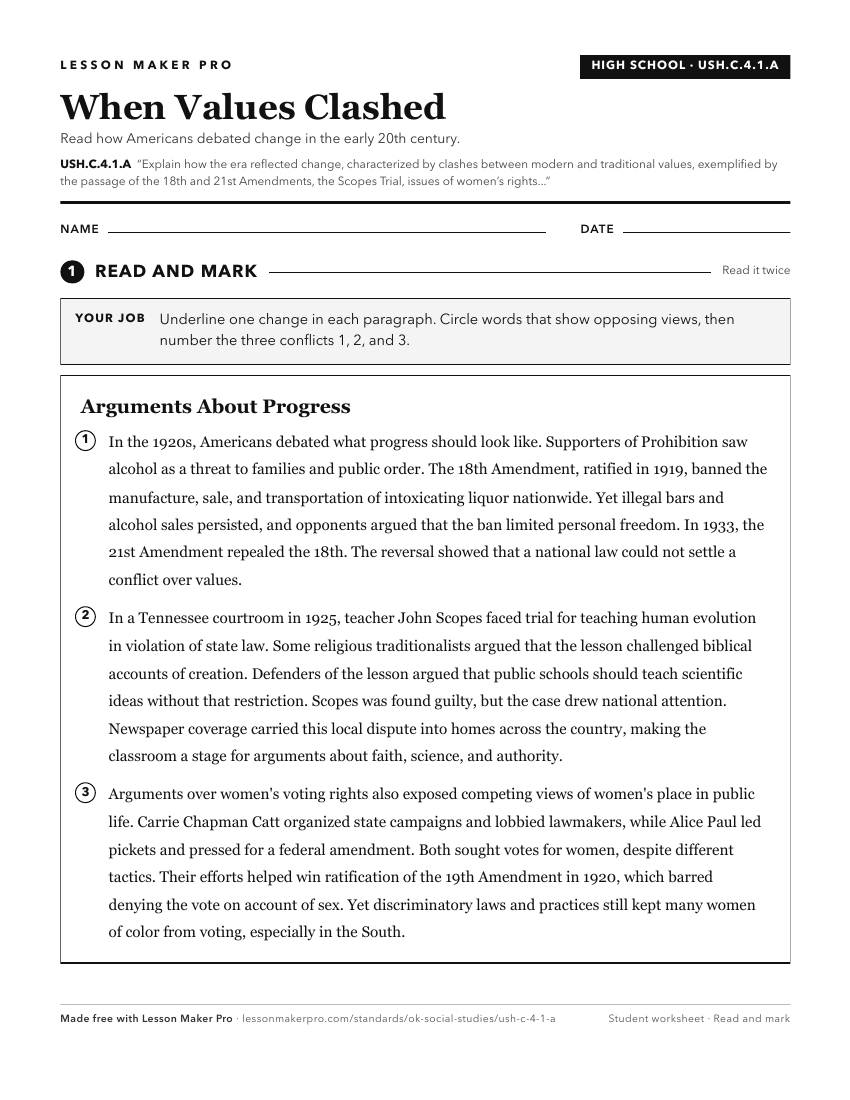
A ready-to-print activity worksheet aligned to USH.C.4.1.A, with an answer key for the teacher on its own page. No account needed.
PDF, US Letter, prints cleanly in black and white.
Download the worksheetKeep exploring
Related Standards
- USH.C.2.3.C
Trace the series of events leading to and the effects of the 16th and 17th Amendments to the Constitution of the United States of America.
- USH.C.2
Analyze the social, economic, and political changes that occurred during the American Industrial Revolution, the Gilded Age, and reform movements.
- 8.C.7
Examine the political, economic and social transformations during the “Era of Good Feelings.”
- USH.C.7.2.F
Examine perspectives on issues related to the debate over the Equal Rights Amendment and the Roe v. Wade decision.
Turn this exact standard into a lesson
Grade, subject, topic, and the complete standard are prefilled. Create one free, no account needed.
Also for this standard:Make a WorksheetMake a QuizMake a Sub Lesson