Oklahoma Social Studies USH.C.3.2.F
The Standard
- USH.C.3
- Analyze the expanding role of the United States of America in international affairs as the United States of America was transformed into a world power in the late 19th and early 20th centuries.
- USH.C.3.2
- Evaluate the long-term impact of the United States’ entry into World War I on national politics, the economy, and society.
Examine Wilson’s foreign policy as proposed in his Fourteen Points and reasons for the nation’s return to isolationism highlighted by the Senate’s rejection of the terms of the Treaty of Versailles and the proposed League of Nations.
Oklahoma Academic Standards for Social Studies (2026) · USH.C.3.2
Teacher's field guide
What This Standard Means
What Students Need to Do
- Students identify Wilson’s proposals for open diplomacy, national self-rule, and a League of Nations. They explain why some senators feared League obligations could pull the United States into another war. They describe the pullback from foreign commitments without claiming the country ended all foreign involvement.
What Mastery Looks Like
- Given short excerpts, a student can connect Wilson’s peace goals to the treaty debate and explain why Article X worried senators. They can explain how concerns about Congress’s war powers and failed compromise led the Senate to reject the treaty. They know the United States did not join the League.
Common Misconceptions
- Students may think every senator who opposed the treaty was against peace. Some confuse Wilson’s proposals with the final treaty, which included terms he had not proposed. Others assume the United States stopped all foreign trade and diplomacy after the vote.
How to Assess It
- Exit ticket: “Wilson proposed a League to help prevent war. Why did some senators reject the treaty, and what did their vote mean for U.S. membership?”
Lesson moves
Ways to Teach It
Give pairs printed excerpts from Wilson’s points, League Article X, and Lodge’s reservations; have them sort the cards into goals and objections.
Ask students to write: “Why might a senator support peace but reject League membership?” Require one detail from Article X.
Hold a mock Senate vote using support, reservation, and rejection cards; each student gives one reason for their vote.
Put excerpts from League Article X and NATO Article 5 side by side; have students underline each pledge and circle a difference.
Free download
Printable USH.C.3.2.F Worksheet
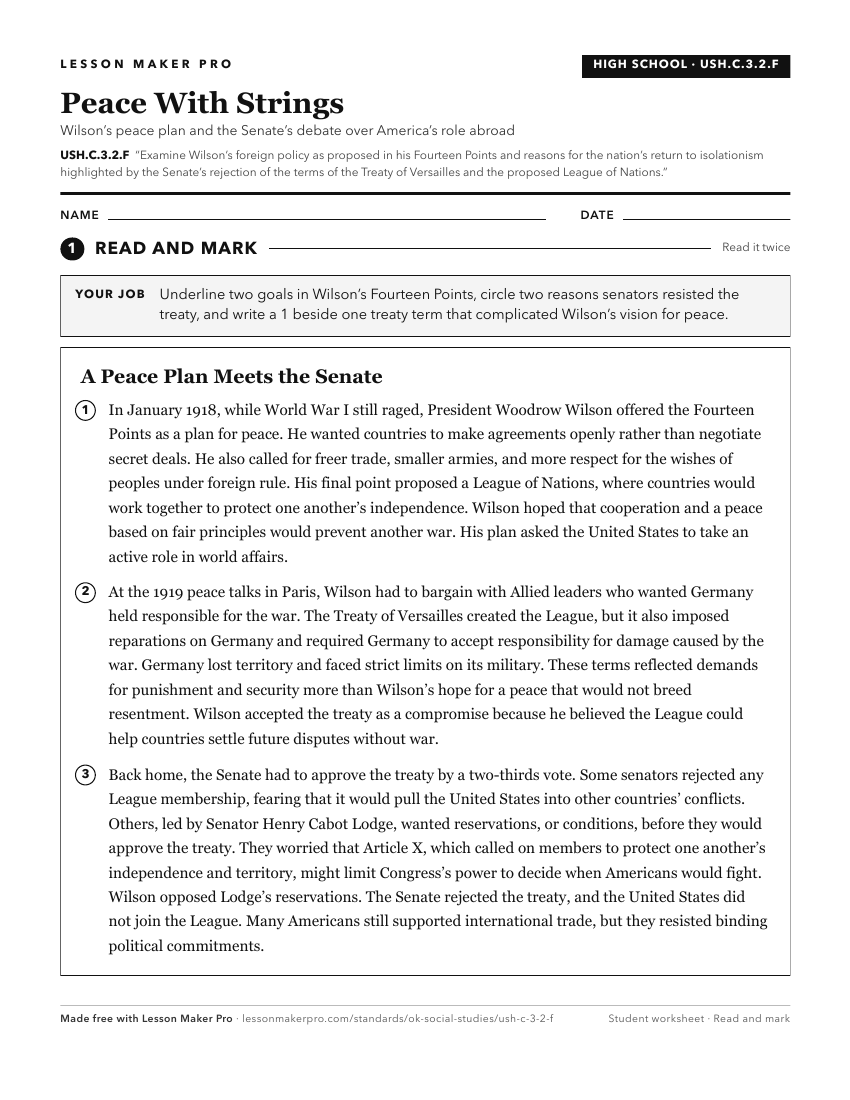
A ready-to-print activity worksheet aligned to USH.C.3.2.F, with an answer key for the teacher on its own page. No account needed.
PDF, US Letter, prints cleanly in black and white.
Download the worksheetKeep exploring
Related Standards
- USH.C.2.4.D
Describe the work of President Woodrow Wilson’s administration, including the promises of “New Freedom” and passage of the Federal Reserve Act.
- USH.C.3.2.A
Examine the justification for the United States of America’s movement from neutrality to engagement in World War I by explaining the intent and impact of the Zi...
- USH.C.3.1.H
Examine how President Wilson's ethical and religious beliefs influenced his vision of “Missionary Diplomacy” as the United States of America’s moral responsibil...
- USH.C.5.1.B
Examine the roles of appeasement and isolationism in the United States of /America’s reluctance to respond to Fascist military aggression in Europe and Asia inc...
Turn this exact standard into a lesson
Grade, subject, topic, and the complete standard are prefilled. Create one free, no account needed.
Also for this standard:Make a WorksheetMake a QuizMake a Sub Lesson