Oklahoma Social Studies USG.C.4.1.B
The Standard
- USG.C.4
- Compare the legislative, executive, and judicial branches of the United States of America's government as they address the needs of the public.
- USG.C.4.1
- Describe the scope and powers of the legislative branch of the federal government as delineated in Article 1 of the Constitution of the United States of America.
Identify the constitutional qualifications, terms of office, and compensation for members of the United States of America Congress, including change created by passage of the 17th and 27th Amendments.
Oklahoma Academic Standards for Social Studies (2026) · USG.C.4.1
Teacher's field guide
What This Standard Means
What Students Need to Do
- Students check age, years of citizenship, and state residence to decide whether someone can serve in the House or Senate. They compare term lengths and explain how senators are elected. They also explain when a change in congressional pay can take effect.
What Mastery Looks Like
- A student can tell why a 29-year-old Oklahoma resident who has been a citizen for eight years qualifies for the House but not the Senate. They know House terms last two years, Senate terms last six years, and voters elect senators. They know a congressional pay change must wait until after the next House election.
Common Misconceptions
- Students often swap the age and citizenship requirements for the two chambers. Some think House members must live in their district, rather than their state. Others think senators have always been elected by voters or that Congress can give itself an immediate raise.
How to Assess It
- Exit ticket: A 29-year-old Oklahoma resident has been a citizen for eight years. Name the chamber they can serve in, both term lengths, who elects senators, and when a congressional pay change can take effect.
Lesson moves
Ways to Teach It
Give pairs candidate cards and a House and Senate requirement chart; have them sort candidates and explain each choice.
Ask: Why might voters choose senators directly instead of state legislatures? Have students write two sentences.
Play Pay Now or Later with proposed raise dates; students identify the House election that must happen before each raise takes effect.
Use the Senate.gov election schedule to find when your state's senators next face voters, then mark those years on a calendar.
Free download
Printable USG.C.4.1.B Worksheet
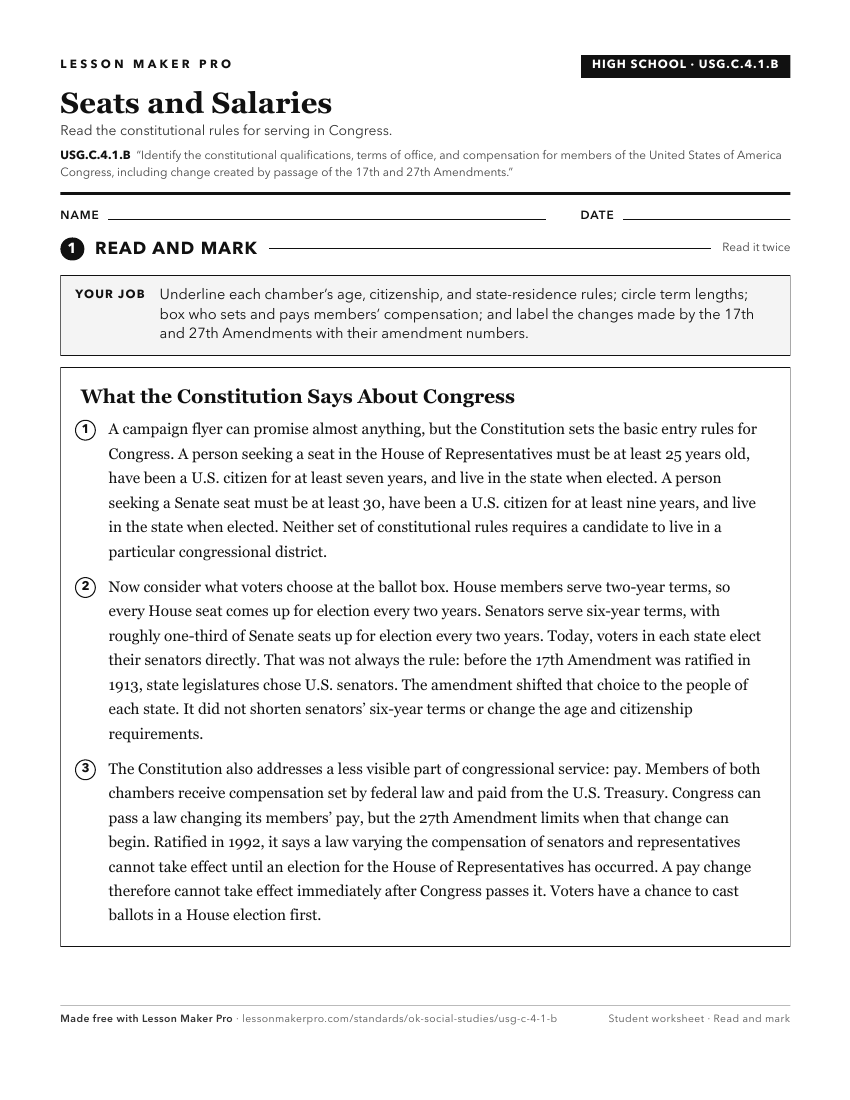
A ready-to-print activity worksheet aligned to USG.C.4.1.B, with an answer key for the teacher on its own page. No account needed.
PDF, US Letter, prints cleanly in black and white.
Download the worksheetKeep exploring
Related Standards
- USH.C.2.3.C
Trace the series of events leading to and the effects of the 16th and 17th Amendments to the Constitution of the United States of America.
- 8.C.4.2.C
Identify the constitutional powers granted to Congress, the President, and the Supreme Court, using historical and contemporary examples.
- 8.C.4.2.B
Explain why the Framers of the Constitution of the United States of America separated governmental powers among three branches (separation of powers), comparing...
- USG.C.4.2.A
Identify the constitutional qualifications, term of office, and impeachment process for the President of the United States of America, including the impact of t...
Turn this exact standard into a lesson
Grade, subject, topic, and the complete standard are prefilled. Create one free, no account needed.
Also for this standard:Make a WorksheetMake a QuizMake a Sub Lesson