Oklahoma Social Studies MWH.C.7.5.C
The Standard
- MWH.C.7
- Evaluate post-World War II regional events leading to the transformations of the modern world.
- MWH.C.7.5
- Assess the impact of African independence movements on human rights and the global expansion of democracy..
Analyze the political, economic, and social context of South Africa’s apartheid system, assessing the role of international pressure and internal resistance in dismantling it, including the leadership of Nelson Mandela and Desmond Tutu.
Oklahoma Academic Standards for Social Studies (2026) · MWH.C.7.5
Teacher's field guide
What This Standard Means
What Students Need to Do
- Students explain how apartheid laws kept South Africa's white minority in power, restricted Black people's lives, and controlled their labor. They trace how resistance inside South Africa and pressure from other countries pushed the government toward change. They explain the different roles of Nelson Mandela and Desmond Tutu.
What Mastery Looks Like
- A student can explain how pass laws restricted movement and helped control Black labor. They can connect protests and foreign sanctions to negotiations and the 1994 election, naming Mandela's negotiating role and Tutu's public opposition.
Common Misconceptions
- Students may think apartheid meant only separate facilities, rather than laws about voting, land, jobs, and movement. Some credit foreign sanctions alone and overlook protests and strikes inside South Africa. Others treat Mandela's 1990 release as the end of apartheid, rather than a step toward the 1994 election.
How to Assess It
- Exit ticket: Explain how pass laws affected Black workers. Then explain how one protest inside South Africa and one action by another country pressed the government to change.
Lesson moves
Ways to Teach It
Give pairs passbook excerpts, a mine wage chart, and a 1994 ballot; have them label each source's political, economic, or social impact.
Ask students to write: How did the 1976 Soweto protests and foreign trade sanctions put different kinds of pressure on the government?
Teams match cards for Soweto protests, trade sanctions, Mandela's negotiations, and Tutu's sermons to descriptions of how each pressed the government.
Show a grocery label listing its country of origin; students explain how a shopper boycott differs from government trade sanctions against apartheid.
Free download
Printable MWH.C.7.5.C Worksheet
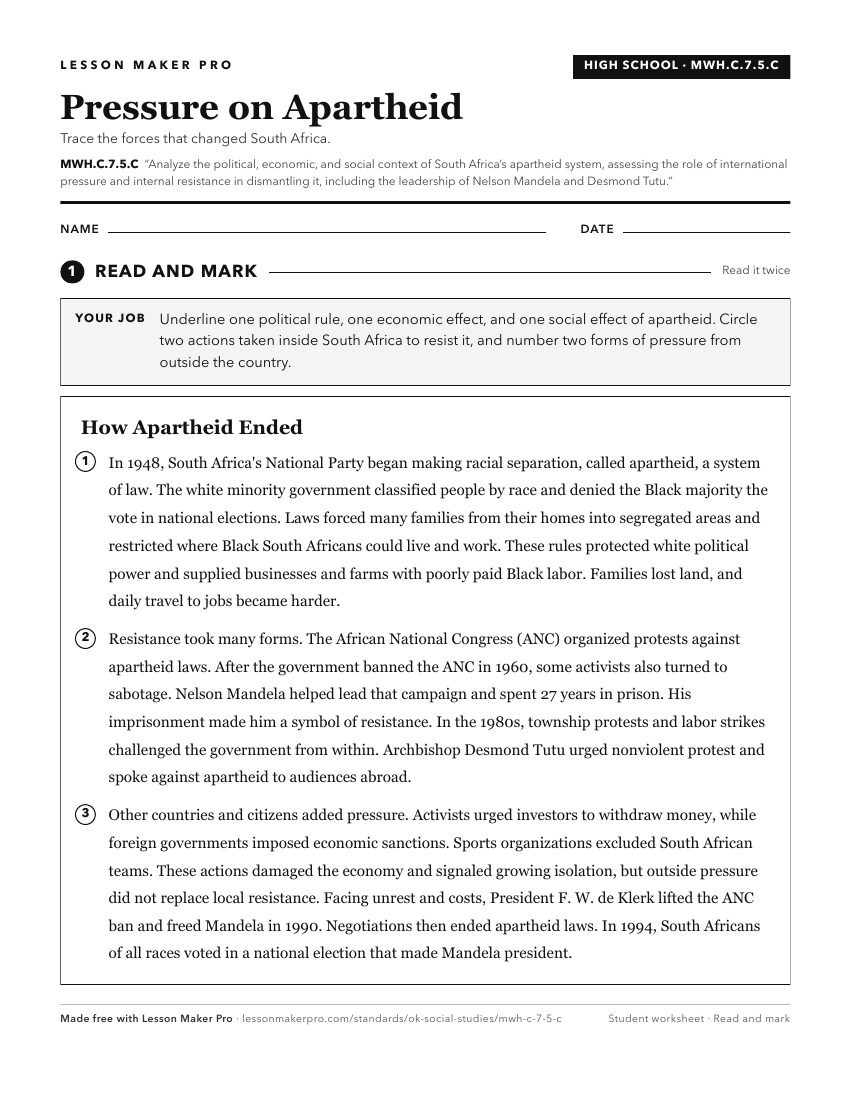
A ready-to-print activity worksheet aligned to MWH.C.7.5.C, with an answer key for the teacher on its own page. No account needed.
PDF, US Letter, prints cleanly in black and white.
Download the worksheetKeep exploring
Related Standards
- USH.C.1.2
Analyze the post-Reconstruction civil rights struggles of African Americans.
- USH.C.7.1
Analyze the major events, personalities, tactics, and effects of the Civil Rights Movement.
- 8.C.13.3
Analyze the emerging social structure of the postwar South.
- MWH.C.7.5
Assess the impact of African independence movements on human rights and the global expansion of democracy..
Turn this exact standard into a lesson
Grade, subject, topic, and the complete standard are prefilled. Create one free, no account needed.
Also for this standard:Make a WorksheetMake a QuizMake a Sub Lesson