Oklahoma Social Studies MWH.C.7.5
Standard Cluster
- MWH.C.7
- Evaluate post-World War II regional events leading to the transformations of the modern world.
Assess the impact of African independence movements on human rights and the global expansion of democracy.. Explain the effects of Pan-Africanism on changing political boundaries and the development of anticolonialism. Describe the struggle for self-government in Ghana, including the influence of Kwame Nkrumah. Analyze the political, economic, and social context of South Africa’s apartheid system, assessing the role of international pressure and internal resistance in dismantling it, including the leadership of Nelson Mandela and Desmond Tutu.
Oklahoma Academic Standards for Social Studies (2026) · MWH.C.7
Cluster contents
Standards in This Cluster
MWH.C.7.5 is a cluster heading. These are the individual standards under it.
- MWH.C.7.5.A
Explain the effects of Pan-Africanism on changing political boundaries and the development of anticolonialism.
- MWH.C.7.5.B
Describe the struggle for self-government in Ghana, including the influence of Kwame Nkrumah.
- MWH.C.7.5.C
Analyze the political, economic, and social context of South Africa’s apartheid system, assessing the role of international pressure and internal resistance in ...
Teacher's field guide
What This Cluster Means
What Students Need to Do
- Students explain how Pan-African organizing helped independence movements spread across colonial borders. They describe Nkrumah’s role in Ghana’s independence. They compare South African resistance with outside pressure against apartheid and explain what changed in voting rights.
What Mastery Looks Like
- A student can use a map to show which African colonies became independent, while noting that many kept their colonial borders. They can connect Nkrumah’s organizing to Ghanaian self-government. They can explain how Mandela, Tutu, and international sanctions challenged apartheid and expanded political rights.
Common Misconceptions
- Students may think independence meant every colonial border changed or every new country became a democracy. They may treat Mandela and Tutu as holding the same role. Some credit sanctions alone for ending apartheid and leave out South Africans’ resistance.
How to Assess It
- Exit ticket: How did Pan-African ideas help Ghana’s independence movement? Name one action inside South Africa and one outside pressure that helped end apartheid, then name one change in voting rights.
Lesson moves
Ways to Teach It
Give pairs maps of Africa from 1950 and 1975; have them color newly independent countries and circle borders that stayed the same.
Ask, “How did Nkrumah’s party organizing differ from Mandela’s ANC work and Tutu’s church-led protests?” Have students cite one action each.
Have students sort cards labeled ANC protests, Tutu’s sermons, UN sanctions, and sports boycotts into internal resistance or international pressure.
Show the 2024 South African election results; ask students to compare who could vote then with who could vote under apartheid.
Free download
Printable MWH.C.7.5 Worksheet
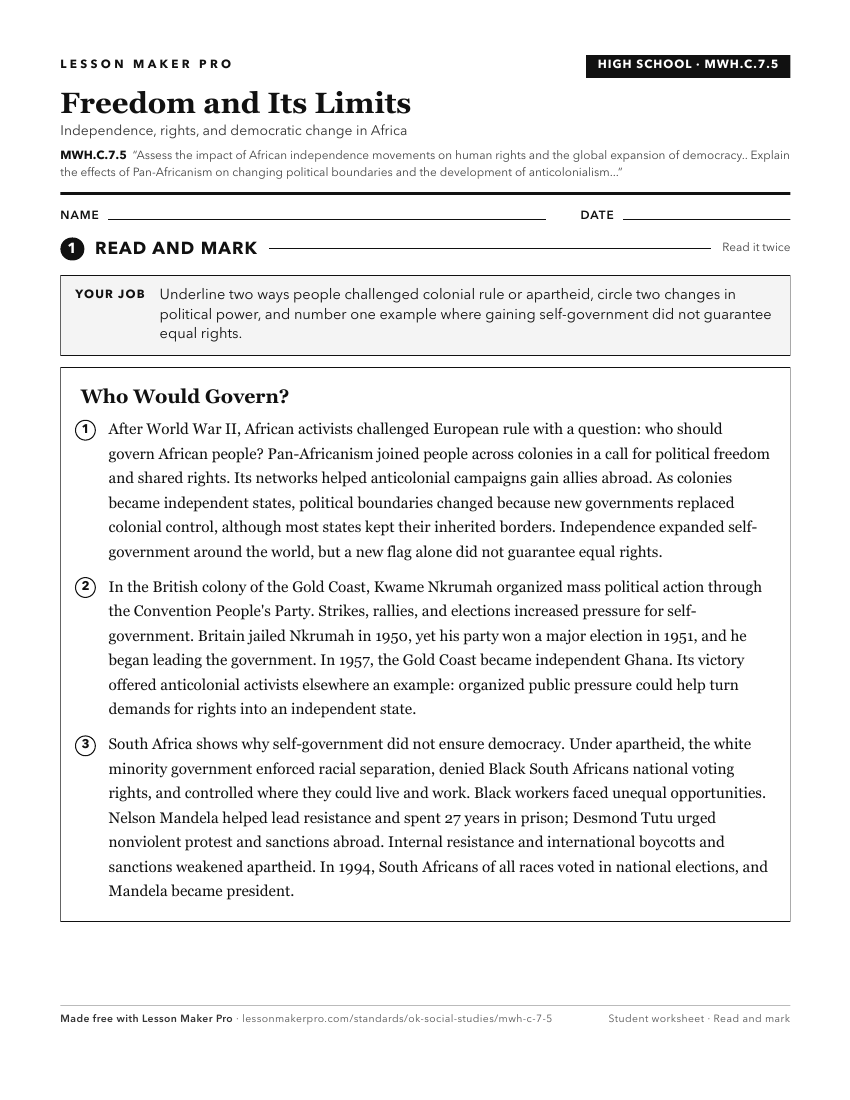
A ready-to-print activity worksheet aligned to MWH.C.7.5, with an answer key for the teacher on its own page. No account needed.
PDF, US Letter, prints cleanly in black and white.
Download the worksheetKeep exploring
Related Standards
- MWH.C.7.3
Assess the impact of independence movements on human rights and the global expansion of democracy in South Asia.
- MWH.C.7.6.D
Analyze the effect of the collapse of the Soviet Union on global power dynamics, including the emergence of new democracies in Eastern Europe.
- USH.C.3.1
Evaluate the impact of Imperialism on international relations and its effect on developing nations.
Turn this cluster into a lesson
Grade, subject, topic, and the complete cluster are prefilled. Create one free, no account needed.
Also for this cluster:Make a WorksheetMake a QuizMake a Sub Lesson