Oklahoma Social Studies MWH.C.6.6.D
The Standard
- MWH.C.6
- Evaluate the global transformation created by the World Wars.
- MWH.C.6.6
- Examine the background, causes, series of events, and effects of the Shoah (Holocaust), the state-sponsored systematic persecution and annihilation of European Jews by Nazi Germany and its collaborators.
Summarize world responses including religious, political, and humanitarian resistance movements to the Shoah resulting in the Nuremberg Trials and the increased support for the establishment of a Jewish state in the Jewish people’s historical homeland.
Oklahoma Academic Standards for Social Studies (2026) · MWH.C.6.6
Teacher's field guide
What This Standard Means
What Students Need to Do
- Students identify how people resisted Nazi persecution through shelter, protest, and rescue. They explain what the Nuremberg Trials addressed and why support for a Jewish state grew after the war.
What Mastery Looks Like
- A student can describe how villagers in Le Chambon sheltered Jews, how the White Rose used leaflets, and how Danes helped Jews escape by boat. They can explain that Nazi leaders faced trial and that support for a Jewish state increased, though it was not universal.
Common Misconceptions
- Some students think resistance meant only armed fighting, so they miss sheltering, leaflets, and escape routes. Others assume the trials prosecuted every perpetrator or that support for a Jewish state began only after the war.
How to Assess It
- Exit ticket: Using the Le Chambon, White Rose, and Danish rescue cards, name one action from each. Then explain how Nazi crimes led to trials and increased support for a Jewish state.
Lesson moves
Ways to Teach It
Give pairs printed cards on Le Chambon, the White Rose, and Danish boat rescues; have them underline each action and label overlapping motives.
Ask: How did a leaflet, a safe house, and a fishing boat challenge Nazi persecution in different ways? Use the source cards.
Run a timeline relay: groups place White Rose leaflets, Danish rescues, Nuremberg Trials, the UN partition vote, and Israel's founding in order.
Compare a Nuremberg indictment excerpt with the International Criminal Court's definition of crimes against humanity; have students highlight one shared concern.
Free download
Printable MWH.C.6.6.D Worksheet
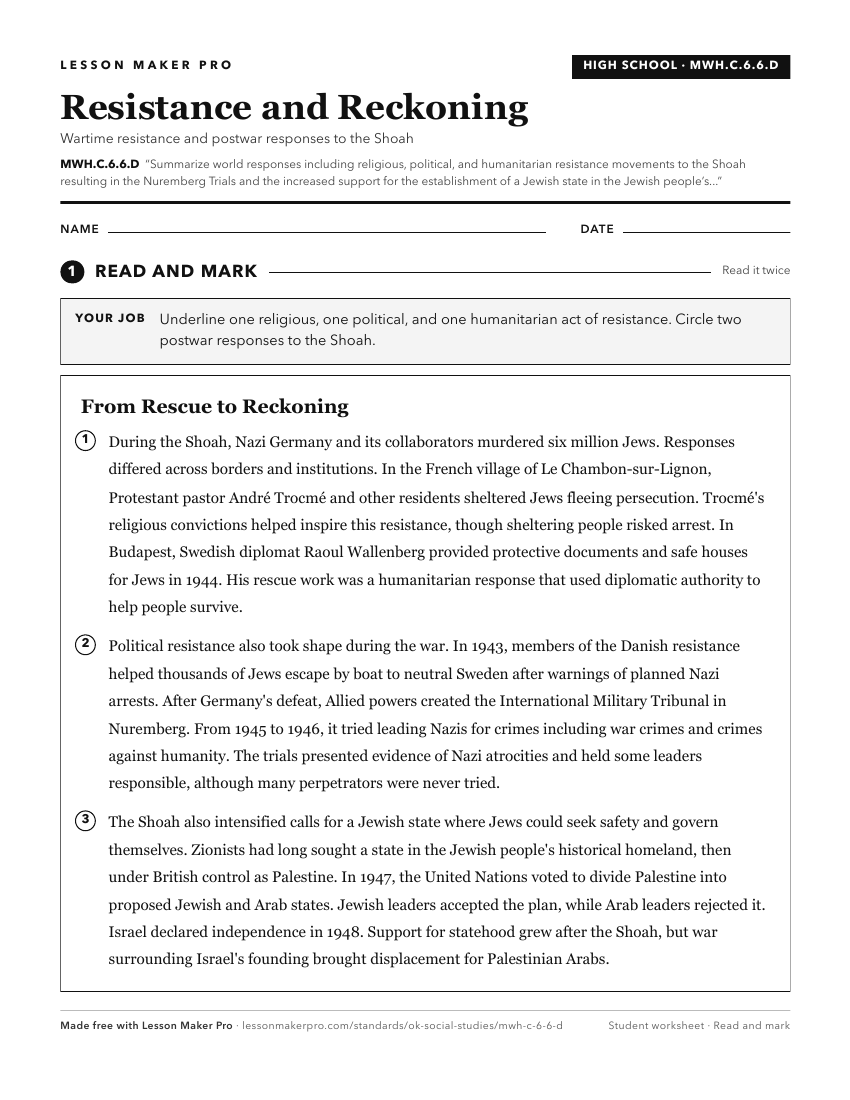
A ready-to-print activity worksheet aligned to MWH.C.6.6.D, with an answer key for the teacher on its own page. No account needed.
PDF, US Letter, prints cleanly in black and white.
Download the worksheetKeep exploring
Related Standards
- TOT.C.7.9
Examine the settlement patterns of Shoah (Holocaust) survivors after World War II, including immigration to the United States of America and other countries and...
- TOT.C.7.11
Explain the effect of the Eichmann Trial on policy concerning crimes against humanity, capital punishment, accountability, the testimony of survivors, and ackno...
- TOT.C.7.10
Analyze the international community’s efforts to hold perpetrators responsible for their involvement in the Shoah (Holocaust) including the purpose and outcomes...
- USH.C.5.3
Summarize the United States of America’s reactions to the events of the Shoah (Holocaust).
Turn this exact standard into a lesson
Grade, subject, topic, and the complete standard are prefilled. Create one free, no account needed.
Also for this standard:Make a WorksheetMake a QuizMake a Sub Lesson