Oklahoma Social Studies MWH.C.4.1.A
The Standard
- MWH.C.4
- Analyze the political, economic, and social transformations brought about by the events of the age of revolutions.
- MWH.C.4.1
- Analyze the complex political, social, and economic causes culminating in the French Revolution (e.g., influence of Enlightenment philosophy, taxation, development of the middle class, excesses and corruption of the French monarchy, demands for reform).
Examine the influence of Enlightenment philosophy, economic conditions, the rising influence of the middle class, and the excesses and corruption of the French monarchy on demands for reform.
Oklahoma Academic Standards for Social Studies (2026) · MWH.C.4.1
Teacher's field guide
What This Standard Means
What Students Need to Do
- Students explain why different groups in France called for reform. They connect ideas about political rights, high bread prices, middle-class demands for a voice, and royal privilege to the changes people wanted.
What Mastery Looks Like
- A student can link high bread prices to demands for relief and ideas about consent to demands for representation. They can explain why wealthy merchants opposed noble privileges and why court spending weakened trust in the monarchy.
Common Misconceptions
- Students may assume everyone wanted the same reform, or that only hungry peasants wanted change. Some mistake the middle class for the nobility. Others blame court spending alone for France's debt and overlook war costs and unequal taxes.
How to Assess It
- Exit ticket: Choose two causes from high bread prices, ideas about consent, middle-class exclusion, and royal spending. For each, name a reform people might demand and explain the link.
Lesson moves
Ways to Teach It
Give pairs slips labeled bread prices, consent of the governed, merchant exclusion, and court spending; have them build cause-and-demand chains.
Ask: Would cheaper bread alone have ended calls for reform? Why might a wealthy merchant still want change?
Play a matching race with cause cards and reform-demand cards, then have partners defend two matches.
Show a grocery flyer and ask who might demand help if bread prices doubled, then compare those demands with France in 1789.
Free download
Printable MWH.C.4.1.A Worksheet
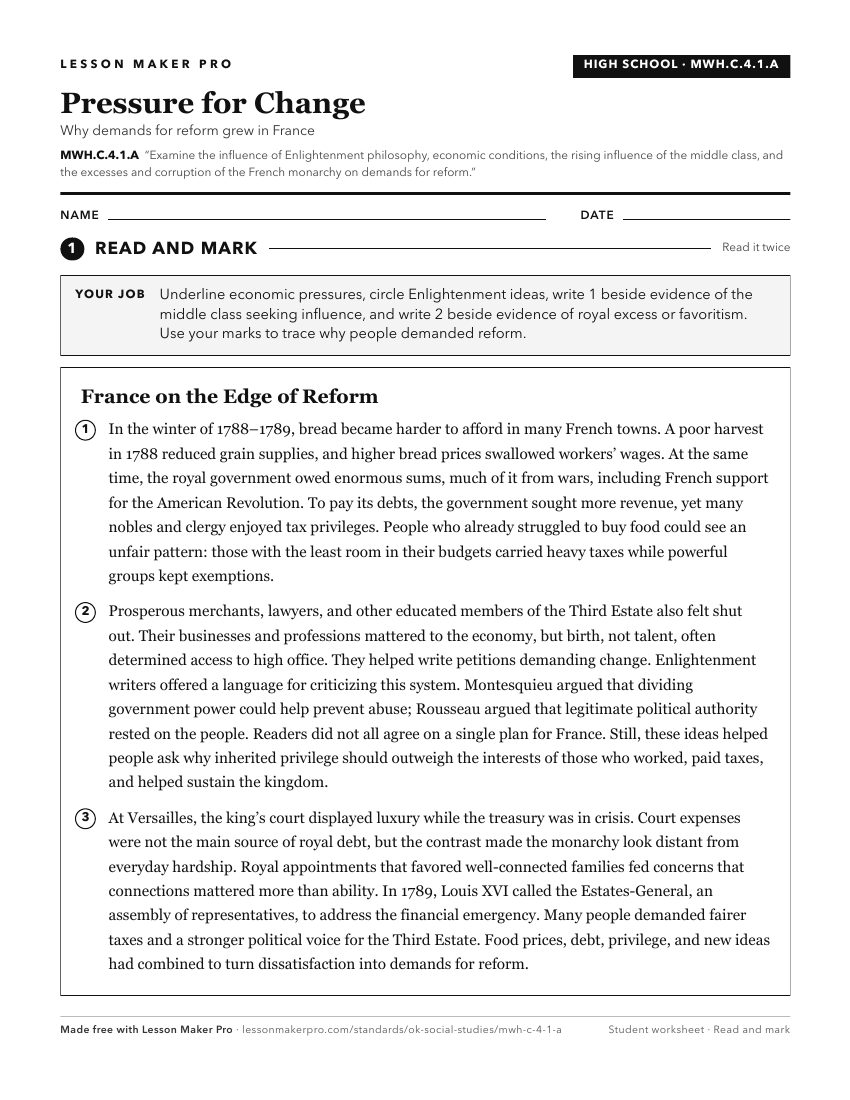
A ready-to-print activity worksheet aligned to MWH.C.4.1.A, with an answer key for the teacher on its own page. No account needed.
PDF, US Letter, prints cleanly in black and white.
Download the worksheetKeep exploring
Related Standards
- MWH.C.3.1.D
Examine rule by enlightened monarchs and how the ideas of the Enlightenment tempered Absolutism (e.g., Joseph II, Frederick the Great, Catherine the Great).
- MWH.C.4.1
Analyze the complex political, social, and economic causes culminating in the French Revolution (e.g., influence of Enlightenment philosophy, taxation, developm...
- MWH.C.3.3
Analyze the impact of the Enlightenment on modern government and economic institutions.
- MWH.C.4.1.B
Trace the significant events of the French Revolution (e.g., convening of the Estates General, Tennis Court Oath, storming of the Bastille, execution of Louis X...
Turn this exact standard into a lesson
Grade, subject, topic, and the complete standard are prefilled. Create one free, no account needed.
Also for this standard:Make a WorksheetMake a QuizMake a Sub Lesson