Oklahoma Social Studies MWH.C.2.3.E
The Standard
- MWH.C.2
- Analyze patterns of social, economic, political, and cultural changes during the Late Middle Ages to the Age of Exploration.
- MWH.C.2.3
- Summarize the causes of and influence of the theological movements of the Reformation and how those movements subsequently transformed society.
Explain the purposes and policies of the Catholic Counter-Reformation.
Oklahoma Academic Standards for Social Studies (2026) · MWH.C.2.3
Teacher's field guide
What This Standard Means
What Students Need to Do
- Students explain why Catholic leaders responded to Protestant challenges and problems within the Church. They connect policies such as priest training, Jesuit education, and restrictions on books to those goals.
What Mastery Looks Like
- A student can distinguish beliefs the Church kept, such as the seven sacraments, from practices it changed. They can explain how seminaries addressed poor priest training and how the Index limited reading.
Common Misconceptions
- Students may think Catholic leaders adopted Protestant beliefs or ended the seven sacraments. They may also think the Church abolished indulgences, when it kept them but banned their sale.
How to Assess It
- Exit ticket: Name one Catholic belief leaders defended and one practice they changed. Explain the purpose of each choice.
Lesson moves
Ways to Teach It
Give pairs short Council of Trent excerpts on sacraments and priest training; have them highlight what stayed and what changed.
Ask pairs, “Why keep the seven sacraments but set up seminaries?” Have them write one reason for each choice.
Run a card match: pair seminaries with trained priests, Jesuit schools with Catholic education, and the Index with restricted reading.
Show a current Catholic seminary course list; students circle one course linked to the push for better-trained priests.
Free download
Printable MWH.C.2.3.E Worksheet
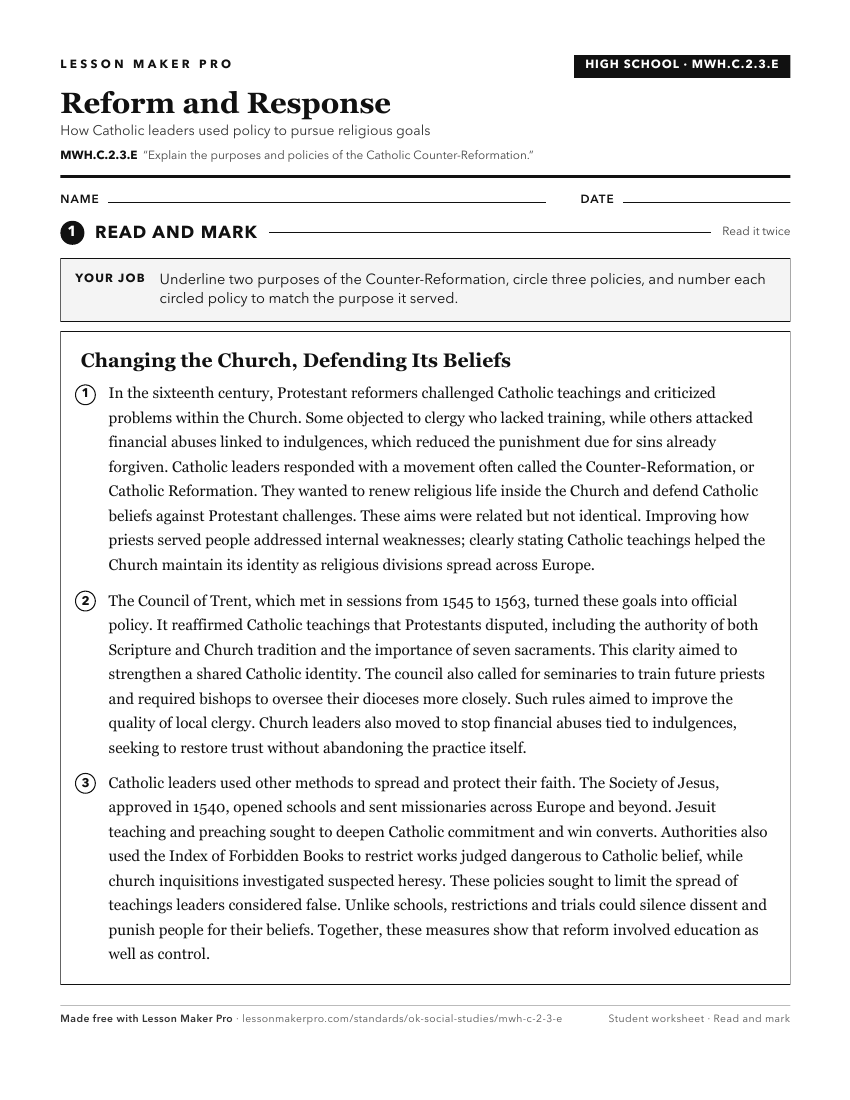
A ready-to-print activity worksheet aligned to MWH.C.2.3.E, with an answer key for the teacher on its own page. No account needed.
PDF, US Letter, prints cleanly in black and white.
Download the worksheetKeep exploring
Related Standards
- AWH.C.12.1
Describe internal divisions and impact on the Roman Catholic Church during the Avignon Papacy, the Great Schism, and the subsequent councils.
- MWH.C.2.3
Summarize the causes of and influence of the theological movements of the Reformation and how those movements subsequently transformed society.
- MWH.C.2.3.A
Explain reasons for the growing discontent with the Catholic Church, including the main ideas of Martin Luther and John Calvin, and the role of William Tyndale.
- MWH.C.2.3.C
Describe tensions between religious and secular authorities contributing to the English Reformation.
Turn this exact standard into a lesson
Grade, subject, topic, and the complete standard are prefilled. Create one free, no account needed.
Also for this standard:Make a WorksheetMake a QuizMake a Sub Lesson