Oklahoma Social Studies AWH.C.1.3
The Standard
Describe the characteristics of the hunter-gatherer societies (e.g., use of tools and fire, hunting weapons, physical adornments) from the Paleolithic to the Neolithic Age.
Oklahoma Academic Standards for Social Studies (2026)
Teacher's field guide
What This Standard Means
What Students Need to Do
- Students describe how hunter-gatherer groups used fire, tools, and weapons to get food and meet daily needs. They explain what beads and other adornments suggest about how people presented themselves. They compare groups across the Paleolithic and Neolithic without assuming everyone lived the same way.
What Mastery Looks Like
- Given photos of a hearth, a spearpoint, and beads, students can name a likely use for each and point to evidence. They can explain that hunting and gathering continued in some places as farming spread elsewhere.
Common Misconceptions
- Students may think hunting and gathering ended as soon as the Neolithic began. They may assume all tools were stone, or that beads tell us exactly what their wearers believed.
How to Assess It
- Exit ticket: A campsite has a hearth, stone blades, and pierced beads. Name a likely use for each, then write one thing these finds cannot tell us about the people who lived there.
Lesson moves
Ways to Teach It
Give pairs cards showing a hearth, scraper, spearpoint, and beads; have them sort the cards by use and explain their choices.
Ask, "What could a pierced bead tell us about its wearer, and what could it not tell us?" Have students write two sentences.
Play artifact bingo: read clues such as "used to scrape hides" or "worn on the body," and have students mark matching pictures.
Show a museum photo of a prehistoric bead; have students write an exhibit label with its likely use and one unanswered question.
Free download
Printable AWH.C.1.3 Worksheet
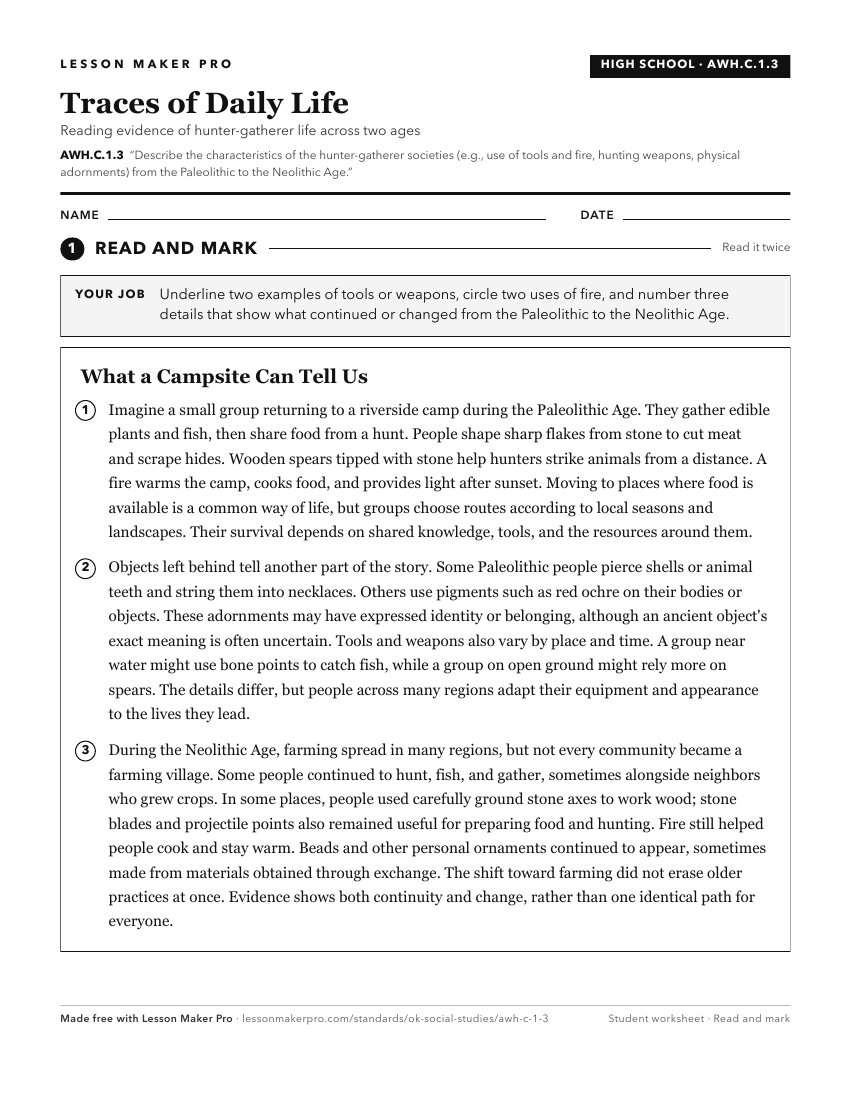
A ready-to-print activity worksheet aligned to AWH.C.1.3, with an answer key for the teacher on its own page. No account needed.
PDF, US Letter, prints cleanly in black and white.
Download the worksheetKeep exploring
Related Standards
- 4.C.2.5.A
Explain how humans adapt to the physical environment (e.g., food, shelter, earning a living) by identifying historical and contemporary examples.
- 7.C.5.2.B
Explain that complex societies and civilizations in different regions share common characteristics (e.g., agricultural innovations, written language, and early ...
- AWH.C.1.6
Identify the major characteristics of civilizations (e.g., geographic boundaries and political institutions, economies that produce food surpluses, the formatio...
- 3.C.3.1
Examine the state’s earliest peoples and the significance of their interactions.
Turn this exact standard into a lesson
Grade, subject, topic, and the complete standard are prefilled. Create one free, no account needed.
Also for this standard:Make a WorksheetMake a QuizMake a Sub Lesson