Oklahoma Social Studies 8.C.11
Standard Cluster
Analyze slavery as the principal cause of increased sectional polarization leading to the Civil War. Evaluate the goals of the Compromise of 1850 regarding the issue of slavery. Describe the series of measures proposed by Senator Henry Clay to avert the threat of dissolution of the Union, including a strengthened Fugitive Slave Act and the application of popular sovereignty regarding the spread of slavery into new states. Explain why the Compromise of 1850 may have succeeded as a temporary solution but proved that compromise could not offer a permanent solution to the issue of slavery. Analyze the impact of the Kansas-Nebraska Act, the growing tension, and inevitability of a civil war. Explain how popular sovereignty in new territories regarding the institution of slavery led to factional feuds in “Bleeding Kansas.” Examine why the North opposed the possibility that northern territories such as Kansas and Nebraska might adopt slavery, which had been prevented by the Missouri Compromise. Evaluate the impact of the Dred Scott v. Sandford decision, which denied citizenship to African Americans and ruled enslaved persons as property. Examine the motives and impact for John Brown’s Raid on the federal arsenal at Harpers Ferry.
Oklahoma Academic Standards for Social Studies (2026)
Cluster contents
Standards in This Cluster
8.C.11 is a cluster heading. These are the individual standards under it.
- 8.C.11.1
Evaluate the goals of the Compromise of 1850 regarding the issue of slavery.
- 8.C.11.1.A
Describe the series of measures proposed by Senator Henry Clay to avert the threat of dissolution of the Union, including a strengthened Fugitive Slave Act and ...
- 8.C.11.1.B
Explain why the Compromise of 1850 may have succeeded as a temporary solution but proved that compromise could not offer a permanent solution to the issue of sl...
- 8.C.11.2
Analyze the impact of the Kansas-Nebraska Act, the growing tension, and inevitability of a civil war.
- 8.C.11.2.A
Explain how popular sovereignty in new territories regarding the institution of slavery led to factional feuds in “Bleeding Kansas.”
- 8.C.11.2.B
Examine why the North opposed the possibility that northern territories such as Kansas and Nebraska might adopt slavery, which had been prevented by the Missour...
- 8.C.11.2.C
Evaluate the impact of the Dred Scott v. Sandford decision, which denied citizenship to African Americans and ruled enslaved persons as property.
- 8.C.11.2.D
Examine the motives and impact for John Brown’s Raid on the federal arsenal at Harpers Ferry.
Teacher's field guide
What This Cluster Means
What Students Need to Do
- Students trace how disputes over slavery split the North and South before the Civil War. They explain what the 1850 deal tried to settle and why voting on slavery in new territories led to violence in Kansas. They connect the Dred Scott ruling and John Brown’s raid to rising fears on both sides.
What Mastery Looks Like
- Students identify slavery as the dispute behind each turning point. They explain how the Fugitive Slave Act and popular sovereignty made the 1850 deal a short-term fix. They show how the Kansas-Nebraska Act reopened the dispute, Dred Scott limited federal power to stop slavery in territories, and Brown sought weapons for an uprising.
Common Misconceptions
- Students may think the 1850 deal ended slavery or that popular sovereignty gave every American a vote. They may miss that the Kansas-Nebraska Act reopened a question the Missouri Compromise had settled for those territories. Some think Dred Scott gained his freedom or that Brown’s raid ended slavery.
How to Assess It
- Exit ticket: Why did the 1850 deal fail to settle the dispute over slavery? Name one measure in the deal and one later event that shows the conflict continued.
Lesson moves
Ways to Teach It
Give pairs a map and cards for California, Utah, and New Mexico; have them label California free and mark the popular sovereignty territories.
Ask: How did the Fugitive Slave Act make the 1850 deal harder for people in the North to accept?
Match Kansas-Nebraska, Bleeding Kansas, Dred Scott, and Brown’s raid cards to consequence cards, then have partners defend their matches.
Use a current map of Harpers Ferry to locate the former federal arsenal; ask why Brown wanted its weapons.
Free download
Printable 8.C.11 Worksheet
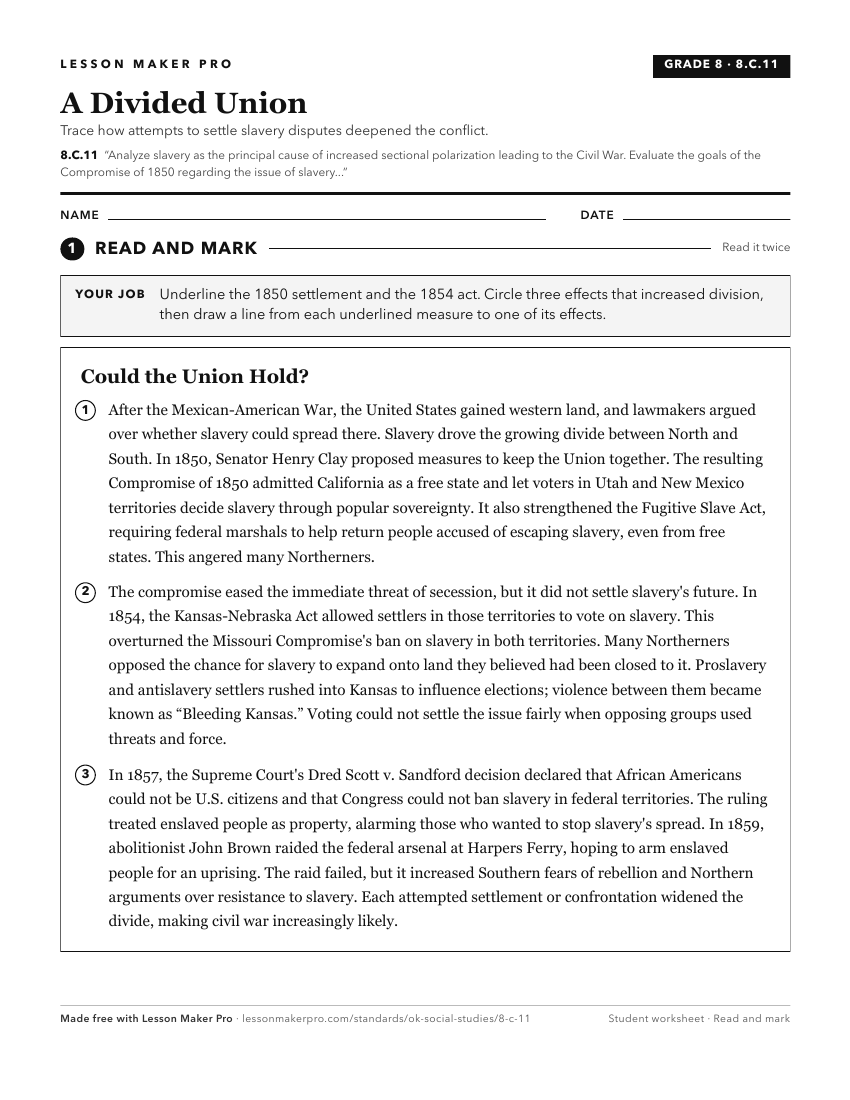
A ready-to-print activity worksheet aligned to 8.C.11, with an answer key for the teacher on its own page. No account needed.
PDF, US Letter, prints cleanly in black and white.
Download the worksheetKeep exploring
Related Standards
- 8.C.7.5
Analyze congress’ attempt to balance sectional interests and political power, by describing the impact of the Missouri Compromise on the expansion of slavery, b...
- 8.C.12.1.C
Explain slavery as the central factor for the secession of southern states by examining passages from state secession declarations.
- 8.C.7.4
Examine the increased tension between Southern sectionalist and Northern nationalist perspectives toward the expansion of slavery into western territories.
- 8.C.12
Analyze the course and consequences of the Civil War.
Turn this cluster into a lesson
Grade, subject, topic, and the complete cluster are prefilled. Create one free, no account needed.
Also for this cluster:Make a WorksheetMake a QuizMake a Sub Lesson