Oklahoma Social Studies 6.C.3.6.D
The Standard
- 6.C.3
- Identify the characteristics, distribution, and demographic patterns of human populations and systems of the Western Hemisphere.
- 6.C.3.6
- Describe the cultural interactions between American Indian cultures and European settlers which impacted the heritage and history of major regions of the Western Hemisphere.
Explain the effects of plantation agriculture and the importation of enslaved labor on the economic development and cultural heritage of regions.
Oklahoma Academic Standards for Social Studies (2026) · 6.C.3.6
Teacher's field guide
What This Standard Means
What Students Need to Do
- Students explain how plantations grew crops for sale using enslaved labor. They identify who gained wealth and connect the history of enslaved Africans to food and music in plantation regions.
What Mastery Looks Like
- A student can explain how Caribbean sugar or Southern cotton brought income to plantation owners and merchants while enslaved people did the work. They can name a specific African influence in the region's culture, such as okra in Caribbean cooking.
Common Misconceptions
- Students may think everyone in a plantation region grew wealthy or that enslaved people chose to work there. They may also think African traditions disappeared or stayed unchanged over time.
How to Assess It
- Exit ticket: Using Caribbean sugar plantations as your example, write three sentences explaining who did the work, who profited, and one African influence on the region's food or music.
Lesson moves
Ways to Teach It
Give pairs an Atlantic map; have them draw red arrows for forced migration from West Africa and blue arrows for Caribbean sugar exports.
Ask students to write two sentences: Who gained from Caribbean sugar sales, and how did enslaved Africans shape Caribbean cooking?
Deal cards labeled cotton exports, owner profits, okra dishes, and African-influenced music; have pairs sort economic effects from cultural legacies.
Display a sugar packet and a map of Caribbean sugar-growing areas; ask how plantation history shaped the region's sugar trade.
Free download
Printable 6.C.3.6.D Worksheet
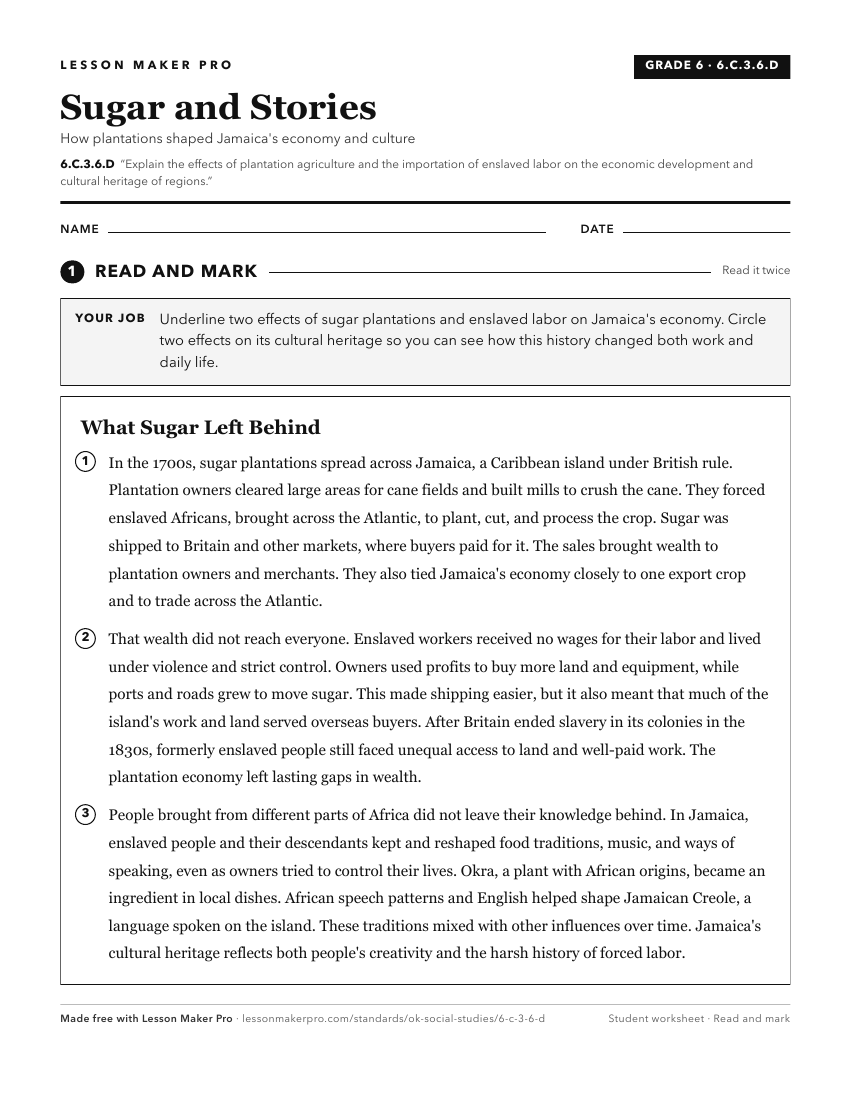
A ready-to-print activity worksheet aligned to 6.C.3.6.D, with an answer key for the teacher on its own page. No account needed.
PDF, US Letter, prints cleanly in black and white.
Download the worksheetKeep exploring
Related Standards
- 5.C.2.3
Explain the economic and cultural interactions resulting from the triangular trade routes, including the forced migration of Africans through the Transatlantic ...
- 5.C.2.2.C
a growing reliance on enslaved labor considered essential to the plantation system.
- MWH.C.2.5.D
Describe the major economic and cultural effects of the Columbian Exchange and explain how the enslavement of Indigenous peoples and Africans was used for the d...
- 8.C.10.1.B
Explain how the invention of the cotton gin impacted Southern plantation economies by increasing the profitability of the crop and leading to the expansion of s...
Turn this exact standard into a lesson
Grade, subject, topic, and the complete standard are prefilled. Create one free, no account needed.
Also for this standard:Make a WorksheetMake a QuizMake a Sub Lesson