Oklahoma Social Studies 5.P.2.1
Standard Cluster
- 5.P.2
- Use interdisciplinary tools to acquire, apply, and evaluate content understanding of the four strands of social studies.
Demonstrate an understanding of the principles of government, the benefits of democratic systems, and their responsibilities as citizens. Explain democratic principles in historic documents by identifying examples of civic virtues and principles at work in state and national settings. Explain the structure, responsibilities, and powers exercised by officials of the national government and describe ways informed citizens can and should participate. Examine the principles of the Constitution of the United States of America, including how laws are made in a democratic society and are used to protect individual rights.
Oklahoma Academic Standards for Social Studies (2026) · 5.P.2
Cluster contents
Standards in This Cluster
5.P.2.1 is a cluster heading. These are the individual standards under it.
- 5.P.2.1.A
Explain democratic principles in historic documents by identifying examples of civic virtues and principles at work in state and national settings.
- 5.P.2.1.B
Explain the structure, responsibilities, and powers exercised by officials of the national government and describe ways informed citizens can and should partici...
- 5.P.2.1.C
Examine the principles of the Constitution of the United States of America, including how laws are made in a democratic society and are used to protect individu...
Teacher's field guide
What This Cluster Means
What Students Need to Do
- Students find examples of rights and the common good in short excerpts from the U.S. Constitution and Oklahoma Constitution. They explain what Congress, the president, and the courts do, how a bill becomes law, and how people can speak up.
What Mastery Looks Like
- Given a proposed federal law, a student can say who votes on it, who signs or vetoes it, and how courts can check whether it violates the Constitution. They can point to a passage protecting a right and suggest a respectful, informed way to speak up.
Common Misconceptions
- Students may think the president makes laws alone or that courts vote on bills. They may confuse state and federal government. Some think children cannot contact elected officials.
How to Assess It
- Post the First Amendment's petition clause and a proposed federal park bill. Ask: Which right is shown, who votes on the bill, who signs it, and what fact would you check before contacting an official?
Lesson moves
Ways to Teach It
Hand out Congress, president, and Supreme Court role cards; have trios match them to bill-writing, signing, and constitutional-review scenarios.
Read the U.S. Constitution and Oklahoma Constitution preambles; ask partners to name a shared goal and one way citizens can serve it.
Run a bill-to-law relay: teams arrange proposal, committee, House vote, Senate vote, and presidential signature or veto cards, then explain each step.
Find your U.S. representative's website together; have students draft a two-sentence message about a local issue using one checked fact and a polite request.
Free download
Printable 5.P.2.1 Worksheet
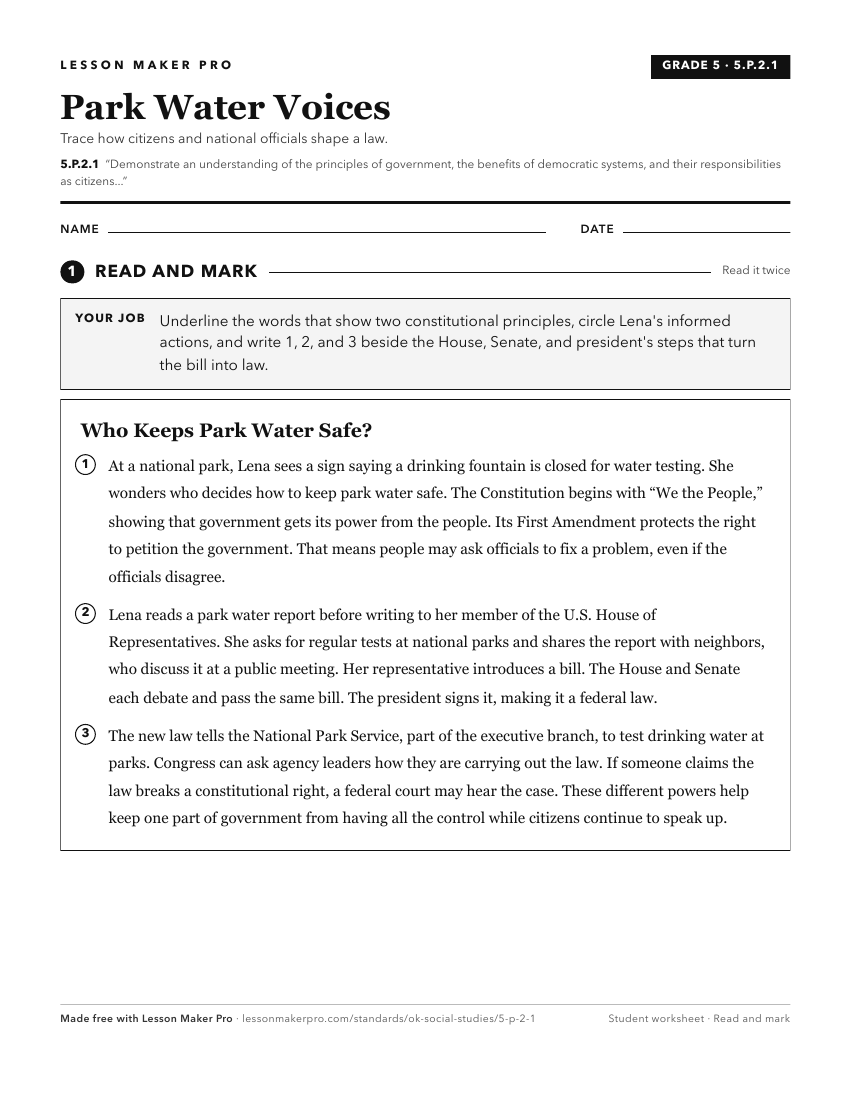
A ready-to-print activity worksheet aligned to 5.P.2.1, with an answer key for the teacher on its own page. No account needed.
PDF, US Letter, prints cleanly in black and white.
Download the worksheetKeep exploring
Related Standards
Turn this cluster into a lesson
Grade, subject, topic, and the complete cluster are prefilled. Create one free, no account needed.
Also for this cluster:Make a WorksheetMake a QuizMake a Sub Lesson