Oklahoma Social Studies 5.C.4.5
Standard Cluster
- 5.C.4
- Examine the struggles of the Revolutionary War and ultimate victory to gain independence.
Identify the contributions of key individuals influential to the American Revolution in the fields of patriot leadership (e.g., Samuel Adams, Benjamin Rush, Paul Revere) politics and diplomacy (e.g., Patrick Henry, Benjamin Franklin, John Adams, Nancy Ward “Nanyehi”) military service (e.g., Nathan Hale, John Paul Jones, Daniel Morgan, Ethan Allen, Nathanael Greene, Benedict Arnold, Marquis de Lafayette) Native alliances (e.g., Stockbridge Indian regiment of Minutemen, Oneida scouts) ideological writing (e.g., Thomas Paine, Mercy Otis Warren, Phillis Wheatley).
Oklahoma Academic Standards for Social Studies (2026) · 5.C.4
Cluster contents
Standards in This Cluster
5.C.4.5 is a cluster heading. These are the individual standards under it.
- 5.C.4.5.A
patriot leadership (e.g., Samuel Adams, Benjamin Rush, Paul Revere)
- 5.C.4.5.B
politics and diplomacy (e.g., Patrick Henry, Benjamin Franklin, John Adams, Nancy Ward “Nanyehi”)
- 5.C.4.5.C
military service (e.g., Nathan Hale, John Paul Jones, Daniel Morgan, Ethan Allen, Nathanael Greene, Benedict Arnold, Marquis de Lafayette)
- 5.C.4.5.D
Native alliances (e.g., Stockbridge Indian regiment of Minutemen, Oneida scouts)
- 5.C.4.5.E
ideological writing (e.g., Thomas Paine, Mercy Otis Warren, Phillis Wheatley).
Teacher's field guide
What This Cluster Means
What Students Need to Do
- Students connect people and Native groups to actions they took during the Revolution. They explain how writing, diplomacy, leadership, and military help affected the war.
What Mastery Looks Like
- A student can explain that Thomas Paine's pamphlet built support for independence and that Oneida scouts gave Patriot troops information. They can describe Benedict Arnold's service at Saratoga and his later switch to the British side.
Common Misconceptions
- Students may assume everyone named fought in the army, overlooking writers and diplomats. Some think all Native nations chose the same side, or that Benedict Arnold fought for Britain throughout the war.
How to Assess It
- Exit ticket: Explain how Paine's pamphlet and information from Oneida scouts helped the Patriots in different ways.
Lesson moves
Ways to Teach It
Pairs match name cards for Revere, Franklin, Jones, and Oneida scouts to cards describing a warning ride, French alliance talks, naval battles, and intelligence.
Ask, 'How could Paine's pamphlet change the war without winning a battle?' Have students write a two-sentence answer.
Play contribution bingo: read clues about Warren's plays, Greene's command, Lafayette's service, and Arnold's fighting at Saratoga; students cover the matching names.
Show a mock student council campaign flyer and ask how its call to action compares with Paine's pamphlet.
Free download
Printable 5.C.4.5 Worksheet
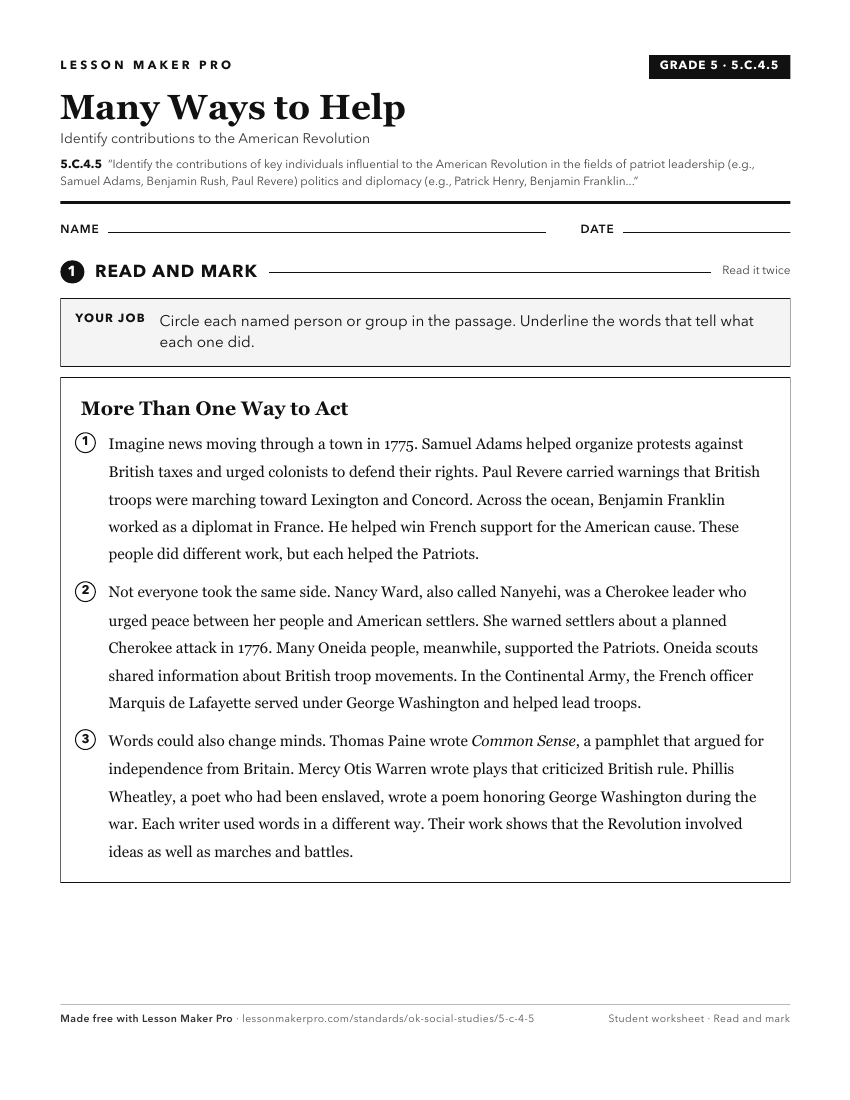
A ready-to-print activity worksheet aligned to 5.C.4.5, with an answer key for the teacher on its own page. No account needed.
PDF, US Letter, prints cleanly in black and white.
Download the worksheetKeep exploring
Related Standards
- 5.C.3.3
Explain efforts to mobilize support for the American Revolution.
- 1.C.2.7
Identify stories about people and ideas that influenced the American colonists, the Founders, and American culture.
- 1.C.1.6
Using biographies from early United States of America’s history, explain historical examples of patriotism and civic virtue as exemplified during the early Amer...
Turn this cluster into a lesson
Grade, subject, topic, and the complete cluster are prefilled. Create one free, no account needed.
Also for this cluster:Make a WorksheetMake a QuizMake a Sub Lesson