Oklahoma Social Studies 1.C.1.6
Standard Cluster
- 1.C.1
- Analyze their role as a citizen in a community.
Using biographies from early United States of America’s history, explain historical examples of patriotism and civic virtue as exemplified during the early American republic, including Leadership (e.g., Chief Powhatan, Patrick Henry, Thomas Jefferson) Military Service (e.g., John Paul Jones, Nathan Hale) Science and Technology (e.g., Benjamin Banneker, Meriwether Lewis, William Clark) Public Service (e.g., Benjamin Franklin, George Washington, James Madison).
Oklahoma Academic Standards for Social Studies (2026) · 1.C.1
Cluster contents
Standards in This Cluster
1.C.1.6 is a cluster heading. These are the individual standards under it.
- 1.C.1.6.A
Leadership (e.g., Chief Powhatan, Patrick Henry, Thomas Jefferson)
- 1.C.1.6.B
Military Service (e.g., John Paul Jones, Nathan Hale)
- 1.C.1.6.C
Science and Technology (e.g., Benjamin Banneker, Meriwether Lewis, William Clark)
- 1.C.1.6.D
Public Service (e.g., Benjamin Franklin, George Washington, James Madison).
Teacher's field guide
What This Cluster Means
What Students Need to Do
- Students listen to short biographies of people from the nation's early years. They name what each person did and explain how that work helped others or the country.
What Mastery Looks Like
- A student can say Washington served as president and Banneker shared useful information in his almanac. They can explain who benefited, rather than just saying each person was famous.
Common Misconceptions
- Some children think helping the country only means being a soldier. Others assume a leader who did good work always treated people fairly, though Washington enslaved people.
How to Assess It
- Give this exit ticket: “Benjamin Banneker published an almanac with information farmers could use. What did he do, and how did it help others?”
Lesson moves
Ways to Teach It
Give pairs picture cards showing Washington as president, Hale as a soldier, Banneker with an almanac, and Franklin's library; sort by how each served.
Read a short Washington biography aloud; ask, “How did serving as president help the country, and how was that different from fighting?”
Play “Who helped?” Read clues from the four biography cards; students hold up the matching person's picture and name the deed.
Show a photo of a local library; ask how Franklin's lending library and today's library help people learn.
Free download
Printable 1.C.1.6 Worksheet
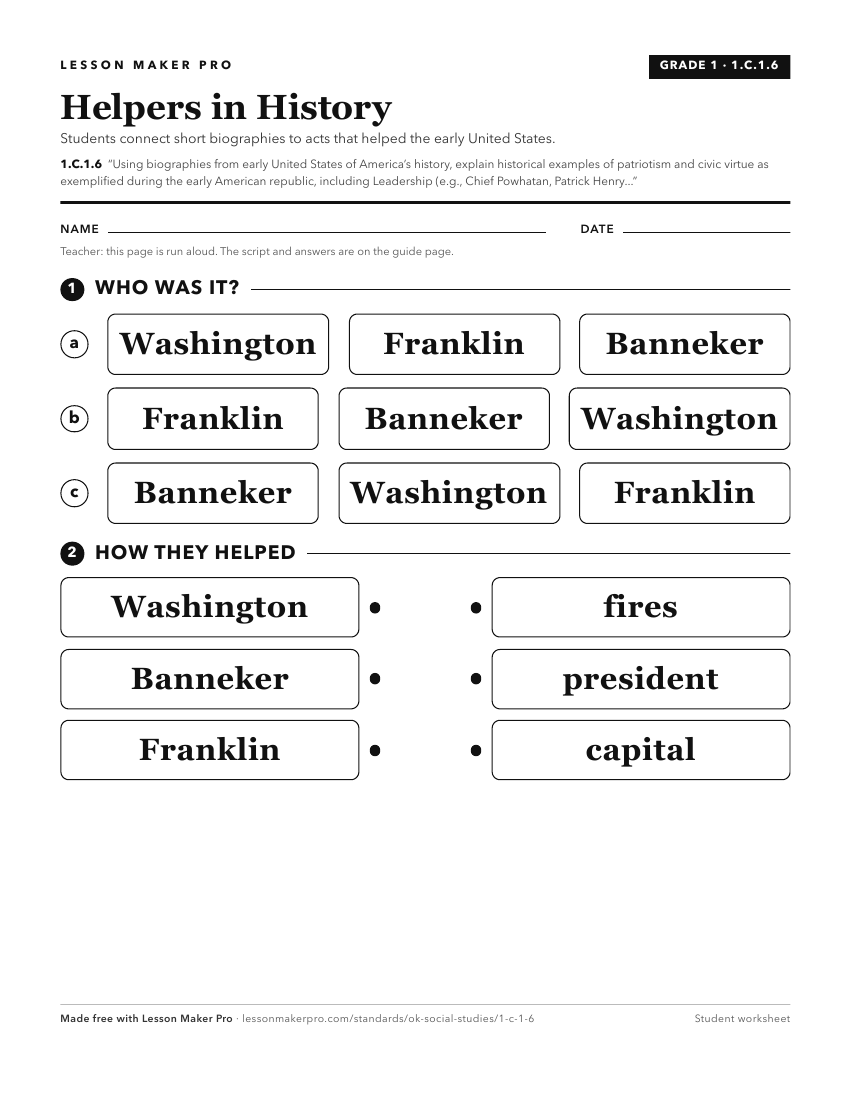
A ready-to-print activity worksheet aligned to 1.C.1.6, with an answer key for the teacher on its own page. No account needed.
PDF, US Letter, prints cleanly in black and white.
Download the worksheetKeep exploring
Related Standards
- 2.C.2.6
Research biographies of notable Americans who exhibited patriotism and civic virtues by describing how each individual contributed to the welfare and betterment...
- 5.P.2.1.A
Explain democratic principles in historic documents by identifying examples of civic virtues and principles at work in state and national settings.
- 4.P.2.1.A
Explain democratic principles in historic documents by identifying examples of civic virtues and principles at work in state and national settings.
- 1.C.1.5
Explain patriotic traditions that unite citizens.
Turn this cluster into a lesson
Grade, subject, topic, and the complete cluster are prefilled. Create one free, no account needed.
Also for this cluster:Make a WorksheetMake a QuizMake a Sub Lesson