Oklahoma Social Studies 5.C.1
Standard Cluster
Examine and compare the Jamestown and Plymouth settlements as the foundations of American culture and society. Describe the region prior to English settlement as the home to established and self-governing Native societies representing multiple cultures and engaging in vast intertribal trade routes. Summarize the economic, political, and cultural reasons for European colonization of North America, including competition over the continent’s land and natural resources, the development of new trade relationships, and opportunities for religious freedom. Explain England’s goals for the settlement of Virginia, including attempts to stake claim on North America at Roanoke and to develop Jamestown as a profit venture for investors. Explain the personal, economic, and political forces driving labor migration to Virginia, including immigration, indentured servitude, and the enslavement of Africans. Analyze the early successes and challenges of Jamestown, by explaining the leadership and diplomacy of Captain John Smith challenges of the Starving Time and the value of Powhatan trade to sustain the colony export of natural resources and John Rolfe’s development of tobacco as a cash crop deteriorating relationships with the Powhatan, characterized by differing views on land ownership. Explain the English commitment to the permanent settlement at Jamestown as evidenced through an elected representative government (House of Burgesses), private ownership of land, and the recruitment of women and families. Describe the importance of freedom from religious persecution that motivated immigration by Pilgrims (separatists) to Plymouth Colony as opposed to economic reasons that motivated other colonists. Explain the early successes and challenges for Pilgrims of the Plymouth settlement including the adaptation to an unfamiliar and harsh environment practice of self-government established by the Mayflower Compact leadership of William Bradford. Explain the founding and development of the Massachusetts Bay Colony, including a stable government influenced by Puritan religious beliefs self-government through town meetings governors elected by freemen protection of individual rights established in the Massachusetts Body of Liberties. leadership of John Winthrop and his vision of a “city upon a hill.” Describe the contact and exchange between colonists and Native peoples by explaining how American Indian knowledge of the environment, agricultural practices (e.g., three sisters), and hunting skills contributed to the sustenance of colonial settlements early alliances with the Wampanoag under the leadership of Ousamequin (Massasoit) and the importance of Tisquantum (Squanto) to Plymouth’s survival how contact between cultures led at times to misunderstandings and conflict.
Oklahoma Academic Standards for Social Studies (2026)
Cluster contents
Standards in This Cluster
5.C.1 is a cluster heading. These are the individual standards under it.
- 5.C.1.1
Describe the region prior to English settlement as the home to established and self-governing Native societies representing multiple cultures and engaging in va...
- 5.C.1.2
Summarize the economic, political, and cultural reasons for European colonization of North America, including competition over the continent’s land and natural ...
- 5.C.1.3
Explain England’s goals for the settlement of Virginia, including attempts to stake claim on North America at Roanoke and to develop Jamestown as a profit ventu...
- 5.C.1.4
Explain the personal, economic, and political forces driving labor migration to Virginia, including immigration, indentured servitude, and the enslavement of Af...
- 5.C.1.5
Analyze the early successes and challenges of Jamestown, by explaining the
- 5.C.1.5.A
leadership and diplomacy of Captain John Smith
- 5.C.1.5.B
challenges of the Starving Time and the value of Powhatan trade to sustain the colony
- 5.C.1.5.C
export of natural resources and John Rolfe’s development of tobacco as a cash crop
- 5.C.1.5.D
deteriorating relationships with the Powhatan, characterized by differing views on land ownership.
- 5.C.1.6
Explain the English commitment to the permanent settlement at Jamestown as evidenced through an elected representative government (House of Burgesses), private ...
- 5.C.1.7
Describe the importance of freedom from religious persecution that motivated immigration by Pilgrims (separatists) to Plymouth Colony as opposed to economic rea...
- 5.C.1.8
Explain the early successes and challenges for Pilgrims of the Plymouth settlement including the
- 5.C.1.8.A
adaptation to an unfamiliar and harsh environment
- 5.C.1.8.B
practice of self-government established by the Mayflower Compact
- 5.C.1.8.C
leadership of William Bradford.
- 5.C.1.9
Explain the founding and development of the Massachusetts Bay Colony, including
- 5.C.1.9.A
a stable government influenced by Puritan religious beliefs
- 5.C.1.9.B
self-government through town meetings
- 5.C.1.9.C
governors elected by freemen
- 5.C.1.9.D
protection of individual rights established in the Massachusetts Body of Liberties.
- 5.C.1.9.E
leadership of John Winthrop and his vision of a “city upon a hill.”
- 5.C.1.10
Describe the contact and exchange between colonists and Native peoples by explaining
- 5.C.1.10.A
how American Indian knowledge of the environment, agricultural practices (e.g., three sisters), and hunting skills contributed to the sustenance of colonial set...
- 5.C.1.10.B
early alliances with the Wampanoag under the leadership of Ousamequin (Massasoit) and the importance of Tisquantum (Squanto) to Plymouth’s survival
- 5.C.1.10.C
how contact between cultures led at times to misunderstandings and conflict.
Teacher's field guide
What This Cluster Means
What Students Need to Do
- Students compare Jamestown, Plymouth, and Massachusetts Bay by why people settled there, how they governed, and how they interacted with Native peoples. They describe Native governments, farms, and trade routes that existed before English colonization. They explain how competition for land and trade, profit, and religious freedom shaped settlement.
What Mastery Looks Like
- Students connect England's failed Roanoke settlement, Jamestown's investors, Powhatan trade, the Starving Time, and tobacco to Virginia's growth. They distinguish indentured servants from enslaved Africans and explain how land ownership and arriving families showed a commitment to staying. They compare the House of Burgesses, Mayflower Compact, and Massachusetts town meetings and written rights, noting who could take part.
Common Misconceptions
- Students may assume the land was empty before English settlers arrived, despite established Native governments, farms, and trade routes. They may confuse Plymouth's religious motives with Jamestown's investor goals or treat indentured servants and enslaved Africans as having the same legal status. They may describe Native peoples only as helpers and assume colonial self-government gave everyone a vote.
How to Assess It
- Exit ticket: Make a two-column chart for Jamestown and Plymouth with each colony's founding motive, one Native relationship, and one form of self-government. Below it, name one feature of Native societies before English settlement.
Lesson moves
Ways to Teach It
Trace Native trade routes with yarn on a printed map; label Powhatan and Wampanoag homelands, then add corn, beans, and squash cards.
Read two short accounts of Powhatan and English land use; write why trade helped Jamestown but land claims caused conflict.
Match cards for Smith, Rolfe, Bradford, Winthrop, Ousamequin, and Tisquantum to their actions using a one-page colony timeline.
Read local council public comment rules; compare who may speak today with who could vote in Massachusetts Bay town meetings.
Free download
Printable 5.C.1 Worksheet
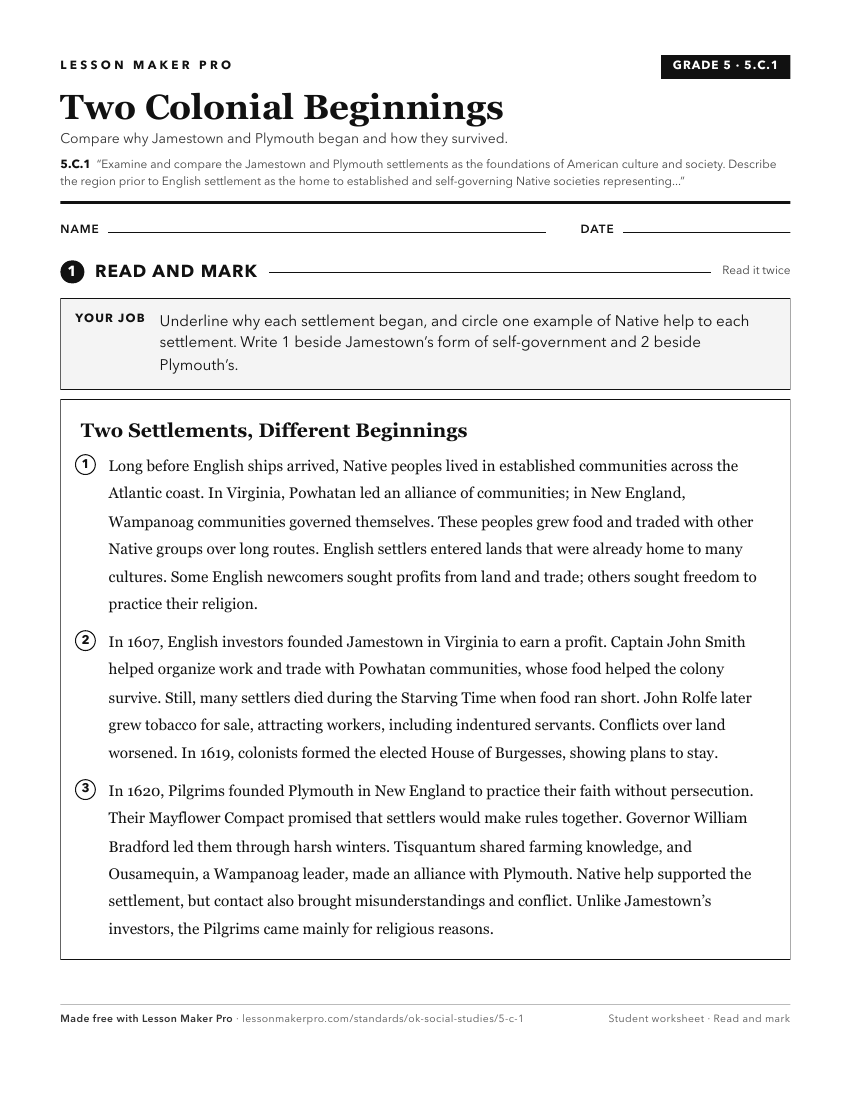
A ready-to-print activity worksheet aligned to 5.C.1, with an answer key for the teacher on its own page. No account needed.
PDF, US Letter, prints cleanly in black and white.
Download the worksheetKeep exploring
Related Standards
- 4.C.3.1
Examine the various American Indian cultures inhabiting the nation prior to European explorations.
- 8.C.1.1.C
Examine how British colonial ideas and practices of self-government (e.g., town meetings and colonial legislatures) influenced American political thought.
- 1.C.2.7
Identify stories about people and ideas that influenced the American colonists, the Founders, and American culture.
Turn this cluster into a lesson
Grade, subject, topic, and the complete cluster are prefilled. Create one free, no account needed.
Also for this cluster:Make a WorksheetMake a QuizMake a Sub Lesson