Oklahoma Social Studies 5.C.1.10
Standard Cluster
- 5.C.1
- Examine and compare the Jamestown and Plymouth settlements as the foundations of American culture and society.
Describe the contact and exchange between colonists and Native peoples by explaining how American Indian knowledge of the environment, agricultural practices (e.g., three sisters), and hunting skills contributed to the sustenance of colonial settlements early alliances with the Wampanoag under the leadership of Ousamequin (Massasoit) and the importance of Tisquantum (Squanto) to Plymouth’s survival how contact between cultures led at times to misunderstandings and conflict.
Oklahoma Academic Standards for Social Studies (2026) · 5.C.1
Cluster contents
Standards in This Cluster
5.C.1.10 is a cluster heading. These are the individual standards under it.
- 5.C.1.10.A
how American Indian knowledge of the environment, agricultural practices (e.g., three sisters), and hunting skills contributed to the sustenance of colonial set...
- 5.C.1.10.B
early alliances with the Wampanoag under the leadership of Ousamequin (Massasoit) and the importance of Tisquantum (Squanto) to Plymouth’s survival
- 5.C.1.10.C
how contact between cultures led at times to misunderstandings and conflict.
Teacher's field guide
What This Cluster Means
What Students Need to Do
- Students explain how Native knowledge of local plants, farming, and hunting helped Plymouth settlers find food. They explain how Tisquantum helped the settlers and why Ousamequin formed an alliance with them. They also describe how contact led to misunderstandings and conflict.
What Mastery Looks Like
- A student can explain how a skill, such as growing corn or hunting local animals, helped settlers survive. They can describe Tisquantum’s help and the purpose of Ousamequin’s alliance. They can name a cause of conflict without treating all Native peoples as one group.
Common Misconceptions
- Some students think Tisquantum spoke for every Native nation, or that Ousamequin offered an alliance only out of kindness. Others assume that cooperation meant there were no disputes over land or resources.
How to Assess It
- Exit ticket: In four sentences, explain how farming or hunting knowledge helped Plymouth, what Tisquantum did, why Ousamequin formed an alliance, and one cause of conflict.
Lesson moves
Ways to Teach It
Give pairs corn, bean, and squash seed packets; have them sketch a Three Sisters plot and label how farming knowledge could help settlers eat.
Read a brief account of Ousamequin’s 1621 agreement with Plymouth; ask, "Why might both sides want allies, and what could go wrong?"
Sort cards reading "Tisquantum translates," "Ousamequin agrees to mutual defense," "corn grows with beans," and "settlers claim Wampanoag land" into survival, alliance, or conflict piles.
Use the school garden’s planting calendar to choose dates for corn, beans, and squash, then explain why local weather knowledge matters.
Free download
Printable 5.C.1.10 Worksheet
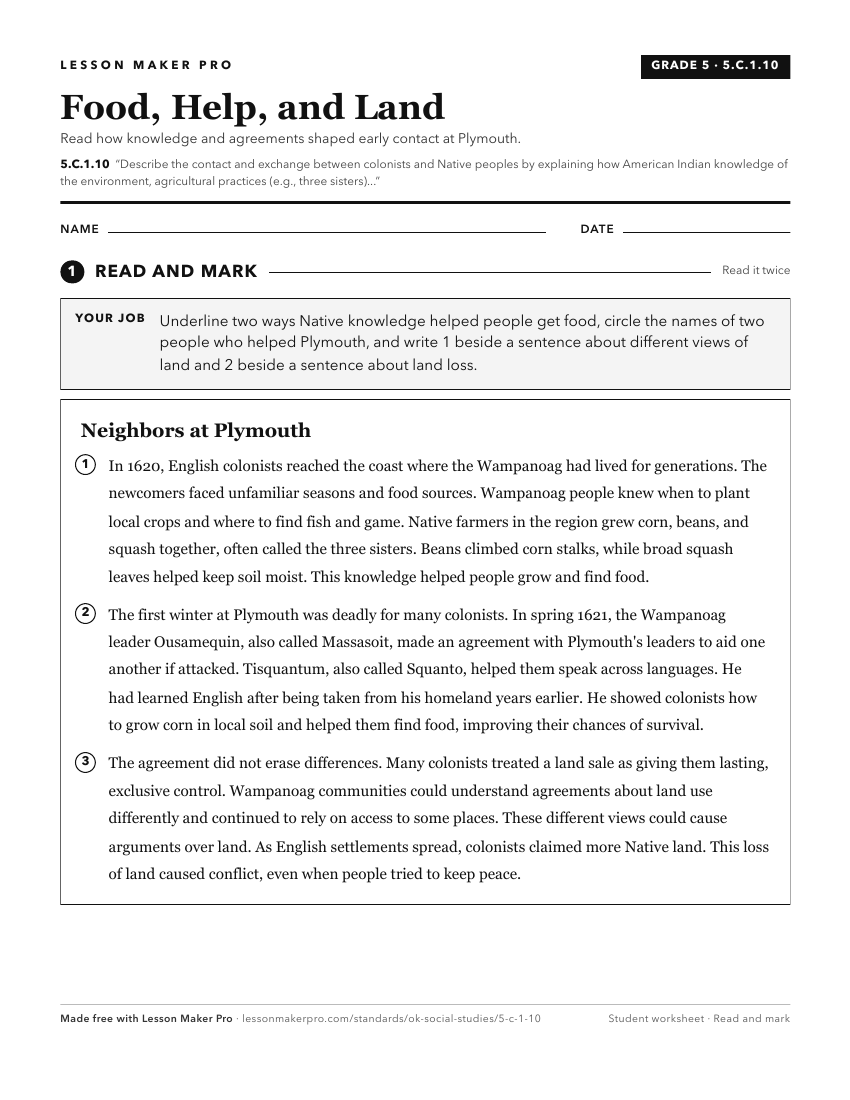
A ready-to-print activity worksheet aligned to 5.C.1.10, with an answer key for the teacher on its own page. No account needed.
PDF, US Letter, prints cleanly in black and white.
Download the worksheetKeep exploring
Related Standards
- 5.C.2.5.A
although colonists and American Indians benefited from trade, disputes erupted over territorial claims.
- 4.C.3.2.C
Explain interactions between American Indians, Spanish explorations, French fur traders, and early European settlers, comparing different perspectives toward la...
- MWH.C.2.5.D
Describe the major economic and cultural effects of the Columbian Exchange and explain how the enslavement of Indigenous peoples and Africans was used for the d...
- 5.C.2.5
Analyze the evolving relationship between American Indians and the British colonists by describing how
Turn this cluster into a lesson
Grade, subject, topic, and the complete cluster are prefilled. Create one free, no account needed.
Also for this cluster:Make a WorksheetMake a QuizMake a Sub Lesson