Oklahoma Social Studies 3.C.2.4
Standard Cluster
- 3.C.2
- Examine Oklahoma’s geography and how people of Oklahoma interact with their environment.
Examine how Oklahomans continue to adapt and modify their environments to meet their needs. Summarize how weather events, such as floods and tornadoes, impact the people and economy of Oklahoma. Explain how Oklahomans changed their environments to support development of the state (e.g., recreational lakes, hydroelectric dams, wildlife refuges, the McClellan-Kerr Arkansas River Navigation System). Examine the concepts of scarcity and surplus of natural resources and describe the role of citizens in conserving the state’s resources (e.g., water rationing, recycling efforts).
Oklahoma Academic Standards for Social Studies (2026) · 3.C.2
Cluster contents
Standards in This Cluster
3.C.2.4 is a cluster heading. These are the individual standards under it.
- 3.C.2.4.A
Summarize how weather events, such as floods and tornadoes, impact the people and economy of Oklahoma.
- 3.C.2.4.B
Explain how Oklahomans changed their environments to support development of the state (e.g., recreational lakes, hydroelectric dams, wildlife refuges, the McCle...
- 3.C.2.4.C
Examine the concepts of scarcity and surplus of natural resources and describe the role of citizens in conserving the state’s resources (e.g., water rationing, ...
Teacher's field guide
What This Cluster Means
What Students Need to Do
- Students describe how floods and tornadoes affect families, farms, and businesses. They explain how dams, lakes, wildlife refuges, and river routes change land and water to meet needs. They identify scarce and surplus resources and describe ways people conserve them.
What Mastery Looks Like
- Given a flood or tornado photo, a student names an effect on families and a cost to farms or shops. They explain how a dam stores water or how river locks help barges move goods. They tell whether a water supply is scarce or surplus and suggest a way to conserve it.
Common Misconceptions
- Students may think storms damage homes but not crops, roads, or businesses. They may think dams create water rather than store it. They may confuse a surplus with an unlimited supply and think there is no reason to conserve it.
How to Assess It
- Exit ticket: A flood closes shops, and a town's dam stores river water for dry months. Name one economic cost of the flood, explain what the dam changes, and give one way families can save water during a shortage.
Lesson moves
Ways to Teach It
Give pairs clay, foil, and water; have them build a river dam and test where water collects after a small pour.
Show a photo of tornado damage to an Oklahoma farm; ask who loses money when crops, roads, and buildings are damaged.
Play a sorting game with cards showing low water supplies or extra stored water; students label scarcity or surplus and suggest a conservation choice.
Use a labeled map of the McClellan-Kerr waterway; circle its locks and trace a barge route for Oklahoma grain to the Mississippi River.
Free download
Printable 3.C.2.4 Worksheet
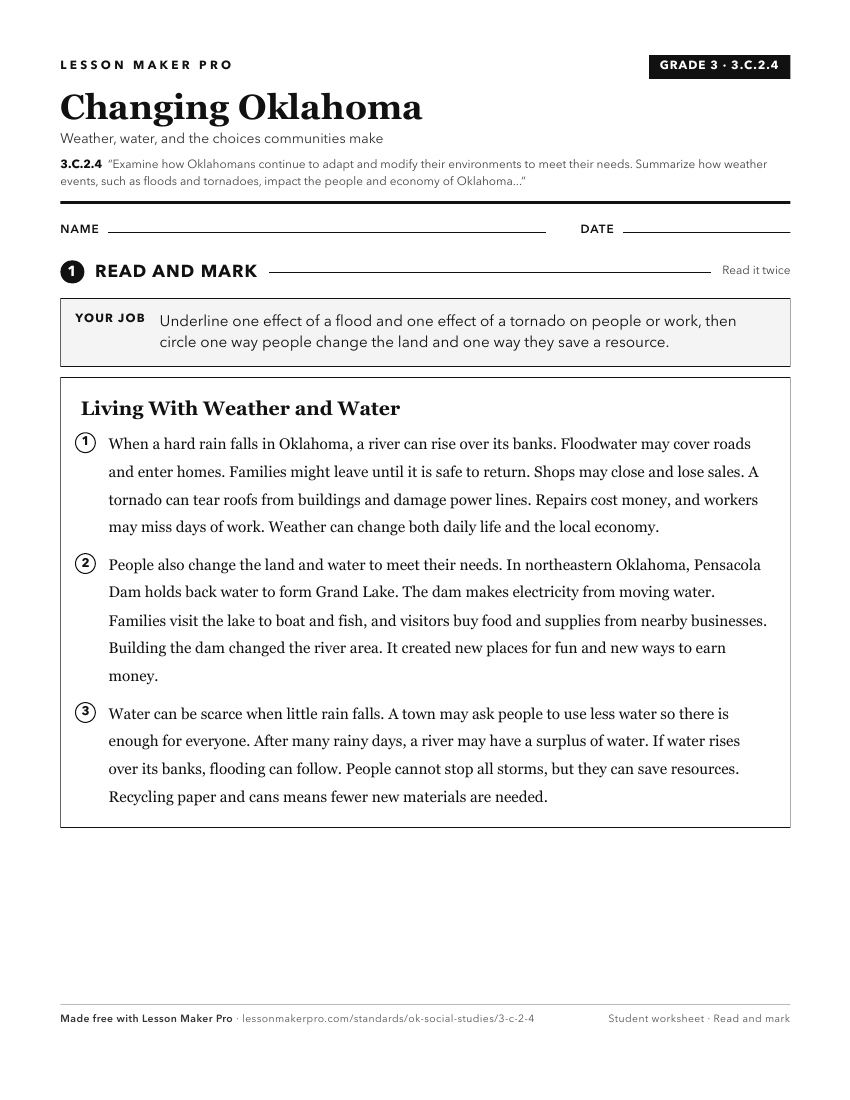
A ready-to-print activity worksheet aligned to 3.C.2.4, with an answer key for the teacher on its own page. No account needed.
PDF, US Letter, prints cleanly in black and white.
Download the worksheetKeep exploring
Related Standards
- 3.C.2.3
Describe ways early inhabitants of present-day Oklahoma satisfied their basic needs and wants by interacting with the environment and using the natural resource...
- 3.C.2
Examine Oklahoma’s geography and how people of Oklahoma interact with their environment.
- 3.C.3.2.E
Describe challenges faced by citizens during the Dust Bowl, focusing on how Oklahomans adapted to harsh environmental conditions and survived economic hardships...
Turn this cluster into a lesson
Grade, subject, topic, and the complete cluster are prefilled. Create one free, no account needed.
Also for this cluster:Make a WorksheetMake a QuizMake a Sub Lesson