Oklahoma Social Studies 1.C.2
Standard Cluster
Examine how we learn from the important events and people of the past. Describe and explain the meaning of important symbols of the United States of America (e.g., Bald Eagle, Liberty Bell) and examine how American symbols, holidays, and celebrations help to develop a shared sense of history and community. Identify primary sources (e.g., letters, photographs, diaries, newspapers, artifacts, official papers) and explain how they help us learn about the past through firsthand accounts. Read and construct basic timelines of related events to demonstrate an understanding of the concept of chronology, as well as cause and effect relationships. Compare ways individuals and groups in the local community and region lived in the past with how they live today (e.g., housing, communication, transportation, occupations). Explain how American Indians lived in environments and communities of their original homelands and thrive in Tribal communities today. Explain how citizens from different cultural backgrounds immigrated to the United States of America, and contributed their traditions to our national heritage. Identify stories about people and ideas that influenced the American colonists, the Founders, and American culture. Describe the contributions of people and groups commemorated on federal holidays (e.g., Veterans Day, Presidents’ Day, Dr. Martin Luther King, Jr. Day, Independence Day).
Oklahoma Academic Standards for Social Studies (2026)
Cluster contents
Standards in This Cluster
1.C.2 is a cluster heading. These are the individual standards under it.
- 1.C.2.1
Describe and explain the meaning of important symbols of the United States of America (e.g., Bald Eagle, Liberty Bell) and examine how American symbols, holiday...
- 1.C.2.2
Identify primary sources (e.g., letters, photographs, diaries, newspapers, artifacts, official papers) and explain how they help us learn about the past through...
- 1.C.2.3
Read and construct basic timelines of related events to demonstrate an understanding of the concept of chronology, as well as cause and effect relationships.
- 1.C.2.4
Compare ways individuals and groups in the local community and region lived in the past with how they live today (e.g., housing, communication, transportation, ...
- 1.C.2.5
Explain how American Indians lived in environments and communities of their original homelands and thrive in Tribal communities today.
- 1.C.2.6
Explain how citizens from different cultural backgrounds immigrated to the United States of America, and contributed their traditions to our national heritage.
- 1.C.2.7
Identify stories about people and ideas that influenced the American colonists, the Founders, and American culture.
- 1.C.2.8
Describe the contributions of people and groups commemorated on federal holidays (e.g., Veterans Day, Presidents’ Day, Dr. Martin Luther King, Jr. Day, Independ...
Teacher's field guide
What This Cluster Means
What Students Need to Do
- Students use photos, letters, and objects to learn about people and events from long ago. They put events in order, explain a simple cause and effect, and compare life then and now. They explain national symbols and holidays and describe how Native communities, immigrants, and early leaders shaped the country.
What Mastery Looks Like
- A student can tell what an old photo shows and what it cannot tell us. They can order three events and name a change in travel, housing, or communication. They can explain what the Liberty Bell represents, name someone honored by a holiday, and describe a Native community today.
Common Misconceptions
- Students may treat an old-looking drawing as a firsthand record or put events in the order they heard about them. They may think all Native people lived alike or only lived long ago. They may describe what a symbol looks like without knowing what it means.
How to Assess It
- Show a dated photo of a horse-drawn wagon and a recent photo of a school bus. Ask students to put them in order, name one change in travel, and say what the older photo tells us.
Lesson moves
Ways to Teach It
Give pairs an old local street photo and a current one; have them circle travel clues and place the photos in date order.
Show a photo from a contemporary Cherokee Nation event and ask, 'What does this show about Cherokee life today? What can’t we tell?'
Play a card match: pair the Liberty Bell with freedom, the bald eagle with the United States, and Veterans Day with service members.
Read a flyer for a local cultural festival; ask what tradition it shares and how families might have brought that tradition here.
Free download
Printable 1.C.2 Worksheet
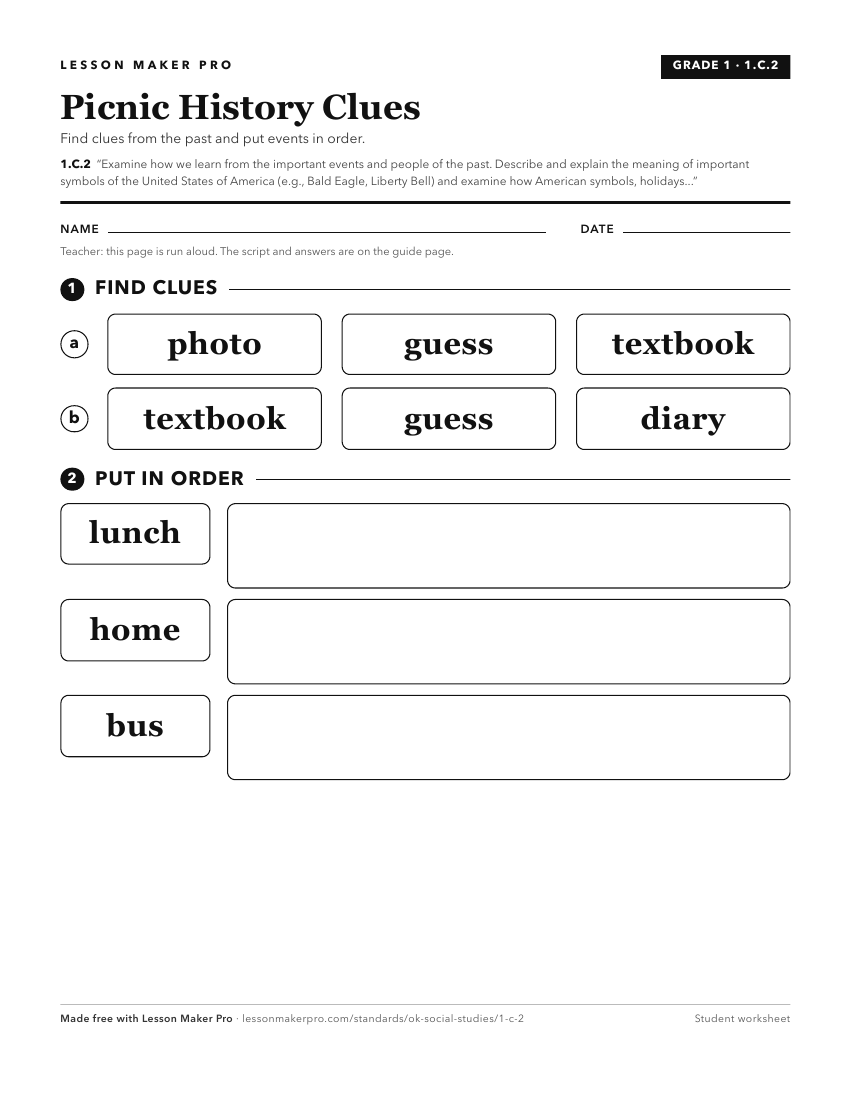
A ready-to-print activity worksheet aligned to 1.C.2, with an answer key for the teacher on its own page. No account needed.
PDF, US Letter, prints cleanly in black and white.
Download the worksheetKeep exploring
Related Standards
- 3.P.2.2
Develop skills which demonstrate an understanding of historical events and the people who shaped our history.
- K.C.2
Understand the impact of historical events and people.
- OKH.P.2.2
Develop skills which demonstrate an understanding of historical events and the people who shaped our history.
- 2.C.2
Examine the history of significant events and individuals who impacted our nation and the world.
Turn this cluster into a lesson
Grade, subject, topic, and the complete cluster are prefilled. Create one free, no account needed.
Also for this cluster:Make a WorksheetMake a QuizMake a Sub Lesson