Oklahoma Social Studies 1.C.1
Standard Cluster
Analyze their role as a citizen in a community. Identify the basic purposes of our nation’s government and explain how it protects a citizen's rights, while providing for the common good (e.g., health, safety, and the protection of property). Describe how people hold the power in our government by electing leaders who make laws. Define the concept of civic duty, identifying characteristics of responsible citizenship (e.g., respect for laws, voting, and volunteerism). Describe how citizens within communities work together to accomplish common tasks, using examples relevant to student experiences. Explain patriotic traditions that unite citizens. Explain the purpose and meaning of The Pledge of Allegiance and the significance of the phrase “under God”. Explain the purpose and the meaning of the Salute to the Oklahoma Flag. Describe appropriate flag etiquette for both the national and state flags. Explain appropriate ways to show respect during the playing of the national anthem, “The Star-Spangled Banner”, by Francis Scott Key. Examine ways citizens can demonstrate patriotism, including military service, honoring veteran cemeteries, and celebrating Independence Day. Explain how we celebrate our nation and its history through patriotic songs (e.g., “My Country ‘tis of Thee”, “God Bless America”). Using biographies from early United States of America’s history, explain historical examples of patriotism and civic virtue as exemplified during the early American republic, including Leadership (e.g., Chief Powhatan, Patrick Henry, Thomas Jefferson) Military Service (e.g., John Paul Jones, Nathan Hale) Science and Technology (e.g., Benjamin Banneker, Meriwether Lewis, William Clark) Public Service (e.g., Benjamin Franklin, George Washington, James Madison). Identify and explain the meaning of the United States of America’s official motto, "In God we trust”.
Oklahoma Academic Standards for Social Studies (2026)
Cluster contents
Standards in This Cluster
1.C.1 is a cluster heading. These are the individual standards under it.
- 1.C.1.1
Identify the basic purposes of our nation’s government and explain how it protects a citizen's rights, while providing for the common good (e.g., health, safety...
- 1.C.1.2
Describe how people hold the power in our government by electing leaders who make laws.
- 1.C.1.3
Define the concept of civic duty, identifying characteristics of responsible citizenship (e.g., respect for laws, voting, and volunteerism).
- 1.C.1.4
Describe how citizens within communities work together to accomplish common tasks, using examples relevant to student experiences.
- 1.C.1.5
Explain patriotic traditions that unite citizens.
- 1.C.1.5.A
Explain the purpose and meaning of The Pledge of Allegiance and the significance of the phrase “under God”.
- 1.C.1.5.B
Explain the purpose and the meaning of the Salute to the Oklahoma Flag.
- 1.C.1.5.C
Describe appropriate flag etiquette for both the national and state flags.
- 1.C.1.5.D
Explain appropriate ways to show respect during the playing of the national anthem, “The Star-Spangled Banner”, by Francis Scott Key.
- 1.C.1.5.E
Examine ways citizens can demonstrate patriotism, including military service, honoring veteran cemeteries, and celebrating Independence Day.
- 1.C.1.5.F
Explain how we celebrate our nation and its history through patriotic songs (e.g., “My Country ‘tis of Thee”, “God Bless America”).
- 1.C.1.6
Using biographies from early United States of America’s history, explain historical examples of patriotism and civic virtue as exemplified during the early Amer...
- 1.C.1.6.A
Leadership (e.g., Chief Powhatan, Patrick Henry, Thomas Jefferson)
- 1.C.1.6.B
Military Service (e.g., John Paul Jones, Nathan Hale)
- 1.C.1.6.C
Science and Technology (e.g., Benjamin Banneker, Meriwether Lewis, William Clark)
- 1.C.1.6.D
Public Service (e.g., Benjamin Franklin, George Washington, James Madison).
- 1.C.1.7
Identify and explain the meaning of the United States of America’s official motto, "In God we trust”.
Teacher's field guide
What This Cluster Means
What Students Need to Do
- Children explain how voters choose leaders, how laws protect people and property, and how neighbors help each other. They describe the pledge, the national motto, the Oklahoma flag salute, and respectful behavior during flag ceremonies and the anthem. They use songs, holidays, and stories about early Americans and veterans to name ways people serve the country.
What Mastery Looks Like
- A student can name a safety law and explain that voters choose leaders who make laws. They can say the pledge promises loyalty, the Oklahoma flag salute calls for peace, and references to God express trust, not a required belief. They can handle both flags carefully, stand respectfully for the anthem, and name a way Benjamin Franklin helped others.
Common Misconceptions
- Some children think leaders make laws without voters choosing them. Others think rights mean they can do anything, even if it puts neighbors at risk. They may think everyone must say the pledge or share the belief expressed in the national motto.
How to Assess It
- Give students a three-box exit ticket: Draw a rule that keeps people safe, tell who chooses leaders, and show how to act when the anthem plays.
Lesson moves
Ways to Teach It
Hold a paper-ballot vote for a cleanup captain, then have the elected student organize a five-minute pencil and crayon cleanup.
Read a short Benjamin Franklin biography and ask, "How did his volunteer fire company help neighbors, and how could we help ours?"
Match picture cards of the U.S. and Oklahoma flags to their salutes, then practice standing respectfully for an anthem recording.
Show a photo of a veterans' cemetery, then have students draw how visitors can honor those who served.
Free download
Printable 1.C.1 Worksheet
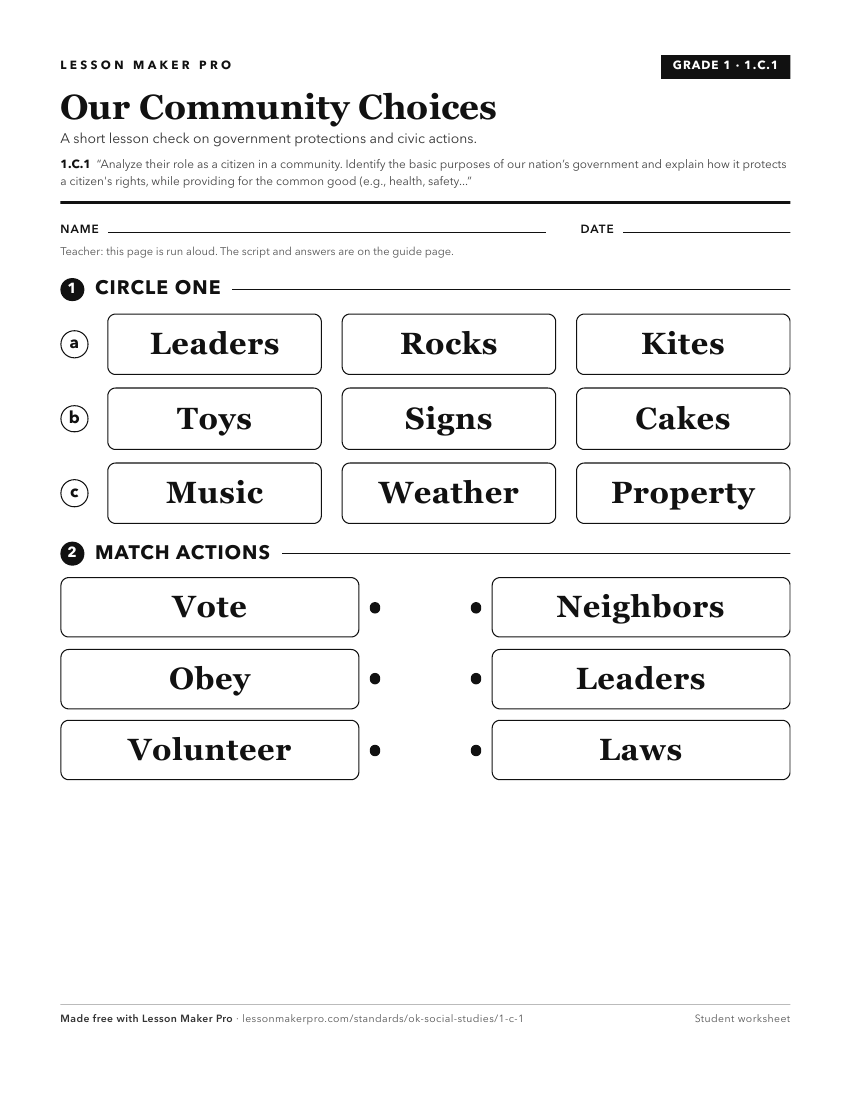
A ready-to-print activity worksheet aligned to 1.C.1, with an answer key for the teacher on its own page. No account needed.
PDF, US Letter, prints cleanly in black and white.
Download the worksheetKeep exploring
Related Standards
- 4.C.1.3.B
Analyze how fulfilling one’s civic responsibilities (e.g., voting, jury and military service, paying taxes) is necessary for the health and continuity of a cons...
- 5.C.6.5
Analyze the role and responsibilities of all United States of America citizens by explaining
- K.C.1
Understand and demonstrate traits of good citizenship.
- 3.C.1
Analyze the purpose of government and traits of responsible citizens.
Turn this cluster into a lesson
Grade, subject, topic, and the complete cluster are prefilled. Create one free, no account needed.
Also for this cluster:Make a WorksheetMake a QuizMake a Sub Lesson