Oklahoma Science ES.ESS2.4
The Standard
Analyze and interpret data to explore how variations in the flow of energy into and out of Earth’s systems cause changes to the atmosphere and climate.
Oklahoma Academic Standards for Science (2026)
Teacher's field guide
What This Standard Means
What Students Need to Do
- Students read data on sunlight absorbed by Earth, heat leaving Earth, and temperature. They use the data to explain how a lasting change in energy flow can warm or cool the climate.
What Mastery Looks Like
- A student can compare incoming and outgoing energy in a table or graph. They can explain why a lasting energy gain leads to warming and support that claim with numbers.
Common Misconceptions
- Students may treat one hot day as proof of climate change. Some think greenhouse gases add sunlight, rather than slow the escape of heat, or that reflected sunlight warms Earth.
How to Assess It
- Exit ticket: Incoming sunlight stays at 240 W/m², while outgoing heat drops from 240 to 238 W/m². If that gap lasts, will Earth's average temperature rise or fall? Explain why.
Lesson moves
Ways to Teach It
Put black paper and aluminum foil under the same lamp; record temperatures every minute for five minutes and compare how much each warms.
Give pairs a graph of absorbed sunlight and outgoing heat; ask which trend would warm Earth and which data points support their answer.
Sort cards labeled snow loss, volcanic ash, and added greenhouse gases by whether each changes absorbed sunlight or outgoing heat.
Show two dated Arctic sea ice maps; ask how newly exposed dark ocean could change sunlight absorption and long-term temperature.
Free download
Printable ES.ESS2.4 Worksheet
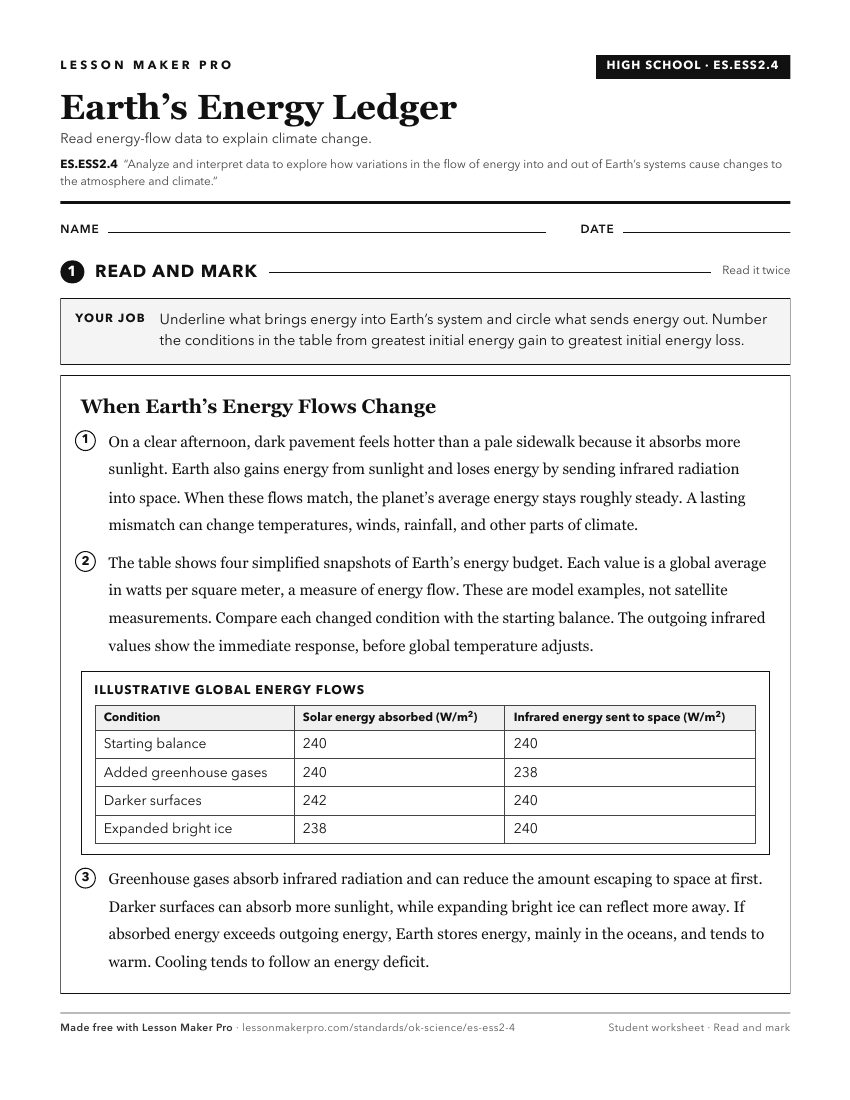
A ready-to-print activity worksheet aligned to ES.ESS2.4, with an answer key for the teacher on its own page. No account needed.
PDF, US Letter, prints cleanly in black and white.
Download the worksheetKeep exploring
Related Standards
- 6.ESS2.6
Develop or modify a model to describe how unequal heating and rotation of the Earth causes patterns of atmospheric and oceanic circulation that determine region...
- EN.ESS2.2
Analyze geoscience data to make the claim that one change to Earth’s surface can create feedback and interactions that cause changes to other Earth systems.
- EN.ESS2.4
Analyze and interpret data to explore how variations in the flow of energy into and out of Earth’s systems cause changes to the atmosphere and climate.
- ES.ESS2.2
Analyze geoscience data to make the claim that one change to Earth’s surface can create feedback and interactions that cause changes to other Earth systems.
Turn this exact standard into a lesson
Grade, subject, topic, and the complete standard are prefilled. Create one free, no account needed.
Also for this standard:Make a WorksheetMake a QuizMake a Sub Lesson