Oklahoma Science ES.ESS2.2
The Standard
Analyze geoscience data to make the claim that one change to Earth’s surface can create feedback and interactions that cause changes to other Earth systems.
Oklahoma Academic Standards for Science (2026)
Teacher's field guide
What This Standard Means
What Students Need to Do
- Students compare plant cover, runoff, and sediment measurements from grassy and bare slopes after equal rain. They explain how losing plants can change water flow, wash away soil, and make it harder for plants to grow back.
What Mastery Looks Like
- A student points to higher runoff and sediment readings from the bare slope as evidence. They explain that soil loss limits plant regrowth, leaving the slope exposed during the next storm.
Common Misconceptions
- Some students call any chain of events feedback, even when nothing loops back to affect the slope. Others compare runoff from two storms without checking whether the same amount of rain fell.
How to Assess It
- Exit ticket: After equal rain, a grassy slope produces 2 L runoff and 1 g sediment; a bare slope produces 7 L and 12 g. Use the measurements to explain how soil loss could lead to less plant cover and more runoff in the next storm.
Lesson moves
Ways to Teach It
Pour equal amounts of water over trays of grass and bare soil, then compare the runoff volume and collected sediment.
Give students runoff data from grassy and bare slopes; ask, "How could soil loss make the next storm worse?"
Have pairs arrange cards labeled plant loss, runoff, soil loss, and reduced regrowth into a loop, then defend their order.
Show photos of a burned hillside and a muddy creek after rain; ask students to sketch what might happen during later storms.
Free download
Printable ES.ESS2.2 Worksheet
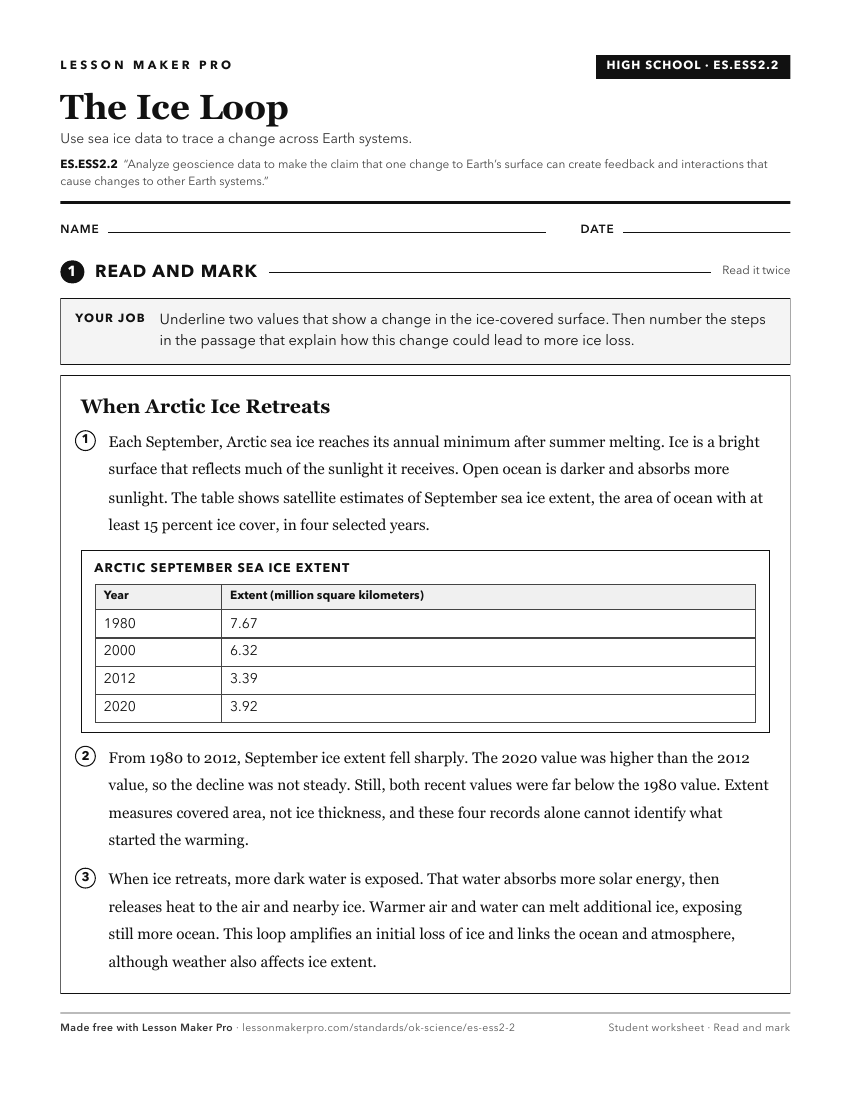
A ready-to-print activity worksheet aligned to ES.ESS2.2, with an answer key for the teacher on its own page. No account needed.
PDF, US Letter, prints cleanly in black and white.
Download the worksheetKeep exploring
Related Standards
- EN.ESS2.2
Analyze geoscience data to make the claim that one change to Earth’s surface can create feedback and interactions that cause changes to other Earth systems.
- EN.ESS2.4
Analyze and interpret data to explore how variations in the flow of energy into and out of Earth’s systems cause changes to the atmosphere and climate.
- ES.ESS2.4
Analyze and interpret data to explore how variations in the flow of energy into and out of Earth’s systems cause changes to the atmosphere and climate.
Turn this exact standard into a lesson
Grade, subject, topic, and the complete standard are prefilled. Create one free, no account needed.
Also for this standard:Make a WorksheetMake a QuizMake a Sub Lesson