Oklahoma Math S.DC.1
Standard Cluster
Distinguish among different types of study designs for collecting data, and know the scope of inference for each design type. Distinguish among sample surveys, experiments, and observational studies. Compare and contrast the benefits of different sampling techniques. Determine the appropriate scope of inference for generalizing results. Explain how sample size impacts the precision with which generalizations can be made. Determine when a cause-and-effect inference can be drawn from an association, based on how the data were collected.
Oklahoma Academic Standards for Mathematics (2022)
Cluster contents
Standards in This Cluster
S.DC.1 is a cluster heading. These are the individual standards under it.
- S.DC.1.1
Distinguish among sample surveys, experiments, and observational studies.
- S.DC.1.2
Compare and contrast the benefits of different sampling techniques.
- S.DC.1.3
Determine the appropriate scope of inference for generalizing results.
- S.DC.1.4
Explain how sample size impacts the precision with which generalizations can be made.
- S.DC.1.5
Determine when a cause-and-effect inference can be drawn from an association, based on how the data were collected.
Teacher's field guide
What This Cluster Means
What Students Need to Do
- Students identify surveys, experiments, and observational studies. They compare ways to select participants and decide whether results apply to a wider group or support a cause-and-effect claim. They explain why a larger sample can improve precision but cannot fix biased selection.
What Mastery Looks Like
- Given a study description, a student spots random selection and random assignment as separate steps. They name the group the results can describe and explain whether the study supports a cause claim.
Common Misconceptions
- Students often confuse random selection with random assignment. They may think a large volunteer sample represents everyone, or that an association proves one thing caused another.
How to Assess It
- A principal randomly selects 80 students from her school, then randomly assigns half to a ten-minute review before a quiz. Ask students to name the study design, say who the results can apply to, and explain whether a score difference supports a cause claim.
Lesson moves
Ways to Teach It
Number a mock class roster from 1 to 30; draw six numbers from a bag, then compare that sample with the first six names.
Ask: Students who sleep longer earn higher grades. What else might explain the pattern, and can we claim sleep caused the higher grades?
Sort four cards: random voter poll, voluntary poll, randomized tutoring trial, and existing-grade study; mark which support population and cause claims.
Show two cafeteria-only lunch surveys, one with 20 replies and one with 200; ask whether either represents the whole school.
Free download
Printable S.DC.1 Worksheet
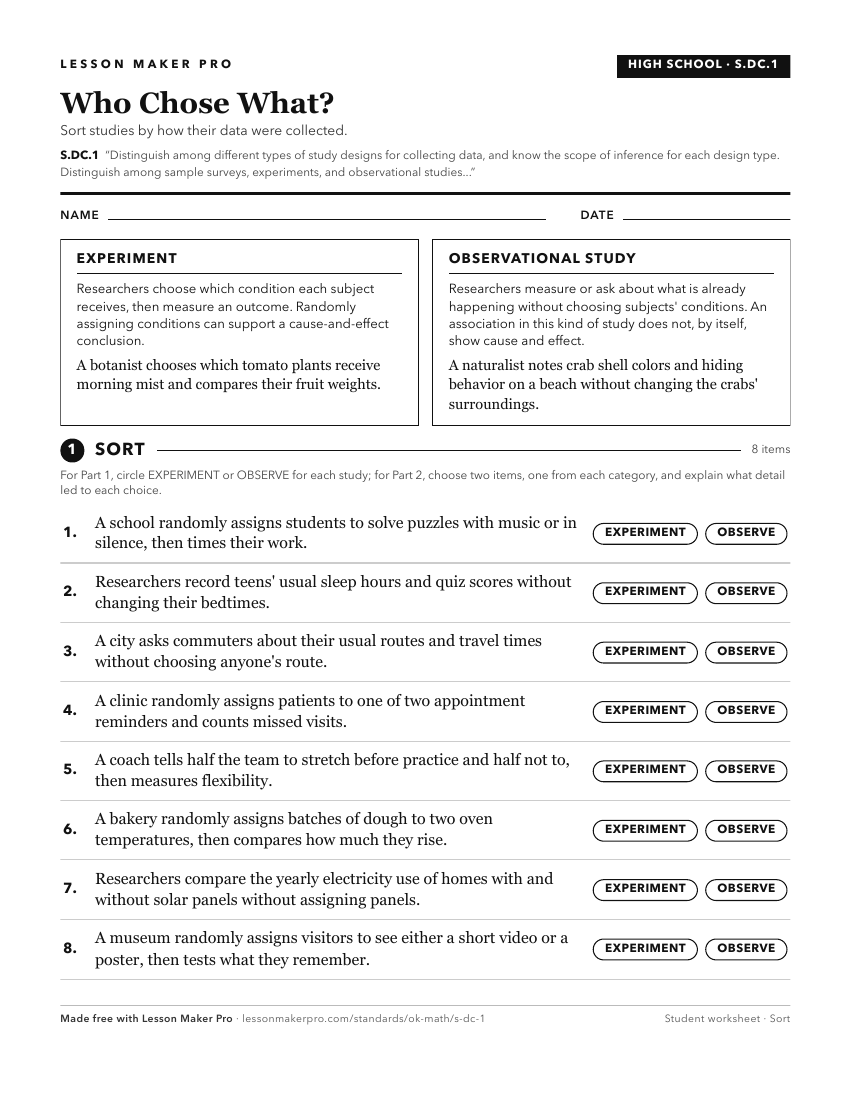
A ready-to-print activity worksheet aligned to S.DC.1, with an answer key for the teacher on its own page. No account needed.
PDF, US Letter, prints cleanly in black and white.
Download the worksheetKeep exploring
Related Standards
Turn this cluster into a lesson
Grade, subject, topic, and the complete cluster are prefilled. Create one free, no account needed.
Also for this cluster:Make a WorksheetMake a QuizMake a Sub Lesson