Oklahoma ELA 3.3.R.3
The Standard
Students will find examples of literary elements: • setting • plot • characters • characterization
Oklahoma Academic Standards for English Language Arts (2021)
Teacher's field guide
What This Standard Means
What Students Need to Do
- Students find where and when a story happens, who is in it, and what happens. They use a character's words and actions to tell what that person is like.
What Mastery Looks Like
- A student can point to details that show the setting and put key events in order. They can name a character trait and explain which words or actions support it.
Common Misconceptions
- Students may name the story's topic instead of telling what happens. They may confuse a character's appearance with a personality trait or name a trait without evidence.
How to Assess It
- Exit ticket: “At the park, Mia gave her umbrella to Ben when it rained. Then they ran home.” Name the setting, characters, one event, and a trait Mia shows. Tell which action shows that trait.
Lesson moves
Ways to Teach It
Give pairs a short story and four sticky notes labeled setting, characters, events, and traits; have them mark one example of each.
Read a page aloud and ask, “What does this character's choice tell you about them? Which sentence helped you decide?”
Play a card match with story details and labels for setting, event, character, and character trait.
Have students retell a real playground moment, naming where it happened, what happened first and next, and what someone's actions showed.
Free download
Printable 3.3.R.3 Worksheet
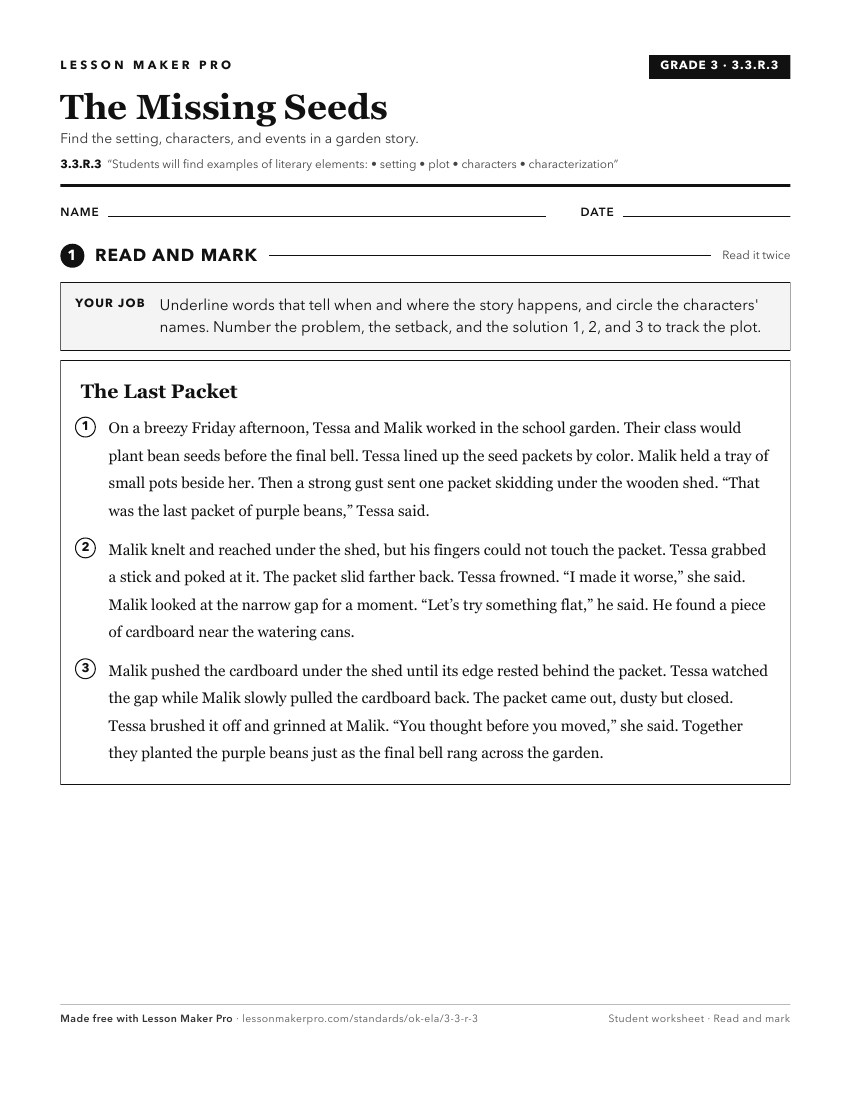
A ready-to-print activity worksheet aligned to 3.3.R.3, with an answer key for the teacher on its own page. No account needed.
PDF, US Letter, prints cleanly in black and white.
Download the worksheetKeep exploring
Related Standards
- 2.3.R.3
Find examples of literary elements:- setting (i.e., time and place)- plot (i.e., beginning, middle, end)- characters and their traits
- 4.3.R.3
Find textual evidence of literary elements:- setting- plot- characters (i.e., protagonist, antagonist)- characterization- conflict
- 1.3.R.3
Find textual evidence when provided with examples of literary elements:- setting ( i.e., time and place)- main characters and their traits
- 8.3.R.3
Analyze literary elements to support interpretations of a literary text:- setting- plot- characters (i.e., protagonist, antagonist)- characterization- conflict ...
Turn this exact standard into a lesson
Grade, subject, topic, and the complete standard are prefilled. Create one free, no account needed.
Also for this standard:Make a WorksheetMake a QuizMake a Sub Lesson