NGSS K-2-ETS1-3
The Standard
Analyze data from tests of two objects designed to solve the same problem to compare the strengths and weaknesses of how each performs.
Next Generation Science Standards
Teacher's field guide
What This Standard Means
What Students Need to Do
- Students read a simple table, tally chart, or picture graph from tests of two designs made for the same job. They compare results using a clear measure, such as weight held, distance traveled, or leaks. They use the data to name strengths and weaknesses.
What Mastery Looks Like
- A student names one strength and one weakness of each object. The student uses observations or numbers from fair tests, rather than personal preference, to explain the comparison.
Common Misconceptions
- Students may choose the object they like best instead of using test results. They may compare results from different test conditions. They may treat one trial as enough or call any imperfect design a failure.
How to Assess It
- Exit ticket: Boat A held 12 pennies but tipped in two of three trials, while Boat B held 9 pennies and stayed upright in all three trials. Draw or write one strength and one weakness for each boat, using the numbers.
Lesson moves
Ways to Teach It
Build two paper bridges from the same size paper, add linking cubes one at a time, and record when each bends.
Show test results for two toy ramps, then ask students to name one strength and one weakness of each using the measurements.
Play Design Detective: pairs match picture data cards to strength and weakness cards, then earn a point for each explanation using evidence.
Test two lunch containers with equal water amounts, then compare leaking, opening, and carrying to decide which works better for school.
Free download
Printable K-2-ETS1-3 Worksheet
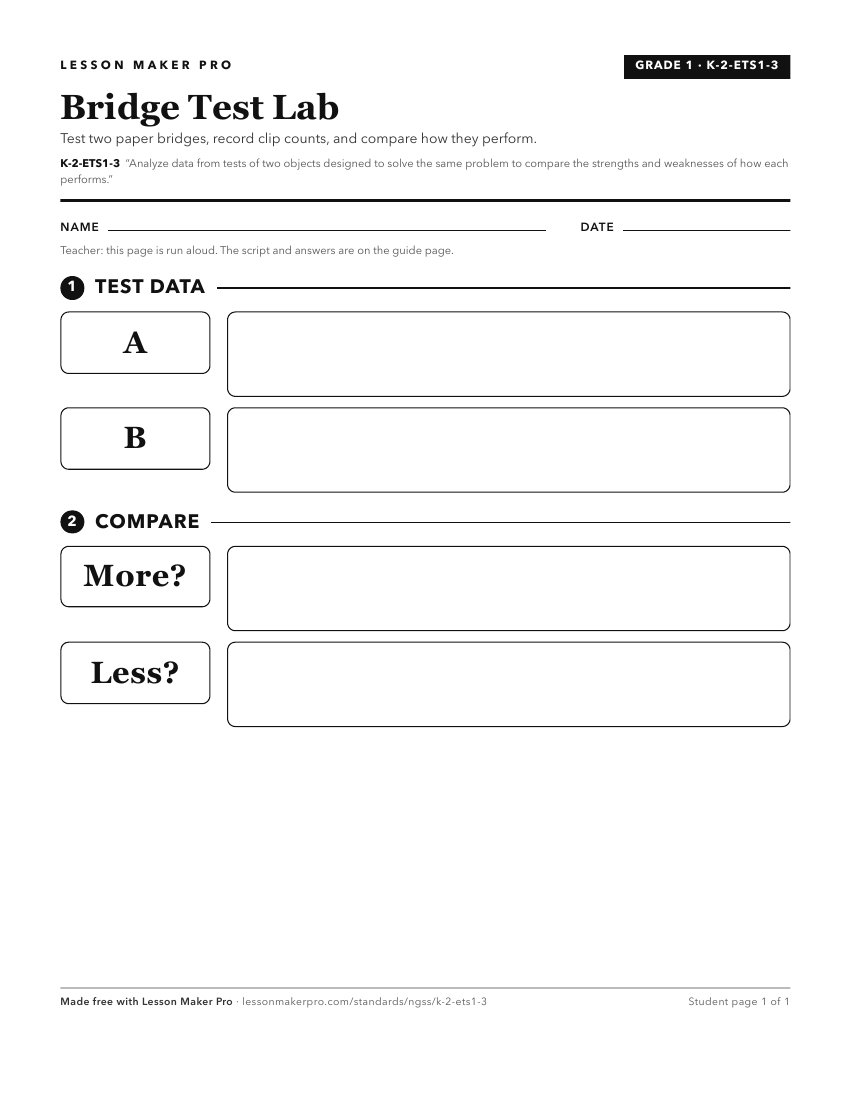
A ready-to-print activity worksheet aligned to K-2-ETS1-3, with an answer key for the teacher on its own page. No account needed.
PDF, US Letter, prints cleanly in black and white.
Download the worksheetKeep exploring
Related Standards
- MS-ETS1-3
Analyze data from tests to determine similarities and differences among several design solutions to identify the best characteristics of each that can be combin...
- MS-ETS1-2
Evaluate competing design solutions using a systematic process to determine how well they meet the criteria and constraints of the problem.
- 3-5-ETS1-2
Generate and compare multiple possible solutions to a problem based on how well each is likely to meet the criteria and constraints of the problem.
- 2-PS1-2
Analyze data obtained from testing different materials to determine which materials have the properties that are best suited for an intended purpose.
Turn this exact standard into a lesson
Grade, subject, topic, and the complete standard are prefilled. Create one free, no account needed.
Also for this standard:Make a WorksheetMake a QuizMake a Sub Lesson