NGSS 2-PS1-2
The Standard
Analyze data obtained from testing different materials to determine which materials have the properties that are best suited for an intended purpose.
Next Generation Science Standards
Teacher's field guide
What This Standard Means
What Students Need to Do
- Students test several materials and record properties they can observe, such as strength, flexibility, hardness, texture, and absorbency. They compare the results and choose the material that best fits a specific job.
What Mastery Looks Like
- Students record results in a simple table using words such as flexible, rough, hard, or absorbent. They choose a suitable material for a named job and support the choice with specific test results.
Common Misconceptions
- Students may choose a material because they like its color or feel rather than using test results. They may assume the strongest or hardest material is always best. They may also confuse an object, such as a towel, with the material it is made from.
How to Assess It
- Give this exit ticket: “Cotton absorbs water, foil blocks water but tears, and plastic blocks water and bends. Which material is best for a rain cover, and why?”
Lesson moves
Ways to Teach It
Test paper, foil, fabric, and plastic as covers for a wet sponge, then record which materials block water and bend easily.
Ask students to write: “Which material would make the best book cover, and what test result supports your choice?”
Play a matching game using property cards, material samples, and job cards, then have partners explain each match.
Examine classroom raincoats, lunch bags, and window shades, then identify how each material’s properties fit its job.
Free download
Printable 2-PS1-2 Worksheet
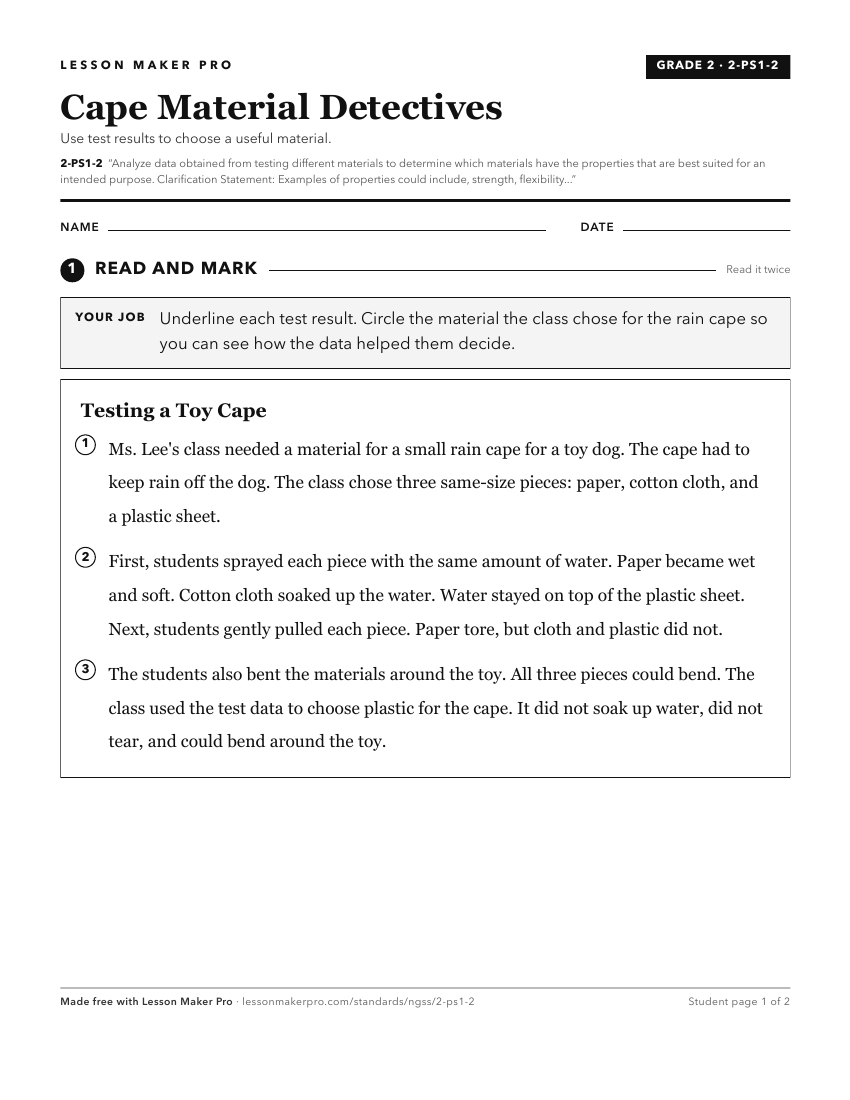
A ready-to-print activity worksheet aligned to 2-PS1-2, with an answer key for the teacher on its own page. No account needed.
PDF, US Letter, prints cleanly in black and white.
Download the worksheetKeep exploring
Related Standards
- 2-PS1-1
Plan and conduct an investigation to describe and classify different kinds of materials by their observable properties.
- MS-ETS1-3
Analyze data from tests to determine similarities and differences among several design solutions to identify the best characteristics of each that can be combin...
- 5-PS1-3
Make observations and measurements to identify materials based on their properties.
- K-2-ETS1-3
Analyze data from tests of two objects designed to solve the same problem to compare the strengths and weaknesses of how each performs.
Turn this exact standard into a lesson
Grade, subject, topic, and the complete standard are prefilled. Create one free, no account needed.
Also for this standard:Make a WorksheetMake a QuizMake a Sub Lesson