NGSS 2-LS2-2
The Standard
Develop a simple model that mimics the function of an animal in dispersing seeds or pollinating plants.
Next Generation Science Standards
Teacher's field guide
What This Standard Means
What Students Need to Do
- Students build a simple object or setup that acts like an animal moving pollen or seeds. They test it and explain how its parts represent the animal and plant.
What Mastery Looks Like
- Students create and test a model that shows an animal moving seeds or pollen. They explain what each part represents and how the movement helps a plant reproduce or spread.
Common Misconceptions
- Students may think animals carry seeds or pollen because they are trying to help plants. They may confuse pollen with seeds or think every animal moves both. They may also treat a model as an exact copy rather than a tool that shows one process.
How to Assess It
- Give students a cotton swab, two paper flowers, and colored chalk dust. Ask them to show pollen movement, then explain what each material represents.
Lesson moves
Ways to Teach It
Press fabric animal paws onto Velcro seeds, move them between paper habitats, and observe where the seeds drop.
Ask students to draw and explain how a bee, bird, or squirrel helps a plant make new plants.
Play a matching game pairing animal picture cards with seed dispersal or pollination action cards.
Examine burrs on socks after a playground walk, then discuss how animal fur can carry seeds to new places.
Free download
Printable 2-LS2-2 Worksheet
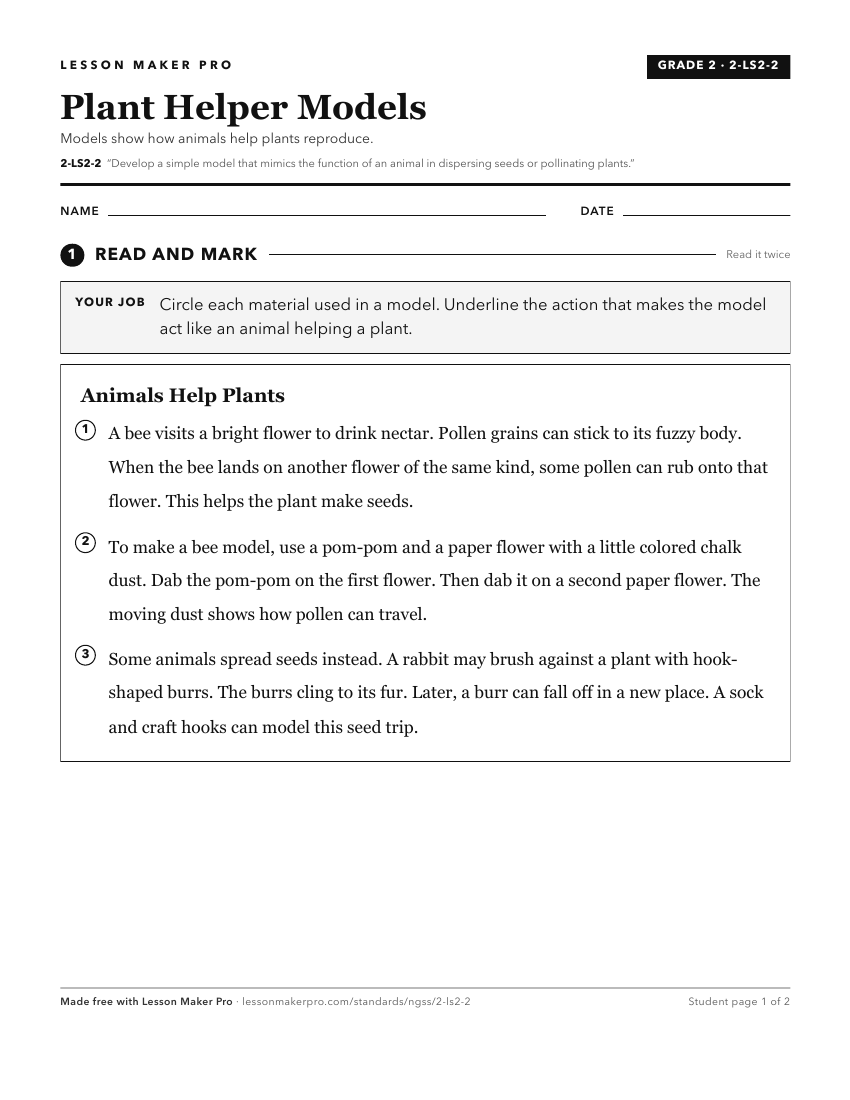
A ready-to-print activity worksheet aligned to 2-LS2-2, with an answer key for the teacher on its own page. No account needed.
PDF, US Letter, prints cleanly in black and white.
Download the worksheetKeep exploring
Related Standards
- HS-LS1-2
Develop and use a model to illustrate the hierarchical organization of interacting systems that provide specific functions within multicellular organisms.
- K-ESS3-1
Use a model to represent the relationship between the needs of different plants or animals (including humans) and the places they live.
- 5-LS2-1
Develop a model to describe the movement of matter among plants, animals, decomposers, and the environment.
- 1-LS1-1
Use materials to design a solution to a human problem by mimicking how plants and/or animals use their external parts to help them survive, grow, and meet their...
Turn this exact standard into a lesson
Grade, subject, topic, and the complete standard are prefilled. Create one free, no account needed.
Also for this standard:Make a WorksheetMake a QuizMake a Sub Lesson