NGSS 5-LS2-1
The Standard
Develop a model to describe the movement of matter among plants, animals, decomposers, and the environment.
Next Generation Science Standards
Teacher's field guide
What This Standard Means
What Students Need to Do
- Students make a diagram or physical model that traces matter through an ecosystem. They use arrows and labels to connect plants, animals, decomposers, air, water, and soil.
What Mastery Looks Like
- Students create a clear model with plants, animals, decomposers, air, water, and soil. Their arrows and labels show how matter moves, changes form, and returns to the environment.
Common Misconceptions
- Students often think plants get their food directly from soil. They may think decomposers make dead matter disappear or confuse matter movement with energy flow.
How to Assess It
- Exit ticket: Draw a garden model with a plant, rabbit, mushroom, air, water, and soil. Add labeled arrows showing where matter moves.
Lesson moves
Ways to Teach It
Build a bottle ecosystem with soil, a plant, leaf litter, and pill bugs, then label where matter enters, moves, and returns.
Write an explanation for this prompt: How can air, water, and dead leaves eventually become part of an animal?
Give groups organism and material cards, then race to arrange and explain accurate matter pathways through an ecosystem.
Study a compost bin and trace how food scraps become soil materials that support new plant growth.
Free download
Printable 5-LS2-1 Worksheet
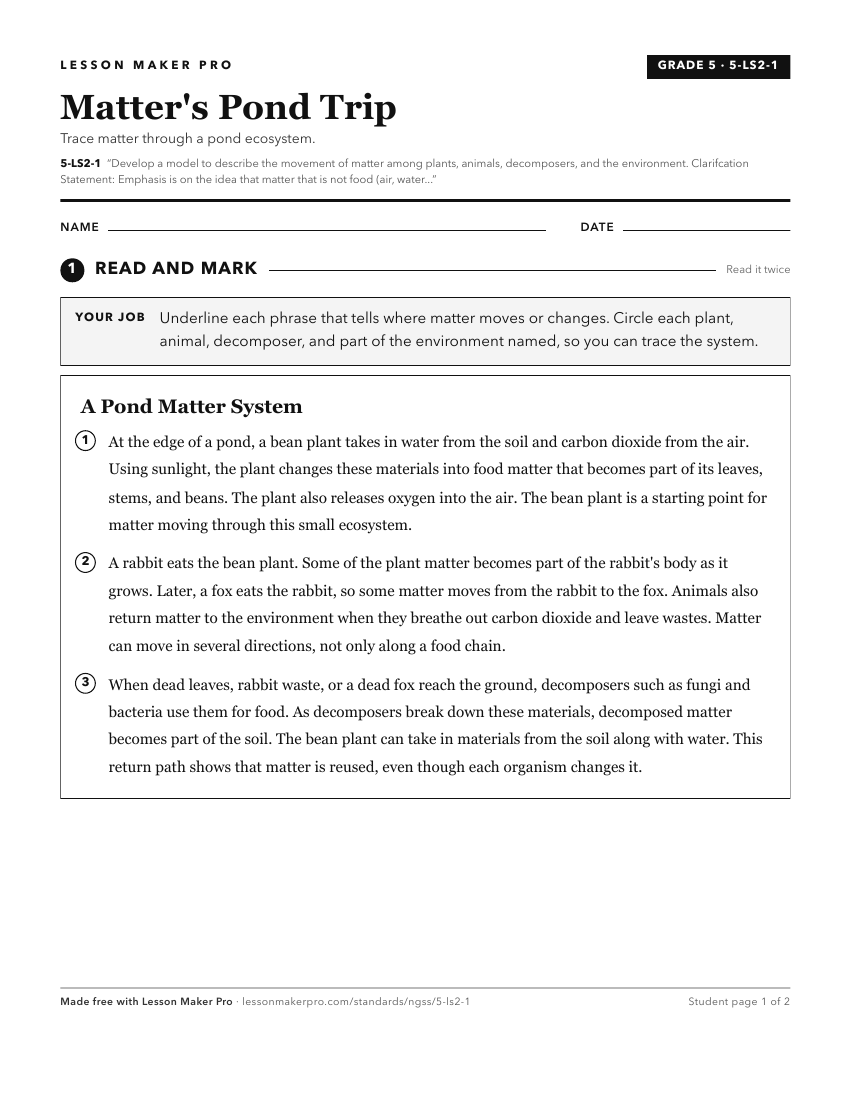
A ready-to-print activity worksheet aligned to 5-LS2-1, with an answer key for the teacher on its own page. No account needed.
PDF, US Letter, prints cleanly in black and white.
Download the worksheetWhat This Unlocks
Mastery here sets students up for these next.
Keep exploring
Related Standards
- MS-LS1-7
Develop a model to describe how food is rearranged through chemical reactions forming new molecules that support growth and/or release energy as this matter mov...
- MS-ESS2-1
Develop a model to describe the cycling of Earth's materials and the flow of energy that drives this process.
- HS-ESS2-6
Develop a quantitative model to describe the cycling of carbon among the hydrosphere, atmosphere, geosphere, and biosphere.
Turn this exact standard into a lesson
Grade, subject, topic, and the complete standard are prefilled. Create one free, no account needed.
Also for this standard:Make a WorksheetMake a QuizMake a Sub Lesson